Skip to content
Briefings are running a touch slower this week while we rebuild the foundations.See roadmap
Iran Conflict 2026
26MAR

CEPA scale check: 0.46% of Russian oil

3 min read
09:36UTC

David Axe at CEPA, citing RUSI research, assessed Ukraine's 130 oil strikes in 2025 produced $863 million of damage against roughly $189 billion in annual Russian oil revenue.

ConflictDeveloping
Key takeaway

Ukraine's oil strike campaign delivers footage; the revenue figures sit on the wrong side of the scale.

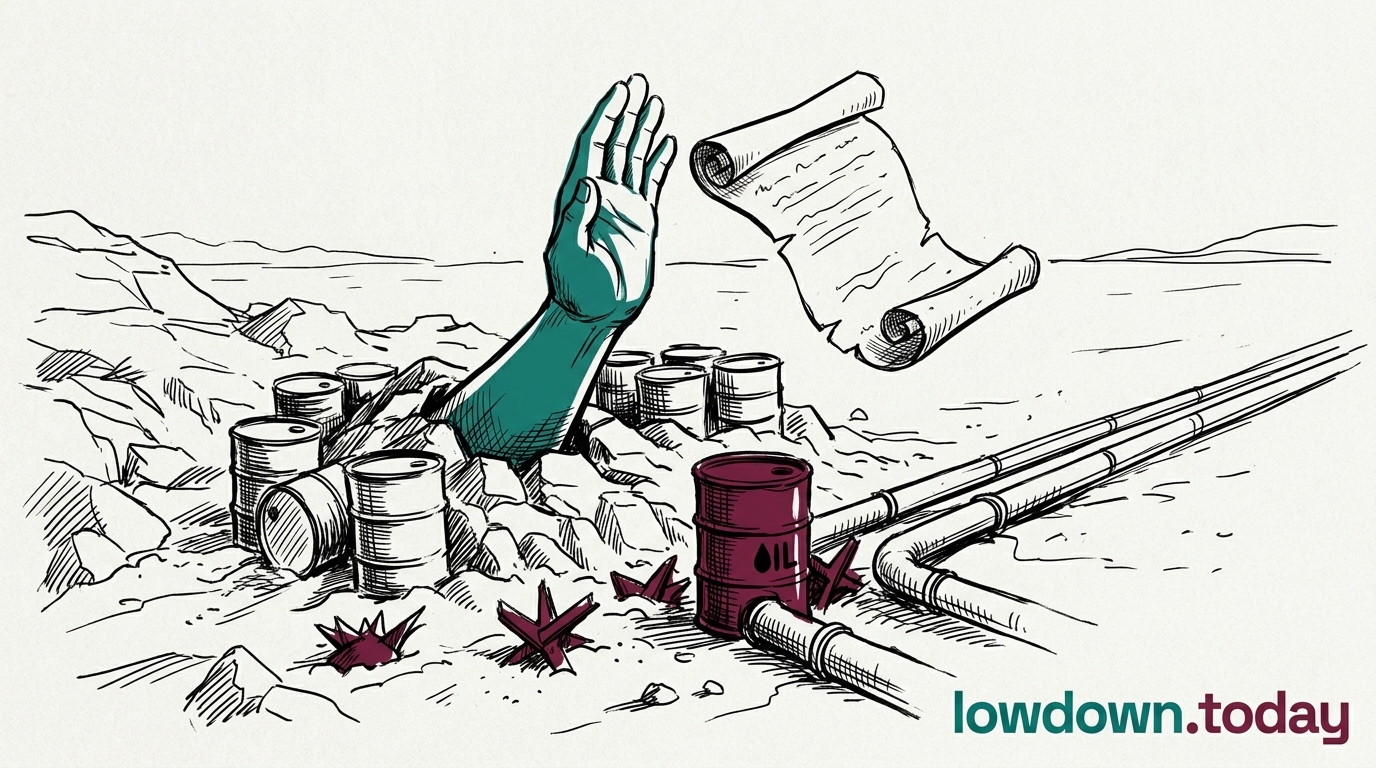
David Axe at CEPA (Center for European Policy Analysis), citing RUSI research published this month, assessed that Ukraine's 130 refinery and port strikes in 2025 delivered only a 6% export reduction against 2024 1. Cumulative damage came to $863 million against roughly $189 billion in annual Russian oil revenue, or 0.46% of the base.

That is roughly the cost of three weeks of Patriot operations in the Middle East, set against a rounding error in Moscow's books. At that tempo, Ukraine would need over two centuries of strike operations to match a single year of Russian oil revenue. Ukrainian targeteers pick lightly-defended terminals for visible damage, leaving hardened core infrastructure intact. Footage does most of the work the revenue figures do not.

Two separate considerations compound the scale problem. Fire Point, the Ukrainian consortium manufacturing the Flamingo cruise missile , is reportedly under investigation by NABU (Ukraine's National Anti-Corruption Bureau). Only nine Flamingos have been fired in six months, against the hundreds that any serious strike campaign against hardened infrastructure would require. And the Iran war separated price from volume in a way the infrastructure campaign cannot control: Urals rode the Hormuz premium while Baltic throughput was recovering. When Kyiv asks for Patriots for ballistic defence while launching its own drones at pipelines Chevron part-owns, the two trade-offs sit on the same ledger.


Deep Analysis

In plain English

Ukraine has been hitting Russian oil refineries and export terminals in a campaign aimed at cutting the revenue that funds Russia's military. A new report from the Center for European Policy Analysis and RUSI found that 130 such strikes across 2025 reduced Russia's oil exports by only 6% and caused $863 million in total damage. Russia earns roughly $189 billion per year from oil. So the entire year of strikes damaged the equivalent of 0.46% of annual revenue. To put that in context, Russia earns back that amount in about 42 hours. The Iran war's oil price spike likely generated more revenue for Russia in a single week than Ukraine's entire 2025 strike campaign cost Russia in a year.

What could happen next?
  • Meaning

    The CEPA finding reframes the Baltic and Black Sea oil campaigns as primarily having operational-denial value, not economic attrition value; Ukraine's justification for the campaign must shift accordingly.

    Immediate · 0.78
  • Risk

    If the Fire Point/NABU investigation reveals systematic corruption in Ukraine's precision strike procurement, it will complicate Western partner willingness to fund further anti-infrastructure weapons deliveries.

    Short term · 0.62
  • Opportunity

    The 6% export-volume reduction, while small in revenue terms, represents real capacity constraints on specific refinery outputs (aviation fuel, diesel) that have strategic value beyond headline revenue figures.

    Medium term · 0.55
First Reported In

Update #12 · Three narrowings of US support for Kyiv

Center for European Policy Analysis· 11 Apr 2026
Read original
Causes and effects
This Event
CEPA scale check: 0.46% of Russian oil
Load-bearing counter-evidence against the narrative that Ukraine's strike campaign is constraining Russian oil revenue.
Different Perspectives
Markets
Markets
Brent crude rose 2.2 per cent to $96.34 on 10 June, reversing a 7 per cent weekly decline built on deal optimism, as the overnight exchange repriced the Strait of Hormuz risk premium in a single session. The move reflects transit-risk repricing rather than supply shock: Iran's exports had already collapsed to below 300,000 barrels per day.
Pakistan
Pakistan
Pakistan's Naqvi channel, the only mediation track carrying both civilian and military buy-in, was stress-tested by live ordnance within 48 hours of the 6-7 June Tehran visit. Whether Washington informed Islamabad of the imminent strike plan while Naqvi was in Tehran remains undisclosed, putting the channel's neutrality under scrutiny.
Kuwait
Kuwait
Kuwait hosted the third Iranian strike on its soil since the 3 June airport drone attack, with Ali Al Salem airbase targeted in the three-country salvo. Its recent $1.98 billion Anduril Anvil counter-drone purchase signals it is rearming rather than reconsidering its hosting posture.
Bahrain
Bahrain
Bahrain absorbed the IRGC barrage via PAC-3 intercepts with its magazine already at 87 per cent depletion and no resupply before 2027. Sounding air-raid sirens over Manama, it faced the intercept burden with the thinnest defensive stack in the Gulf coalition.
Jordan
Jordan
Jordan reported all five incoming missiles intercepted with no injuries and no damage, a clean defensive performance that strengthens Amman's case for staying in the Western coalition without escalating its own posture. It now sits on Iran's target list for the first time despite not being a party to the Abraham Accords confrontation.
Iran / IRGC
Iran / IRGC
Foreign Minister Araghchi posted on X that US forces should 'leave our region if you want to be safe' and framed the exchange as a US defeat, while the IRGC claimed 21 targets hit and an F-35 hangar destroyed. The claims serve a domestic and Arab-audience framing rather than a verified battle-damage assessment.



