Skip to content
Briefings are running a touch slower this week while we rebuild the foundations.See roadmap
Iran Conflict 2026
24MAR

US gasoline hits $4.54 as Hormuz premium sticks

4 min read
05:37UTC

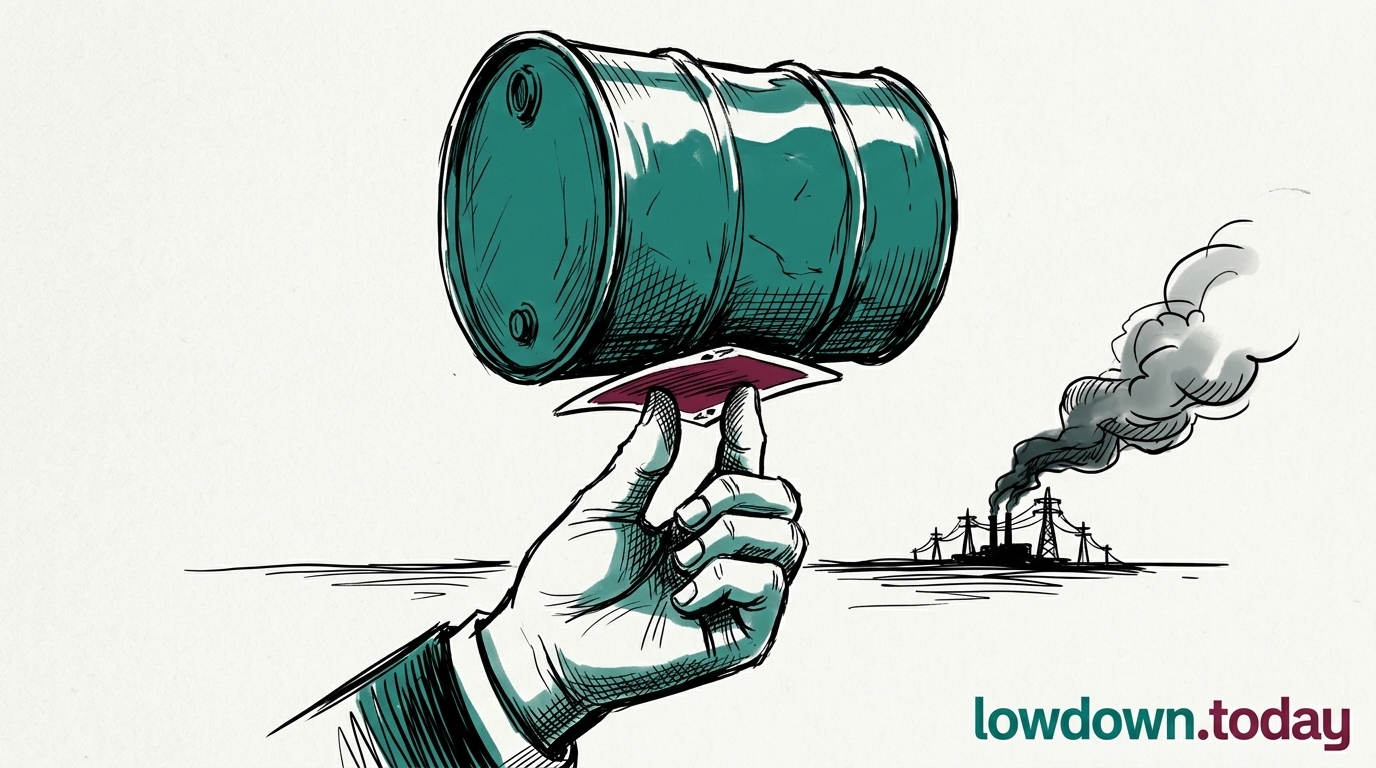
NBC News reports US average regular gasoline at $4.54 a gallon, up 47% from pre-war. Axios analysts no longer expect prices to retrace on a deal because Hormuz risk is now structurally priced in.

ConflictDeveloping
Key takeaway

The Hormuz premium is now baked into US pump prices and underwriter models; a signature would not unwind it.

NBC News reported on 8 May that the US average regular gasoline price reached $4.54 a gallon in early May, up from sub-$3 before the war began on 28 February: a 47% rise that adds roughly $24 per fill-up against the pre-war baseline 1. North American jet fuel has risen 95% over the same period. USPS, Amazon and FedEx have all imposed fuel surcharges since the United Arab Emirates quit OPEC+ on 1 May, removing five million barrels per day of quota discipline from the producer cartel.

Axios reported on 7 May that analysts no longer expect prices to retrace to pre-war levels even if the MOU is signed. A structural premium is now priced in because Iran demonstrated, via the Persian Gulf Strait Authority and the IRGC's mining declarations earlier in the campaign, that it can halt Strait of Hormuz traffic at will. The premium reflects the view of marine insurance underwriters about the risk, not the physical flow on any given day. P&I clubs cannot reprice the strait without a verifier-backed enrichment baseline, which the MOU does not currently provide.

The market moved hard on the MOU report itself. Brent Crude swung 11% intraday on 8 May, falling from $101.20 at the 7 May close to roughly $96 before Trump's "too soon" comment recovered it to a $101.27 settlement 2. WTI fell 15% intraday to $88 a barrel before recovering to $95.08. The peace dividend is currently worth between thirteen and fifteen per cent of the Brent price; the disappointment is worth roughly the same. A signature would crystallise the discount; the absence of one keeps the gap floating.

The 1973-74 oil-shock parallel is closer than the 1990 one. Both 1973 and 2026 paired supply disruption with structural-credibility loss in the producer-consumer relationship; in 1990 the disruption was discrete and confidence in Saudi reserve capacity was intact. The 1973-74 premium took eighteen months to unwind even after Saudi production normalised. Axios's 7 May analyst panel reached the same conclusion for 2026. Logistics surcharges from USPS, Amazon and FedEx will feed the next CPI print with a six-to-eight-week lag, the first to capture the full surcharge rollout.

Deep Analysis

In plain English

Petrol prices in the US have hit $4.54 per gallon, up 47% from before the Iran war began. Most people assume the price rise is just because less oil is flowing through the Strait of Hormuz, the narrow waterway Iran controls, through which about a fifth of the world's oil passes. Ships carrying oil through the Strait now have to pay war-risk insurance premiums of $1-3 million per voyage on top of their normal cover, a cost that did not exist before the conflict began. That cost gets added to the price of the oil at every stage from the tanker to the refinery to the petrol station. Analysts think these insurance costs will stick even after any peace deal is signed, because insurers take months to officially re-classify a dangerous zone as safe again. A signed deal would reduce the physical risk; the insurance cost would lag behind by several months. For a typical US driver filling up a 15-gallon tank, the $1.54/gallon increase above the pre-war price adds about $23 per fill-up. With the structural insurance premium likely staying elevated through the autumn, that extra cost looks persistent rather than temporary.

What could happen next?
  • Consequence

    Lloyd's quarterly review cycle means the Listed Area designation stays in force until at least September 2026 regardless of deal status; fuel surcharges imposed by USPS, Amazon, and FedEx will feed US CPI prints with a six-to-eight-week lag through July.

  • Risk

    If Brent settles above $100 through June, US core CPI, already elevated by logistics surcharges, will keep the Federal Reserve from cutting rates before September, extending the domestic economic cost of the conflict beyond any diplomatic resolution timeline.

First Reported In

Update #92 · An MOU asking Iran to surrender what nobody can count

CBS News· 9 May 2026
Read original
Causes and effects
This Event
US gasoline hits $4.54 as Hormuz premium sticks
The structural insurance premium that Iran demonstrated it can impose on the strait will not unwind on signature; it requires verifier-backed enrichment freeze that the MOU does not currently provide.
Different Perspectives
IAEA
IAEA
Director General Rafael Grossi appeared in person at the UNSC on 19 May and warned that a direct hit on an operating reactor 'could result in very high release of radioactivity'. The session produced a condemnation record but no resolution, and the Barakah perimeter was already struck on 17 May.
Hengaw (Kurdish rights monitor)
Hengaw documented three judicial executions and the detention of Kurdish writer Majid Karimi in Tehran on 19 May, establishing Khorasan Razavi province as the newest geography in Iran's wartime judicial record. The organisation's Norway-based operation continues to surface a domestic repression track running in parallel with every diplomatic and military development.
India
India
Six India-flagged vessels conducted a coordinated cluster transit under PGSA bilateral assurances during the 17 May window, paying no yuan tolls. New Delhi's inclusion in Iran's state-to-state passage track insulates Indian energy supply without requiring endorsement of the PGSA's yuan-toll architecture or alignment with the US coalition.
Pakistan
Pakistan
Pakistan is the only functioning diplomatic bridge between Tehran and Washington. Its role is relay, not mediation in the settlement sense: it conveyed Iran's 10-point counter-MOU in early May, relayed the US rejection, and is now passing 'corrective points' in the third documented exchange of this sub-cycle without either side working from a shared text.
UK and France (Northwood coalition)
Twenty-six coalition members have published no rules of engagement eight days after the Bahrain joint statement; Lloyd's underwriters have conditioned war-risk reopening on written ROE from either Iran or the coalition. Italian and French mine-countermeasures deployments are operating on the in-water clearance task CENTCOM Admiral Brad Cooper's 90% mine-stockpile claim does not address.
Saudi Arabia
Saudi Arabia
Riyadh has not publicly commented on the Barakah strike or the 50-47 discharge vote. Saudi output feeds the IEA's $106 base case; the $5 Brent premium above that model reflects institutional uncertainty no Gulf producer can compress through supply adjustment alone.