Skip to content
Briefings are running a touch slower this week while we rebuild the foundations.See roadmap
Iran Conflict 2026
7MAR

Baltic Terminals Stay Offline; Russia Reroutes Through Arctic

2 min read
07:34UTC

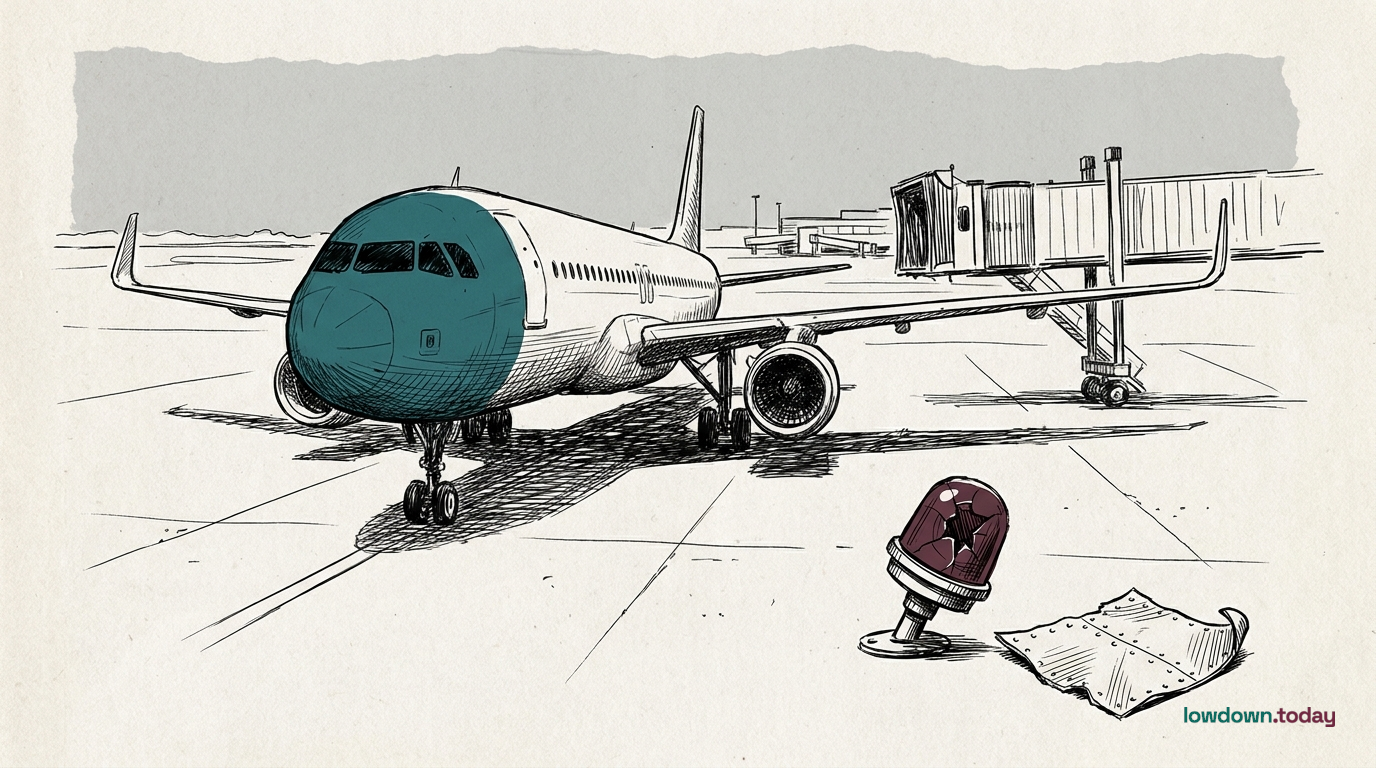
Both Ust-Luga and Primorsk remained closed for petroleum products into a second week, with Primorsk's 40% storage loss confirming lasting physical damage as Russia attempts Arctic rerouting.

ConflictDeveloping
Key takeaway

Ust-Luga's crude terminal is intact, pointing to faster crude recovery; Primorsk's 40% storage loss constrains product exports for weeks.

Planet Labs satellite imagery from 1 April confirmed Ust-Luga's crude terminal is physically intact, while fuel and product terminals bear fire traces from Ukraine's four-strike Baltic campaign . Primorsk suffered more lasting damage: eight 50,000 cubic metre reservoir losses represent permanent storage reduction until repairs complete.

Transneft CEO Nikolai Tokarev publicly acknowledged that rerouting volumes to Murmansk at short notice is difficult. Ice-class vessels are not abundant and Arctic transit times nearly double those from the Baltic (15 to 20 days versus 8 to 10). Russia's earlier refinery strikes at Promsintez and YANOS compounded the logistics challenge by reducing inland processing capacity.

Eighty-five sanctioned shadow tankers have sailed along Norwegian coastal waters since October 2025. Norwegian security officials describe a monitoring gap in their territorial waters. The Arctic logistics infrastructure was not built to absorb Baltic volumes at short notice, and each week of delay brings Russia closer to the storage saturation threshold that would force production cuts.

Deep Analysis

In plain English

Russia's main oil export terminals on the Baltic Sea are still shut down for fuel products two weeks after Ukrainian drone strikes. Russia is trying to redirect oil shipments through Arctic routes near Murmansk, but those routes are slower and require specialist ice-capable ships that are in short supply.

Deep Analysis
Root Causes

Russia built its seaborne export infrastructure around Baltic terminals — Ust-Luga and Primorsk handle roughly 60% of seaborne crude — with no equivalent Arctic alternative at scale. The shadow fleet expansion since 2022 added volume capacity but not port infrastructure.

Arctic ice-class vessel supply is a structural constraint: Russia commissioned fewer than 30 vessels capable of sustained Arctic routing, against demand requiring 50+. Primorsk's eight damaged reservoirs represent a storage bottleneck that rerouting cannot bypass — crude must still pass through terminal storage before loading.

What could happen next?
  • Consequence

    Crude terminal structural integrity at Ust-Luga suggests faster recovery for crude exports than for petroleum products.

  • Risk

    Norway faces a monitoring gap as 85+ sanctioned shadow tankers transit its coastal waters en route to Arctic export routes.

First Reported In

Update #11 · Russia Sells Less Oil but Earns More

Reuters via US News· 5 Apr 2026
Read original
Causes and effects
This Event
Baltic Terminals Stay Offline; Russia Reroutes Through Arctic
Partial physical recovery is underway but Arctic rerouting constraints mean full restoration will take weeks, creating a window for Ukraine to sustain the production squeeze if strike tempo continues.
Different Perspectives
Oil markets / Lloyd's underwriters
Futures markets priced CENTCOM's strikes-complete statement as a de-escalation signal and pushed Brent down 1.7 per cent to $94.71, even as the IRGC declared Hormuz closed. Lloyd's war-risk premiums held elevated because institutional de-listing requires a UN Security Council resolution that Russia and China have just shown they will block.
Pakistan (mediator)
Pakistan (mediator)
Interior minister Mohsin Naqvi carried dual civilian and military letters to Mojtaba Khamenei in Tehran on 6-7 June with no public response. The IRGC's Hormuz closure on 11 June shows the corps is acting independently of the channel Pakistan is using, making the mediation structurally unable to produce a binding commitment without direct IRGC access.
Russia and China
Russia and China
Russia and China voted against GOV/2026/40 at the IAEA Board, following through on the blocking position coordinated with Grossi in Geneva on 5 June; both states continue to oppose Western institutional pressure on Iran at every multilateral venue.
E3 and IAEA (UK, France, Germany)
The E3 co-sponsored IAEA resolution GOV/2026/40, adopted 21-3-10 on 10 June, demanding Iran disclose 440.9 kg of unaccounted HEU and admit inspectors to four denied facilities. The 10 abstentions and Russia-China noes leave any Security Council referral without a viable enforcement path.
IRGC / Iran military command
The corps declared Hormuz closed to all traffic on 11 June and claimed two vessels struck, overriding the MoU its own civilian negotiators were pursuing through Pakistan. The closure order used the Persian Gulf Strait Authority apparatus to convert a toll mechanism into a military prohibition.
Trump administration / CENTCOM
CENTCOM completed a second day of strikes on Tehran, Sirik and Minab, rejected the IRGC Hormuz closure as inconsistent with observed transit, and said strikes were complete. Hegseth framed the bombing explicitly as the negotiation: the method is coercive deal-making with no stated pause threshold.