Skip to content
Welcome, thoughtbot's Giant Robots listeners!Start here
Iran Conflict 2026
8NOV

Supertanker rates hit $424k/day, up 94%

3 min read
19:56UTC

VLCC freight rates nearly doubled in a single week to an all-time record — and the insurance collapse means the cost persists even after the shooting stops.

ConflictDeveloping
Key takeaway

The decoupling of the insurance timeline from the military timeline creates a second, commercial blockade that will persist independently of any ceasefire, because P&I clubs and hull underwriters cannot restore War risk coverage in less than several weeks regardless of battlefield developments.

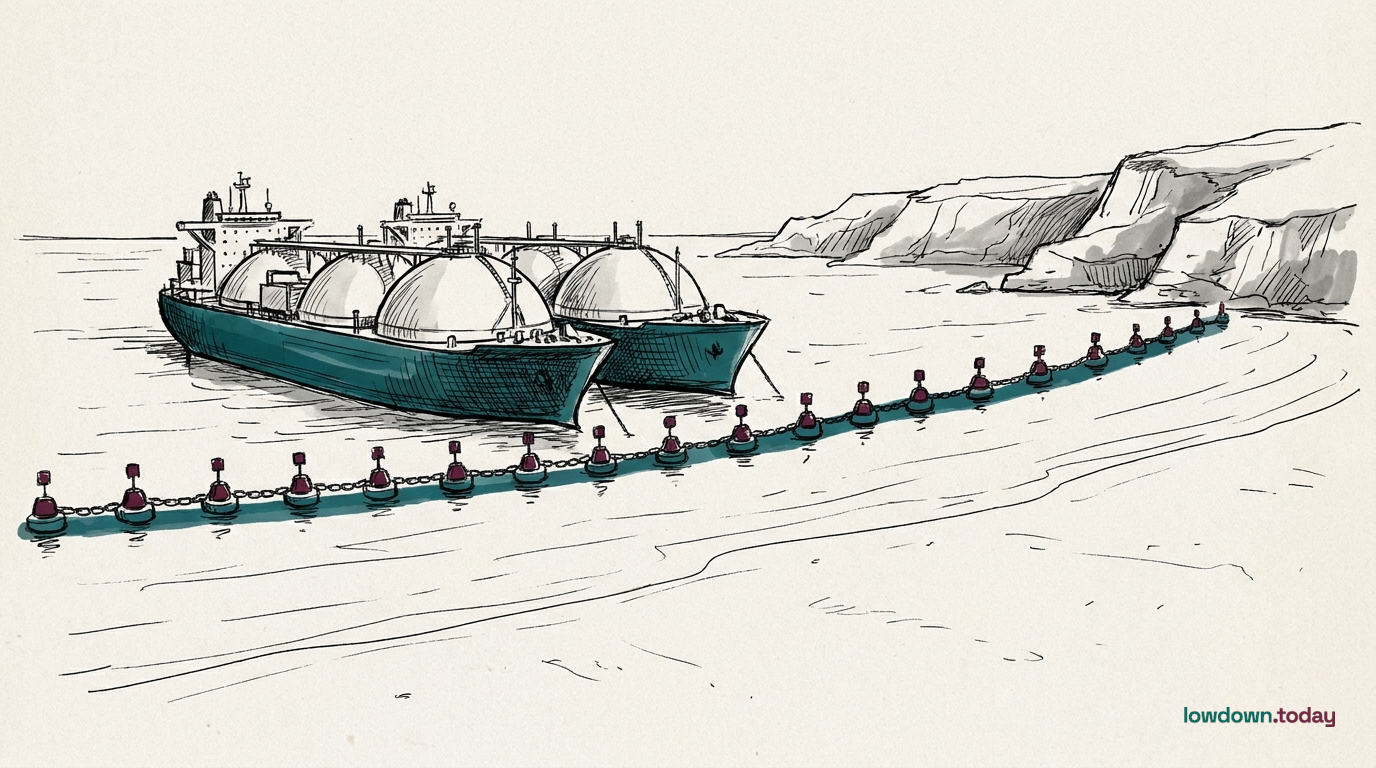
Very Large Crude Carrier freight rates hit $423,736 per day on 7 March — a 94% increase from the prior Friday close and the highest figure ever recorded. At these rates, shipping costs alone add approximately $3–4 per barrel before crude reaches a refinery, a surcharge passed through to refiners and, ultimately, to consumers at the pump.

The rate reflects physical scarcity, not speculation. More than 150 vessels sat at anchor in The Gulf of Oman and Arabian Sea as of 5 March, unable to transit the strait of Hormuz. Every major P&I club's War risk coverage expired at midnight on 5 March; no new commercial transits were documented after the deadline. Trump's promised DFC insurance programme and Navy convoy escorts remain non-operational — the US Navy has not conducted a single escorted passage. Shipping consultancy Simpson Spence Young assessed Navy convoys as "unlikely in the near-term" given simultaneous combat demands.

The freight market has priced in something political analysts have been slower to articulate: the energy disruption runs on two separate timelines. The military timeline could theoretically end with a ceasefire. The insurance timeline cannot. P&I reassessments typically take weeks regardless of battlefield developments. Even if hostilities ceased today, commercial shipping would not resume until underwriters complete their reviews and agree to cover vessels transiting waters where the IRGC struck the Sonangol Namibe — a Bahamas-flagged Angolan state oil company tanker — causing a cargo tank rupture and oil spill just 30 nautical miles from Kuwait.

Every day the strait remains closed, the available global VLCC fleet shrinks as vessels queue outside The Gulf instead of cycling through it. Routes bypassing Hormuz — the Cape of Good Hope for Gulf-to-Europe cargoes, trans-Pacific alternatives — are longer, tying up tankers for additional weeks per voyage and compounding the shortage. The freight rate is not a war premium that dissipates with a ceasefire. It is the market's recognition that the physical infrastructure of global oil transport has been dislocated in a way that does not reverse on the day the missiles stop.

Deep Analysis

In plain English

Very Large Crude Carriers (VLCCs) are the supertankers that move most of the world's oil — each carries roughly 2 million barrels. Their daily hire rate just hit a record of over $400,000, nearly double a week ago. The more consequential fact: commercial shipping insurance for The Gulf war zone effectively expired on 5 March, and reassessing it takes weeks. This means commercial ships will not enter the region even if shooting stops tomorrow. The war has created two separate blockades — one military, one commercial — and only one of them can be ended by a ceasefire.

Deep Analysis
Synthesis

The combination of all-time-high freight rates and structural insurance withdrawal creates a two-layer blockade: one physical (Iranian military activity), one commercial (insurance market failure). These layers operate on different timelines and respond to different interventions — meaning any ceasefire framework that addresses only the military layer will leave the commercial blockade intact. A durable economic resolution requires explicit mechanisms for restoring commercial insurability, not merely a halt to hostilities.

Root Causes

Global P&I insurance is concentrated in thirteen clubs comprising the International Group of P&I Clubs, which collectively cover approximately 90% of world merchant shipping by tonnage. Their simultaneous withdrawal of War risk coverage creates a structural market failure with no private-sector alternative at comparable scale — a single point of failure embedded in the architecture of global trade that pre-dates this crisis by decades and reflects a historical assumption that major transit straits would remain navigable under great-power deterrence.

Escalation

VLCC rates at $423,736/day make Cape of Good Hope rerouting economically viable despite adding approximately 14 days and $500,000–700,000 in additional bunker costs per voyage. However, the global VLCC fleet cannot simultaneously serve both normal Hormuz-routed demand and full Cape rerouting without effective capacity reduction, meaning the volume of oil reaching Asian refiners will decline regardless of price — the physical constraint, not cost, is the binding variable.

What could happen next?
  • Consequence

    A ceasefire alone will not restore commercial shipping through Hormuz — P&I and hull war risk insurance timelines require weeks of formal reassessment regardless of battlefield developments, maintaining the effective commercial blockade.

    Short term · Assessed
  • Risk

    Asian refinery throughput may begin declining within 2–4 weeks as strategic petroleum reserves are drawn down and Cape-rerouted alternative supply proves insufficient to replace full Hormuz transit volumes.

    Short term · Suggested
  • Precedent

    The simultaneous expiry of all major P&I war risk policies demonstrates that commercial insurance markets can enforce a de facto naval blockade without any military action — a dynamic relevant to future crisis planning and deterrence doctrine.

    Long term · Suggested
  • Consequence

    Shipowners operating VLCC capacity on Cape rerouting receive record freight income while bearing higher operating costs — a windfall concentrated in fleet owners based in Greece, Japan, South Korea, and Norway that partially offsets those countries' higher import costs.

    Short term · Assessed
First Reported In

Update #26 · President orders halt; IRGC ignores him

Bloomberg· 7 Mar 2026
Read original →
Causes and effects
This Event
Supertanker rates hit $424k/day, up 94%
Record supertanker rates expose the energy disruption's two-timeline problem: military hostilities could theoretically end with a ceasefire, but the P&I insurance collapse cannot. Freight markets are pricing in weeks of continued disruption regardless of the battlefield, and every day the strait stays closed shrinks the available global tanker fleet as vessels queue rather than cycle.
Different Perspectives
Office for Budget Responsibility
The OBR's 28 October forecast assumed $82 oil for 2026 and 2027, from market prices for the ten working days to 19 August, and blamed dearer wholesale energy on the war without naming Iran. It expects CPI inflation close to 4% in early 2027 even at that price.
Hengaw, Kurdish rights group
Hengaw reported the 3 November hangings of Amirhossein Maleki and Amirhossein Ebrahimi in Isfahan, saying Ebrahimi was tortured into confessing and that nine of 12 people sentenced to death in the case have now been hanged. Iran's judiciary holds that the defendants killed members of the security forces.
FINTRAC, Canada's financial intelligence unit
FINTRAC worked with the US Treasury on the 6 November designation of eight money services businesses in British Columbia, Ontario and Quebec. Treasury says the businesses still operate, some under new names, so closing them falls to Ottawa.
Abdul Qadir al-Dakhil, Governor of Nineveh
Al-Dakhil cancelled three Mosul International Airport contracts on 7 November over alleged links to armed groups, after meeting Prime Minister Ali al-Zaidi in Baghdad. He named no group or company, and said the contracts will go to international companies.
Kuwait
Kuwait
Kuwait condemned the Houthi missile fired towards the Madinah region on 5 November and restated its support for Saudi Arabia, the Qatar News Agency reported. Its state tanker company, Kuwait Oil Tankers Company, is among the Gulf state fleets on Iran's expanded Hormuz list.
Scott Bessent, US Treasury Secretary
Treasury designated an alleged Chandigarh false-flag network on 4 November and eight Canadian exchangers on 6 November, while State sanctioned alleged MANPADS intermediaries. None of the actions touches an oil buyer; they target the paper, cash and procurement around Iran's trade.

Written with AI from Lowdown's published reporting. Not individually reviewed by an editor. Editorial standards.