Skip to content
Welcome, thoughtbot's Giant Robots listeners!Start here
Iran Conflict 2026
8NOV

Kpler logs three ships a day in 'open' Hormuz

2 min read
19:56UTC

Kpler counted exactly three transits on each of 22, 23 and 24 July. CENTCOM's formal position is that the Strait of Hormuz remains open for transit.

ConflictDeveloping
Key takeaway

Three independent trackers put Hormuz traffic at a fraction of pre-war levels while CENTCOM calls it open.

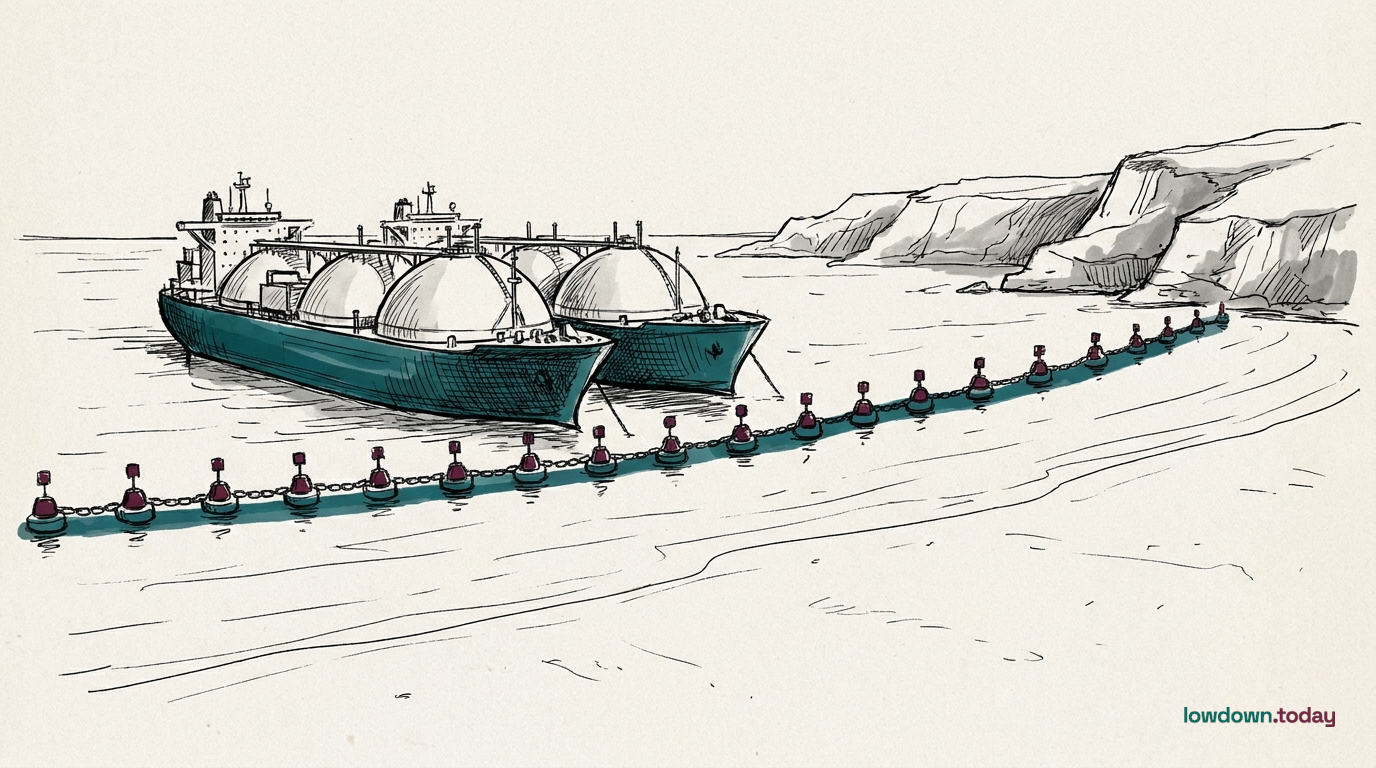
Kpler, the maritime data provider, recorded exactly three vessel transits through the Strait of Hormuz on each of 22, 23 and 24 July, down from more than 20 a day before 15 July⁠1. CENTCOM's formal position is that the strait remains "open for transit".

Both statements can be true at once, and the gap between them is the thing worth understanding. Hormuz is 33km wide at its narrowest and carries about a fifth of the world's seaborne oil; transit passage through it is a right in international law that no naval force has formally revoked. Whether a master exercises that right depends on his charterer, his crew and his underwriters, none of whom are bound by CENTCOM's characterisation. Kpler's count includes vessel-level detail, among them the very large crude carrier New Giant carrying about two million barrels of Basrah crude for China⁠2.

Two other providers reach the same place by different routes. S&P Global counted 40 vessels across 17 to 19 July, about 13 a day, roughly half the previous week's rate. Lloyd's List put tanker and gas-carrier movements specifically at 30 in the week to 20 July against 90 in the week to 13 July, part of the 66% weekly fall we reported on 21 July. Saul Kavonic of MST Marquee, on the record, puts flows at about 15% of pre-war levels⁠3. Three commercial datasets built for paying clients rather than for public argument agree on direction and on magnitude.

The insurance market reached this conclusion first and has not revisited it. War-risk rates on Hormuz transits were repriced in mid-July, when the broker Marcus Baker of Marsh quoted them against a count of eight vessels a day, and they have held at that level while physical traffic fell to three. Underwriters priced a closure the traffic has since caught up with. The exposure now sits in what has not been priced: a single mine strike or boarding in the Larak-Qeshm corridor, the route vessels use to stay outside CENTCOM's written blockade order, could push mainstream insurers to withdraw cover rather than reprice it, which would close the strait commercially without any government declaring it closed.

Deep Analysis

In plain English

The US military says the strait of Hormuz, the narrow waterway through which much of the world's oil passes, is "open for transit". But three separate companies that track ship movements say otherwise. Kpler recorded just three ships a day passing through between 22 and 24 July, down from more than 20 a day before 15 July. S&P Global counted about 13 ships a day in a similar recent stretch, roughly half the week before. In practice, almost nobody is sailing through, whatever the official language says, because the insurance cost of doing so has become too high for most shipping companies to accept.

Deep Analysis
Root Causes

"Open for transit" and "commercially viable to transit" are two different claims, and the gap between them is what three trackers are actually measuring. CENTCOM's statement addresses the first, whether the US Navy will contest passage; the P&I clubs, the insurers that underwrite almost all commercial shipping, address the second, and they set premiums based on assessed risk of loss, not on any government's characterisation of the strait's status.

Once those premiums cross a threshold where insurance cost exceeds freight margin, as the current range does for many operators, rational shipowners divert regardless of what CENTCOM says, because the decision is made in a London or Scandinavian underwriting office, not in Washington or Tehran.

What could happen next?
  • Meaning

    A near-90% collapse in daily transits despite an "open" designation shows insurance markets, not naval statements, are setting the real terms of access to Hormuz.

  • Consequence

    Sustained traffic collapse compounds the Cape of Good Hope diversions already under way, adding weeks to voyage times for cargo bound for Europe and Asia.

First Reported In

Update #162 · Munitions, not Iran, halted US bombing

Baird Maritime (citing Kpler)· 26 Jul 2026
Read original →
Different Perspectives
Office for Budget Responsibility
The OBR's 28 October forecast assumed $82 oil for 2026 and 2027, from market prices for the ten working days to 19 August, and blamed dearer wholesale energy on the war without naming Iran. It expects CPI inflation close to 4% in early 2027 even at that price.
Hengaw, Kurdish rights group
Hengaw reported the 3 November hangings of Amirhossein Maleki and Amirhossein Ebrahimi in Isfahan, saying Ebrahimi was tortured into confessing and that nine of 12 people sentenced to death in the case have now been hanged. Iran's judiciary holds that the defendants killed members of the security forces.
FINTRAC, Canada's financial intelligence unit
FINTRAC worked with the US Treasury on the 6 November designation of eight money services businesses in British Columbia, Ontario and Quebec. Treasury says the businesses still operate, some under new names, so closing them falls to Ottawa.
Abdul Qadir al-Dakhil, Governor of Nineveh
Al-Dakhil cancelled three Mosul International Airport contracts on 7 November over alleged links to armed groups, after meeting Prime Minister Ali al-Zaidi in Baghdad. He named no group or company, and said the contracts will go to international companies.
Kuwait
Kuwait
Kuwait condemned the Houthi missile fired towards the Madinah region on 5 November and restated its support for Saudi Arabia, the Qatar News Agency reported. Its state tanker company, Kuwait Oil Tankers Company, is among the Gulf state fleets on Iran's expanded Hormuz list.
Scott Bessent, US Treasury Secretary
Treasury designated an alleged Chandigarh false-flag network on 4 November and eight Canadian exchangers on 6 November, while State sanctioned alleged MANPADS intermediaries. None of the actions touches an oil buyer; they target the paper, cash and procurement around Iran's trade.

Written with AI from Lowdown's published reporting. Not individually reviewed by an editor. Editorial standards.
