Skip to content
You can now search across every topic, entity and event.What's new
Iran Conflict 2026
21SEP

Israel hits Iran after Trump said no

3 min read
15:34UTC

Trump publicly urged Netanyahu not to retaliate; on Monday 8 June the IDF struck the Mahshahr petrochemical complex and missile sites inside Iran regardless.

ConflictDeveloping
Key takeaway

Trump asked Israel not to strike Iran; Israel struck the next day, exposing his leverage as rhetorical.

President Donald Trump publicly urged Benjamin Netanyahu not to hit back at Iran, saying he would call him and "tell him not to strike back" 1. On Monday 8 June the IDF (Israel Defense Forces) struck military targets inside Iran regardless: the Mahshahr Petrochemical Complex in Khuzestan province and surface-to-surface missile launch sites, with blasts reported in Tehran, Tabriz and Isfahan 2. Iranian officials and Israel's Magen David Adom reported minimal-to-no casualties on either side, preliminary 3.

Netanyahu reportedly agreed to the request, then struck anyway. For 100 days the war's central gap was passive, with no US-Iran instrument on paper while the fighting ran on ; on Monday it turned active. Trump asked his closest ally, in public, to hold fire, and the answer on the ground was the Mahshahr strike.

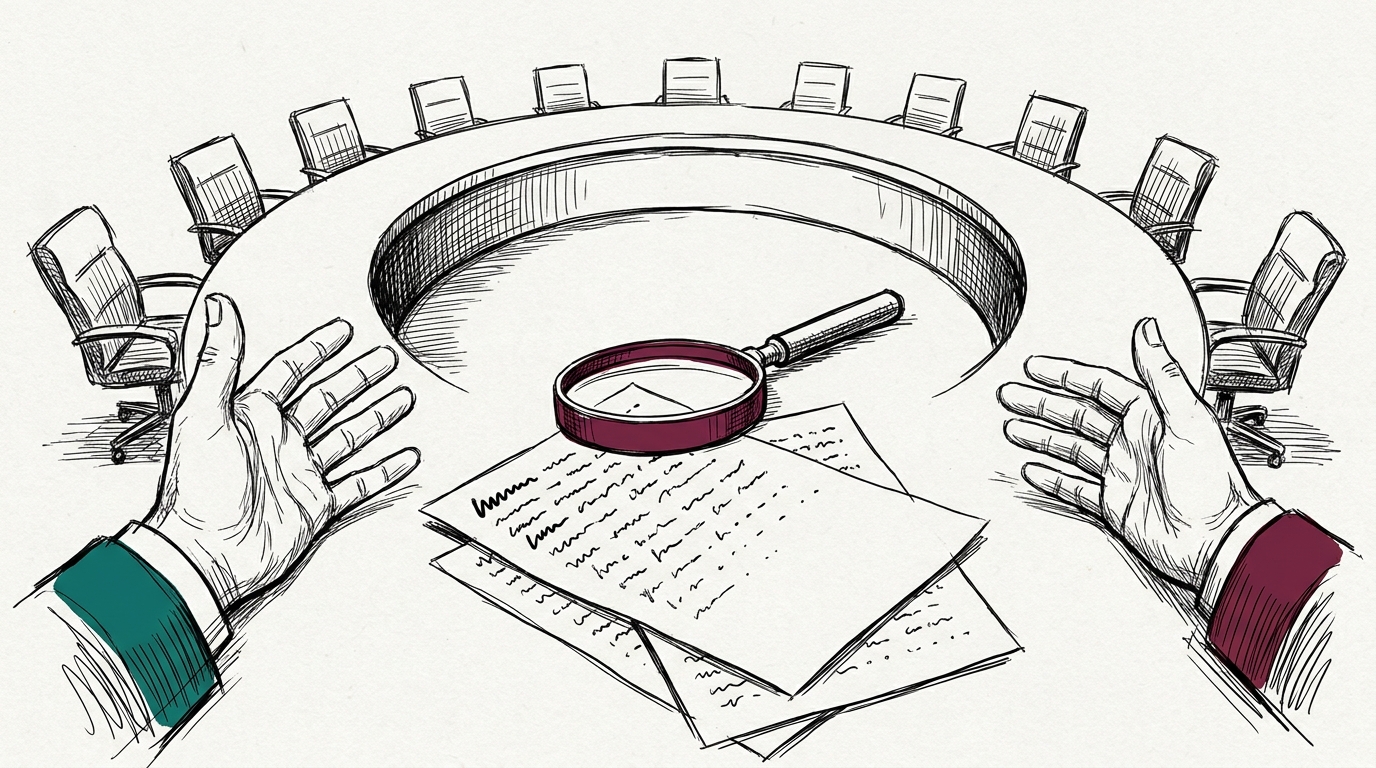
Two readings hold at once. One is plain defiance: Israel will not let Tehran fix the terms of the exchange, and Trump cannot make it. The other is choreography, a good-cop, bad-cop split that lets Israel apply the kinetic pressure Trump keeps off his own diplomatic ledger. No signed US instrument exists to prove Washington controls the kinetic track, so the burden of demonstrating coordination sits with The White House.

Either way, the strike adds a fresh complication to the negotiating file. Rezaei's $24bn precondition was already unresolved; a unilateral Israeli strike against Trump's stated wish now sits beside it as a US-Israel alignment gap.


Deep Analysis

In plain English

Israel's military struck inside Iran on 8 June, hitting a large petrochemical factory in Khuzestan province (south-western Iran) and sites used to launch surface-to-surface missiles. Explosions were also heard in Tehran, Tabriz and Isfahan. US President Trump had publicly asked Israel's Prime Minister Netanyahu not to strike back after Iran's missile attack. Israel struck anyway. Mahshahr is one of Iran's biggest chemical production hubs. Israel hit the same complex in April 2026. Netanyahu reportedly told Trump he had agreed not to strike, then authorised the attack. No verified casualties were reported in the early hours, though that may change.

Deep Analysis
Root Causes

Israel's coalition politics under Netanyahu require maintaining offensive operational tempo: Ben Gvir and Smotrich's continued participation in government is conditioned on rejecting any ceasefire that does not meet maximalist terms.

Netanyahu's government falls if he accepts US-brokered de-escalation without a full agreement. Compliance with Trump's restraint requests is blocked by Israeli coalition arithmetic, not by strategic disagreement about Iran's threat level.

What could happen next?
  • Consequence

    Trump's public restraint request failing within 24 hours removes his ability to use 'I can control Israel' as a credible bargaining chip with Tehran in ongoing nuclear negotiations.

  • Risk

    A second Mahshahr strike compounds the April damage to Iran's domestic fuel supply, increasing civilian pressure that could either force concessions or harden hardliner resistance to any deal.

First Reported In

Update #121 · Trump said don't strike; Israel struck Iran

Jerusalem Post· 8 Jun 2026
Read original
Different Perspectives
Shipping and insurance industry
UKMTO counted about 20 US-facilitated Hormuz transits a day to 11 September against only 6 visible on AIS, with traffic still around 90% below the 138-a-day pre-war baseline. War-risk underwriters cannot price hulls they cannot see, or resolve whether the tanker El Gaia hit a mine, as Iran claims, or a missile and drone, as CENTCOM says.
European refiners
European refiners
European refiners, including Poland's Orlen, absorbed a roughly $26 gap between Dated Brent at $130.80 on 15 September and ICE Brent futures settling at $103.87 on 18 September, a spread that widened from $13.45 on 9 September rather than newly opening. Their futures hedges no longer cover what they now pay for physical barrels.
Saudi Arabia
Saudi Arabia
Saudi Aramco zeroed European term customers' October allocations and rerouted roughly 60 million barrels to Asia through Ras Tanura and Sohar, using Red Sea and Gulf terminal capacity built years ago to cut Hormuz exposure. Riyadh reallocated existing supply rather than negotiating a shortfall with Europe.
Qatar
Qatar
Qatar's energy minister Saad al-Kaabi told Bloomberg at the Qatar Economic Forum on 20 September that Bessent's two-year Hormuz-obsolescence forecast is wrong, and that Doha has deliberately built no bypass pipeline. Qatar's gas exports run through one waterway by choice, not oversight.
Iran (foreign ministry and Majlis)
Iran's foreign ministry and 130 Majlis deputies moved toward NPT withdrawal this week, with lawmaker Hossein-Ali Haji Deligani filing a triple-urgency bill on 20 September that Speaker Qalibaf has not yet scheduled. Tehran treats treaty membership as leverage still on the table, not yet spent.
Russia and China
Russia and China
Moscow and Beijing vetoed the Panel of Experts' renewal, maintaining Resolution 2231 lapsed in October 2025 and the 2025 snapback was never validly triggered, so the sanctions architecture the Panel enforces has no current legal standing. Both governments frame the veto as upholding law, not shielding Tehran.



