Skip to content
Welcome, thoughtbot's Giant Robots listeners!Start here
Iran Conflict 2026
7SEP

Iran bills the world for Hormuz oil

2 min read
14:39UTC

Esmaeil Baqaei said any future administration of the Strait of Hormuz must include payment for environmental damage to Iran's coastline, which he put in the trillions of dollars.

ConflictDeveloping
Key takeaway

Tehran reframed its Hormuz demand as environmental damages, which no maritime rule blocks.

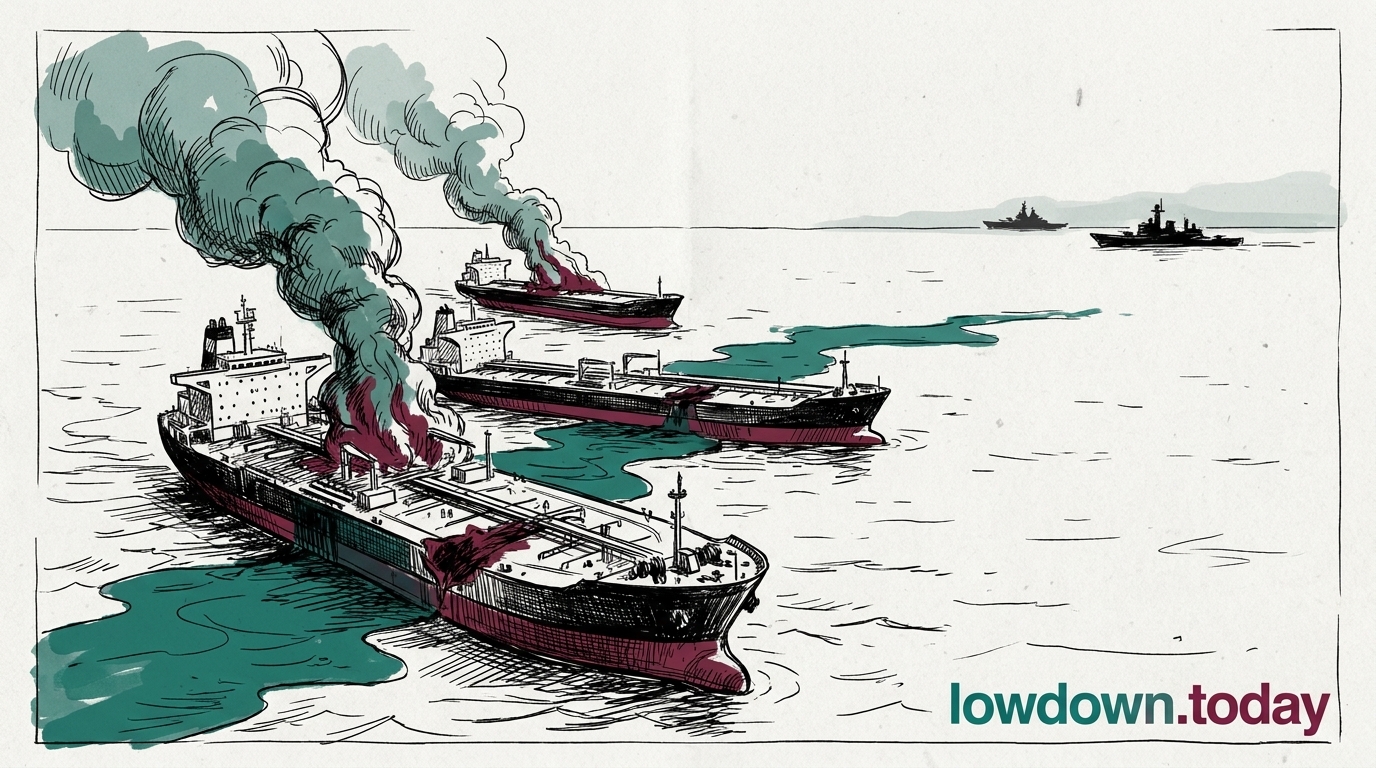
Iran's foreign ministry spokesman Esmaeil Baqaei said on Thursday 13 August that any future administration of the strait of Hormuz must include payment for environmental damage, putting the cumulative harm to Iran's coastal areas in the trillions of dollars⁠1. Oil had washed onto Qeshm Island, off Iran's southern coast, the day before. "Every party that benefits from commercial shipping through the strait of Hormuz carries both a legal and a moral obligation to remediate the environmental harm inflicted upon The Persian Gulf and the Sea of Oman," he said. He named no ship, no flag and no government.

Three days earlier the same spokesman ruled transit fees out of the Oman talks and named four working areas, one of them environmental protection. That sequence matters because a charge for passage runs straight into the transit-passage right that every maritime state cites against Iran, the objection that has sunk each fee proposal since the spring.

A remediation claim carries no such problem. Framed as damage owed rather than a price paid, it needs no ceasefire, no counterparty signature and no naval success to stay alive, and it can be tabled at any point a waterway arrangement is drafted. The trillions figure is Baqaei's own characterisation, offered without a party to bill or a period to bill for, and it is worth nothing as a valuation. The shape of the claim will outlive the war that produced it.

Deep Analysis

In plain English

Oil washed up on Iran's Qeshm Island in mid-August, and Iran's foreign ministry spokesman, Esmaeil Baqaei, responded by saying any future arrangement over who controls the strait of Hormuz must include payment for environmental damage running into trillions of dollars. He did not say who should pay. Separately, the oil causing the pollution has been traced to a tanker called the Caroline Bezengi, which was carrying Russian crude and is under international sanctions for helping Russia dodge them. Iran has not publicly named Russia or that tanker's owners as responsible, even though the evidence points there, likely because Russia has been supplying Iran through the war and Tehran has reasons not to embarrass an ally in public.

Deep Analysis
Root Causes

Iran's reluctance to name a payer sits against a wartime dependency it cannot easily set aside: Russia's Caspian shipping corridor into Bandar Anzali has supplied Iran throughout the conflict, a route Israel and Ukraine have each struck this year.

That dependency gives Tehran a live strategic reason not to publicly blame a Sovcomflot-linked vessel for polluting its own coastline.

What could happen next?
  • Consequence

    Framing environmental compensation as a precondition for any future Hormuz administration arrangement adds a new, uncosted demand layered onto Iran's existing six political conditions (ID:5645) for reopening the strait.

  • Meaning

    Naming no payer lets Iran raise the political cost of any Hormuz settlement without committing to a legal claim against any specific state or company, including its own wartime supplier.

First Reported In

Update #170 · The ships Iran does not control are leaving Hormuz

Press TV· 14 Aug 2026
Read original →
Different Perspectives
Wang Yi
Wang Yi
China's foreign minister and Djibouti's issued a joint communique on 21 October saying the war should not reach the Horn of Africa and stressing free navigation through Bab al-Mandeb. The text names neither Iran nor the Houthis, and Djibouti hosts China's only overseas military base, opposite the Yemeni coast.
Ministry of External Affairs
India's foreign ministry called the attacks on Saudi civilian and energy sites "unacceptable" on 22 October and said they must stop at once. An Indian died at Dammam, Indians were injured there and at Shaybah, and about 4,000 Umrah pilgrims remain stranded by one MP's count.
Iraq
Iraq
Iraq closed the al-Sheeb crossing with Iran to travellers and trucks from 21 October and said other crossings would close gradually. Unlike September's closure, which ended on a staged timetable, this one has none, and Iran's interior ministry said it received no notice.
Abdel Fattah el-Sisi
Egypt's president said on 21 October that Cairo's support would "defend Saudi territory, and does not include an attack on Yemen". Araghchi warned that Egyptian involvement would further complicate the situation, and Cairo's limit matches the one Ankara set on 8 October against attacking another state's soil.
UK Ministry of Defence
The MoD said on 20 October that RAF Typhoons over Saudi Arabia will not strike the Houthis, but extended tanker support to Saudi operations including against Houthi targets in Yemen. The tanker line sets no limit on strikes, so British aircraft may now refuel Saudi jets on bombing runs.
Turkey
Turkey
Ankara sent the Mecca Joint Defence Agreement to parliament around 20 October, and its published text treats an attack on one party as an attack on all. Article 16 brings it into force only on the last ratification, so the 5 October invocation in Riyadh could not yet bind Turkey.

Written with AI from Lowdown's published reporting. Not individually reviewed by an editor. Editorial standards.
