Skip to content
You can now search across every topic, entity and event.What's new
Iran Conflict 2026
7SEP

CENTCOM disables two Iranian tankers, destroys a third

2 min read
14:39UTC

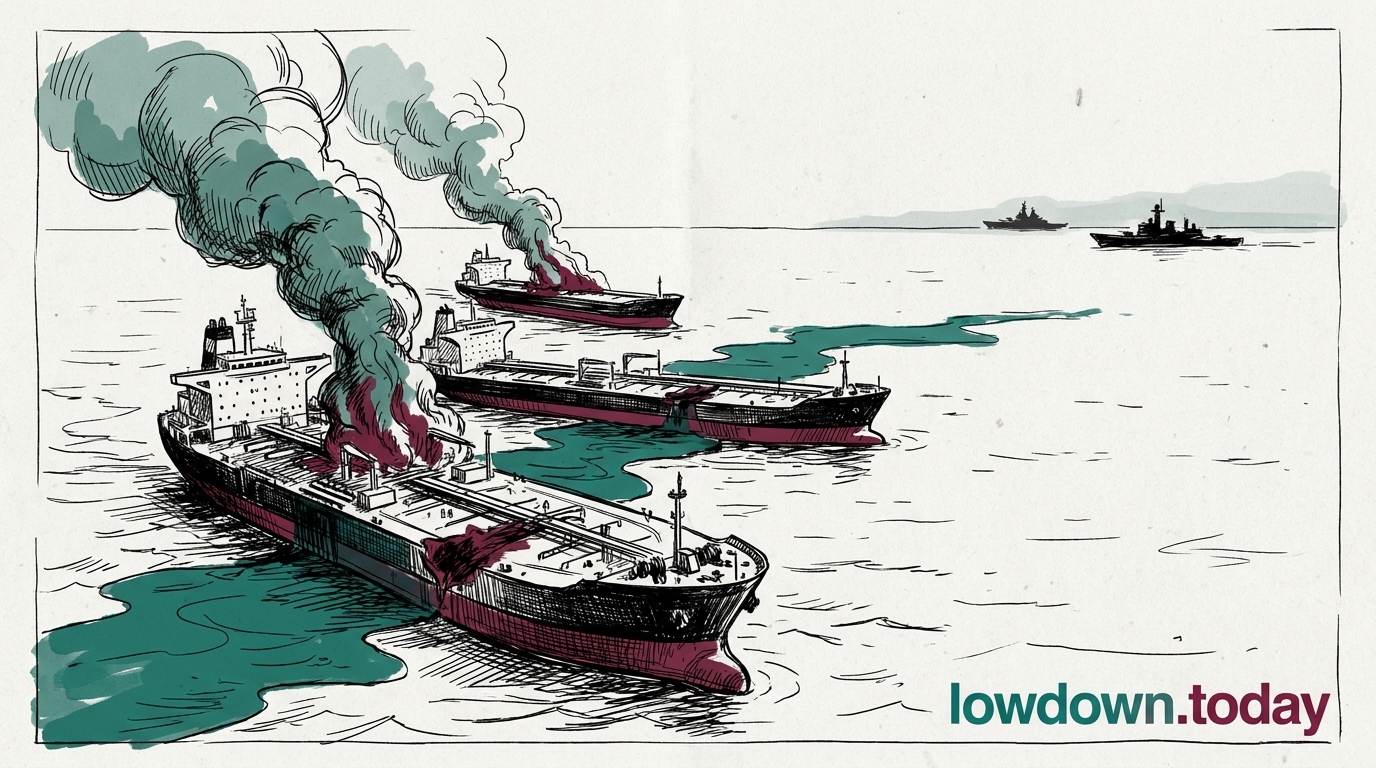
Hours after the missile attack, CENTCOM said American forces had permanently disabled M/T Downy off Kharg Island and M/T Stark 1 near Jask, and destroyed M/T Kylo in the Gulf of Oman.

ConflictDeveloping
Key takeaway

Cooper named a three-for-two exchange rate and applied it the same day, giving shipowners a number to price.

CENTCOM said American forces had permanently disabled the crude carrier M/T Downy off Kharg Island and M/T Stark 1 near Jask, and had completely destroyed the unladen carrier M/T Kylo, also known as Noxen, in the Gulf of Oman after directing its crew to abandon ship 1. M/T stands for motor tanker. All three strikes came hours after the missile attack on the two American warships, and the release presents them as the reply to it.

CENTCOM's release accounts for Kylo's crew and for no other. It says nothing about the men aboard the Downy or the Stark 1, and no other source we hold fills that gap in either direction.

Admiral Brad Cooper, the CENTCOM Commander, put the rate on the record: "If you shoot at two of our ships, we will impose an even higher economic cost, taking out three of yours." He added: "We will not hesitate to defend American forces, and if necessary, destroy Iran's limited and exposed oil fleet" 2. Anonymous officials had described a tanker-for-tanker rule to Axios on 1 September, and CENTCOM would not confirm it then . Cooper has now named the ratio himself and applied it inside a day.

A stated ratio does work that a strike alone does not. It hands an underwriter, a charterer and a shipowner a number they can put into a rate, so the cost of the next Iranian attack starts accruing before it happens. Note also where that cost lands. The missiles came from the IRGC; the reply hit crude carriers, which reaches Tehran's export earnings rather than the unit that fired.

Deep Analysis

In plain English

American forces disabled two Iranian oil tankers, the M/T Downy and the M/T Stark 1, so badly damaged that neither can carry cargo, and destroyed a third, the empty M/T Kylo, after ordering its crew off first. CENTCOM named each ship, each location and each outcome within hours of the missile attack, unlike the warship attack itself, where the two governments still disagree on what happened. Admiral Brad Cooper, the top US commander for the region, put the exchange rate into words: for every two US ships Iran fires on, three of its tankers will be destroyed. That is a specific, public promise, which means the next time missiles fly, everyone will be able to check whether Cooper's rate holds.

Deep Analysis
Root Causes

CENTCOM's own release frames the choice of target directly. It describes the three tankers as part of "a multibillion-dollar shadow network that funds the IRGC and its regional proxies" and adds that "Iran has no means by which to defend them."

That framing explains the target selection as much as the missile exchange does. Washington picked assets it judged both economically load-bearing, because tanker revenue funds the IRGC network Treasury has separately sanctioned, and militarily undefended, rather than answering a missile attack with a matching strike on Iranian forces.

What could happen next?
  • Consequence

    Cooper's three-for-two ratio is now a public, numbered commitment rather than an unconfirmed policy, so any future IRGC strike on a US vessel will be measured against a specific figure Washington itself supplied.

First Reported In

Update #176 · Three tankers for two warships

U.S. Central Command· 7 Sept 2026
Read original
Different Perspectives
Golden Global Yatirim Bankasi
Golden Global told Turkey's KAP on 4 September that the parties OFAC named are not its customers and it had no dealings with them. It plans to contest the designation.
CENTCOM (US Central Command)
CENTCOM says its ships evaded the IRGC's 5 September missiles unharmed, then disabled two Iranian tankers and destroyed a third within hours. Admiral Cooper named that three-for-two ratio himself.
Islamic Revolutionary Guard Corps
The IRGC Navy claimed strikes on six vessels, three tankers and three US-linked ships, on 5 and 6 September, naming none of them. It conceded its own tankers were hit.
China's foreign ministry
Spokesman Lin Jian rejected Treasury Secretary Scott Bessent's 25 August warning that Iranian oil buyers face an "economic D-Day", saying sanctions do not help and that Beijing would safeguard its own rights and interests. China's Iranian crude imports had already halved for unrelated reasons.
Iraq's government and Erbil authorities
Erbil authorities said 10 explosive-laden drones were shot down over the city on 1-2 September with no casualties. Iraq's government condemned the attacks without naming Iran as their source, and neither Washington nor Baghdad confirmed the IRGC's claim to have hit US bases there.
Bahrain Defence Force
The General Command said air defences intercepted several Iranian missiles and drones on 1-2 September and called the use of such weapons against civilians and private property a flagrant violation of international humanitarian law.