Skip to content
You can now search across every topic, entity and event.What's new
Iran Conflict 2026
3SEP

Trump signed Hormuz open; war ran on

2 min read
16:40UTC

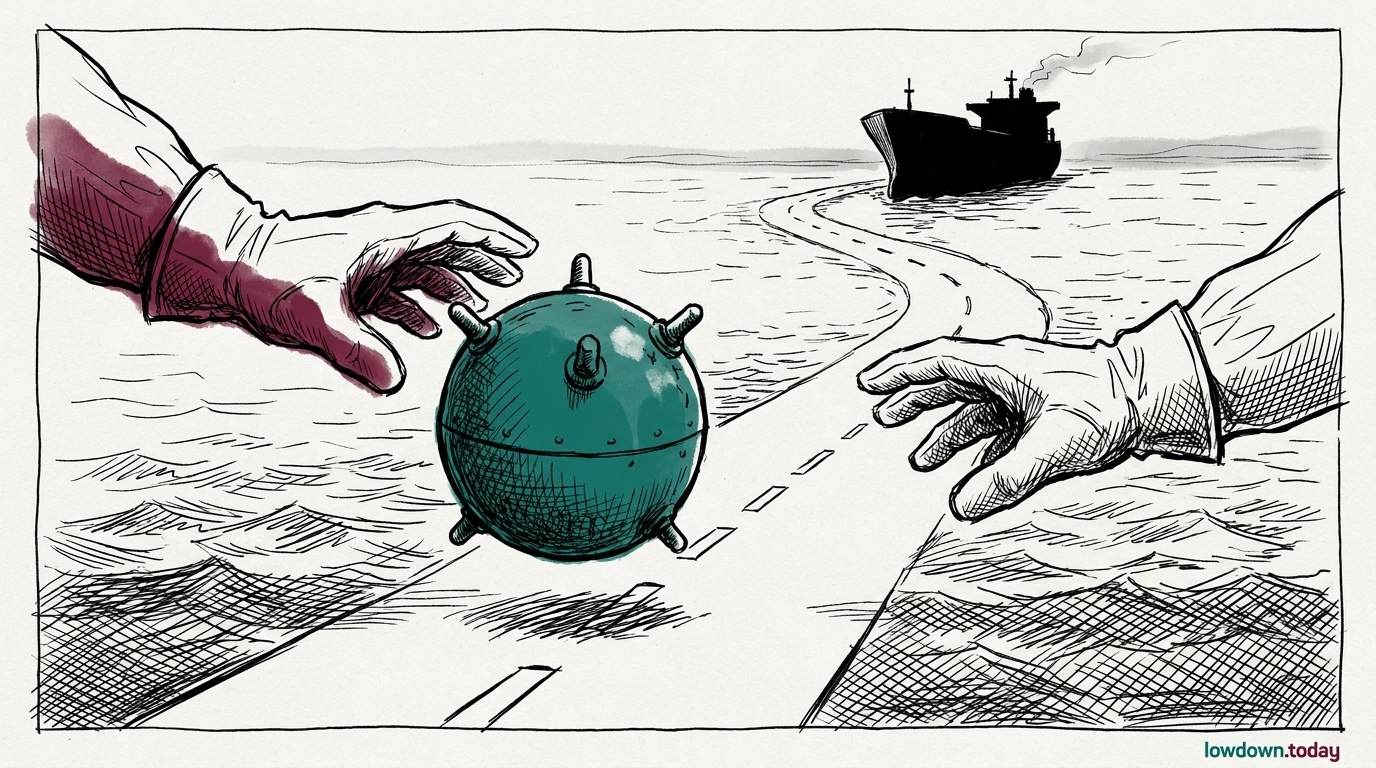
Trump electronically signed the Islamabad Memorandum on Tuesday 16 June and ordered the Hormuz blockade lifted; by Wednesday CENTCOM said the blockade holds until Friday's ceremony.

ConflictDeveloping
Key takeaway

Trump's signature is real; the blockade lift it orders has not yet happened.

On Tuesday 16 June Donald Trump did the one thing 110 days of war had waited for. He put his electronic signature to the Islamabad Memorandum of Understanding, the US-Iran instrument formalising the ceasefire and a 60-day nuclear window, issued a written authorisation for the "immediate removal" of the US naval blockade of Iranian ports, and declared the Strait of Hormuz "completely open". For most of this war the through-line was a president who signed nothing . He has now signed, and within a day the order collided with the thing it described.

By Wednesday 17 June the US military confirmed the blockade remains active until the formal signing on Friday 19 June 1. US Central Command (CENTCOM), the command that runs the port interdiction, has not stood down. The signed order to lift the blockade and the operational posture that keeps it running point in opposite directions on the same calendar day. No executive order or Federal Register entry formalises Trump's authorisation, and the Office of Foreign Assets Control (OFAC), the US Treasury sanctions bureau, recorded no Iran action, its ledger blank as it was when he first declared the deal complete .

Trump issued a written authorisation, not an enforceable executive order, and the two carry different legal weight. Declaratory authority over a blockade does not transmit to a fleet without a written directive through the chain of command, which is why CENTCOM can lawfully hold its line while the President says the strait is open. JD Vance co-signed for Washington. On 17 June only the signature exists; the deed it describes does not. The fleet held its line.

Deep Analysis

In plain English

On 16 June, Donald Trump electronically signed the Islamabad Memorandum and declared the Strait of Hormuz completely open. CENTCOM, the US military command running the blockade, said it would hold until the formal 19 June Geneva ceremony. The signed order and the military posture pointed in opposite directions on the same day. The reason: the military needs specific written orders through its chain of command, not a presidential announcement alone. Think of it like a court judgment: the judge reads out the verdict, but the prison gates only open once a formal release document reaches the warden.

Deep Analysis
Root Causes

The gap between Trump's signature and CENTCOM's posture has two structural drivers. First, the Islamabad Memorandum carries no executive order number, no Federal Register entry, and no OFAC sanctions-relief instrument; it is a political document without the administrative scaffolding that triggers military compliance procedures.

Second, CENTCOM retains independent command authority under Unified Command Plan authorities. A presidential statement or social-media post, even when backed by a signed MOU, does not substitute for the Secretary of Defense's formal execute order or a CJCS message to theatre. The blockade continues until those instruments exist, regardless of what the President has signed.

Escalation

The 48-hour implementation gap between Trump's signature and CENTCOM compliance is procedurally normal but creates a window for Iran to claim violation and walk back from the 19 June ceremony. The risk of escalation from this specific event is low if Geneva proceeds on Friday, but elevated if any incident occurs in the strait before the ceremony.

What could happen next?
  • Risk

    If the 19 June ceremony does not produce a published MOU text and a formal CENTCOM stand-down order, Iran can use the continued blockade as grounds to void the agreement.

  • Precedent

    A presidential signature on a diplomatic document that does not produce a same-day change in military posture establishes a pattern where US military compliance, not presidential announcement, is the credible commitment device.

First Reported In

Update #130 · Trump signed the war over; it kept going

Wikipedia· 17 Jun 2026
Read original
Different Perspectives
China's foreign ministry
Spokesman Lin Jian rejected Treasury Secretary Scott Bessent's 25 August warning that Iranian oil buyers face an "economic D-Day", saying sanctions do not help and that Beijing would safeguard its own rights and interests. China's Iranian crude imports had already halved for unrelated reasons.
Iraq's government and Erbil authorities
Erbil authorities said 10 explosive-laden drones were shot down over the city on 1-2 September with no casualties. Iraq's government condemned the attacks without naming Iran as their source, and neither Washington nor Baghdad confirmed the IRGC's claim to have hit US bases there.
Bahrain Defence Force
The General Command said air defences intercepted several Iranian missiles and drones on 1-2 September and called the use of such weapons against civilians and private property a flagrant violation of international humanitarian law.
Kuwait's Fire Force and foreign ministry
KUNA reported a hostile Iranian drone struck a residential complex in Kuwait City on 2 September; Fire Force spokesman Brigadier General Mohammad Al-Gharib said losses were confined to property. Kuwait's foreign ministry called the attack a clear breach of its sovereignty.
Jordan's Armed Forces
Petra carried a statement that air defences intercepted eight missiles violating Jordanian airspace early on 31 August and 10 of 13 fired on 1 September. The statement named no target and did not address the IRGC's claim to have struck Camp Titin and killed US personnel.
CENTCOM
CENTCOM
CENTCOM's 1 September target list named IRGC air defence, radar, maritime and mine-laying sites in Iran but no tanker, after Axios reported anonymous officials describing a Trump-approved "tanker for tanker" drone policy. A CENTCOM spokesman declined to confirm the policy and referred questions to policymakers.