Skip to content
You can now search across every topic, entity and event.What's new
Iran Conflict 2026
3SEP

IRGC declares standby, quantifies surviving fleet

3 min read
16:40UTC

Iran's Revolutionary Guard told Tasnim on 2 May it is on full standby and disclosed that roughly 60% of its small attack-boat fleet remains intact, the first wartime self-quantification of asset survival.

ConflictDeveloping
Key takeaway

The IRGC has put a number on its surviving small-boat flotilla; the negotiation must now price it in.

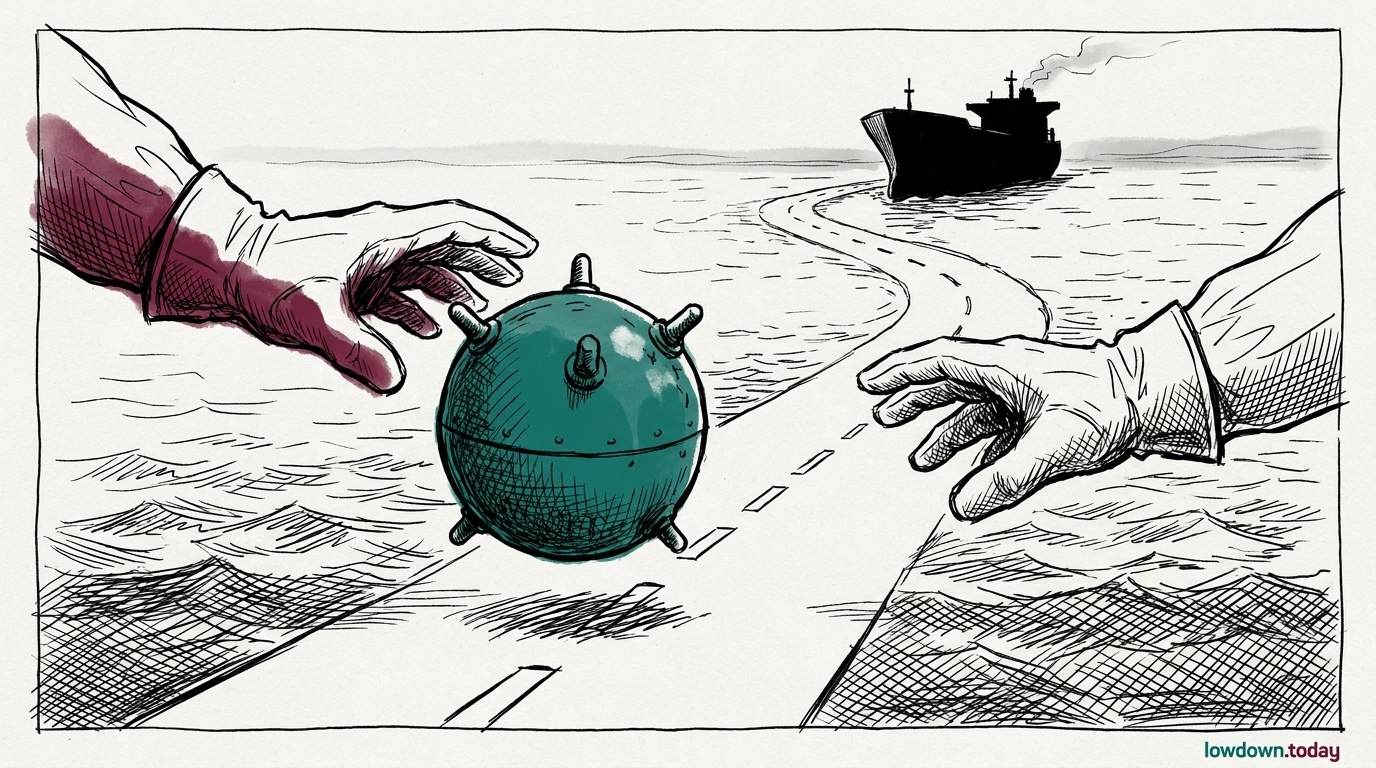
The Islamic Revolutionary Guard Corps told the Tehran-based wire Tasnim on 2 May that it is on 'full standby' for a return to hostilities and disclosed that roughly 60% of its small attack-boat fleet remains intact 1. The IRGC is Iran's ideological military, separate from the regular Artesh and tasked with revolutionary security; its small-boat flotilla is the harassment force that has worked the Strait of Hormuz since the opening days of the war. For 65 days the Guard has briefed only on operations, never on remaining capacity, so the survival figure marks Tehran's first wartime quantification of attrition.

Admiral Brad Cooper, the CENTCOM Commander, told reporters on 30 April that US operations had achieved a '100% halt' to Iran's seaborne economic trade . A halt of vessel intercepts is not a halt of the force that intercepts them, and the IRGC has made that distinction the basis of its negotiating posture. Roughly six in every ten of its asymmetric platforms still float; whatever ceasefire eventually arrives must price that residual capability in.

Tasnim, an IRGC-aligned outlet, ran the figure with no independent OSINT corroboration available; the precision of '60%' rather than 'most' or 'a majority' is itself the signal. Tehran is telling Washington, allies and Gulf insurers that the bargaining surface includes the standing capacity behind the 14-point text, alongside the text itself. The same logic explains the standby declaration: a force on declared standby raises the cost of any US escalation past the verbal threshold Trump set in his Florida pool spray. Together the announcement and the figure read as a single instrument of leverage delivered through state media rather than diplomatic cable.

Deep Analysis

In plain English

Iran's Revolutionary Guard, the military force that controls the Strait of Hormuz, announced on 2 May that it is on 'full standby' to resume fighting and that roughly 60% of its small fast-attack boat fleet survived the US-Israeli strikes since February. These small boats are the main tool the IRGC uses to threaten tankers and naval escorts in the narrow strait. The claim matters because the US military commander had said Iran's ability to conduct sea trade was 100% halted; the IRGC is saying its fighting capacity in the strait is far from finished.

Deep Analysis
Root Causes

The IRGC's structural doctrine after 1988 placed small attack boats in dispersed inland waterway staging areas and hardened coastal shelters, specifically to survive sustained US air campaign attrition.

By 2026, the fleet included craft storable in civilian boatyards and shallow-water inlets inaccessible to carrier-based strike aircraft. The 60% figure reflects the physical limitations of air-delivered munitions against targets designed to blend with civilian maritime infrastructure, more than any US decision to hold back.

The 'full standby' declaration is also an internal IRGC message: following the appointment of Mojtaba Khamenei under IRGC pressure and the organisation's operational sideline of the civilian government, the corps needs to demonstrate to its own rank and file that military leverage has not been surrendered in the ceasefire period.

What could happen next?
  • Risk

    If ceasefire talks collapse and the IRGC activates its surviving fleet, the 60% survival figure implies swarm capability sufficient to threaten CENTCOM escort vessels, not merely commercial tankers, representing a qualitative escalation risk above the pre-ceasefire intercept pattern.

  • Consequence

    The IRGC's public quantification of its own attrition directly undermines Admiral Cooper's '100% halt' claim before Congress, complicating the administration's ability to declare the blockade mission accomplished without IRGC capitulation.

First Reported In

Update #87 · China blocks OFAC; Iran writes; Trump tweets

Al Jazeera· 3 May 2026
Read original
Different Perspectives
China's foreign ministry
Spokesman Lin Jian rejected Treasury Secretary Scott Bessent's 25 August warning that Iranian oil buyers face an "economic D-Day", saying sanctions do not help and that Beijing would safeguard its own rights and interests. China's Iranian crude imports had already halved for unrelated reasons.
Iraq's government and Erbil authorities
Erbil authorities said 10 explosive-laden drones were shot down over the city on 1-2 September with no casualties. Iraq's government condemned the attacks without naming Iran as their source, and neither Washington nor Baghdad confirmed the IRGC's claim to have hit US bases there.
Bahrain Defence Force
The General Command said air defences intercepted several Iranian missiles and drones on 1-2 September and called the use of such weapons against civilians and private property a flagrant violation of international humanitarian law.
Kuwait's Fire Force and foreign ministry
KUNA reported a hostile Iranian drone struck a residential complex in Kuwait City on 2 September; Fire Force spokesman Brigadier General Mohammad Al-Gharib said losses were confined to property. Kuwait's foreign ministry called the attack a clear breach of its sovereignty.
Jordan's Armed Forces
Petra carried a statement that air defences intercepted eight missiles violating Jordanian airspace early on 31 August and 10 of 13 fired on 1 September. The statement named no target and did not address the IRGC's claim to have struck Camp Titin and killed US personnel.
CENTCOM
CENTCOM
CENTCOM's 1 September target list named IRGC air defence, radar, maritime and mine-laying sites in Iran but no tanker, after Axios reported anonymous officials describing a Trump-approved "tanker for tanker" drone policy. A CENTCOM spokesman declined to confirm the policy and referred questions to policymakers.