Skip to content
You can now search across every topic, entity and event.What's new
Iran Conflict 2026
3SEP

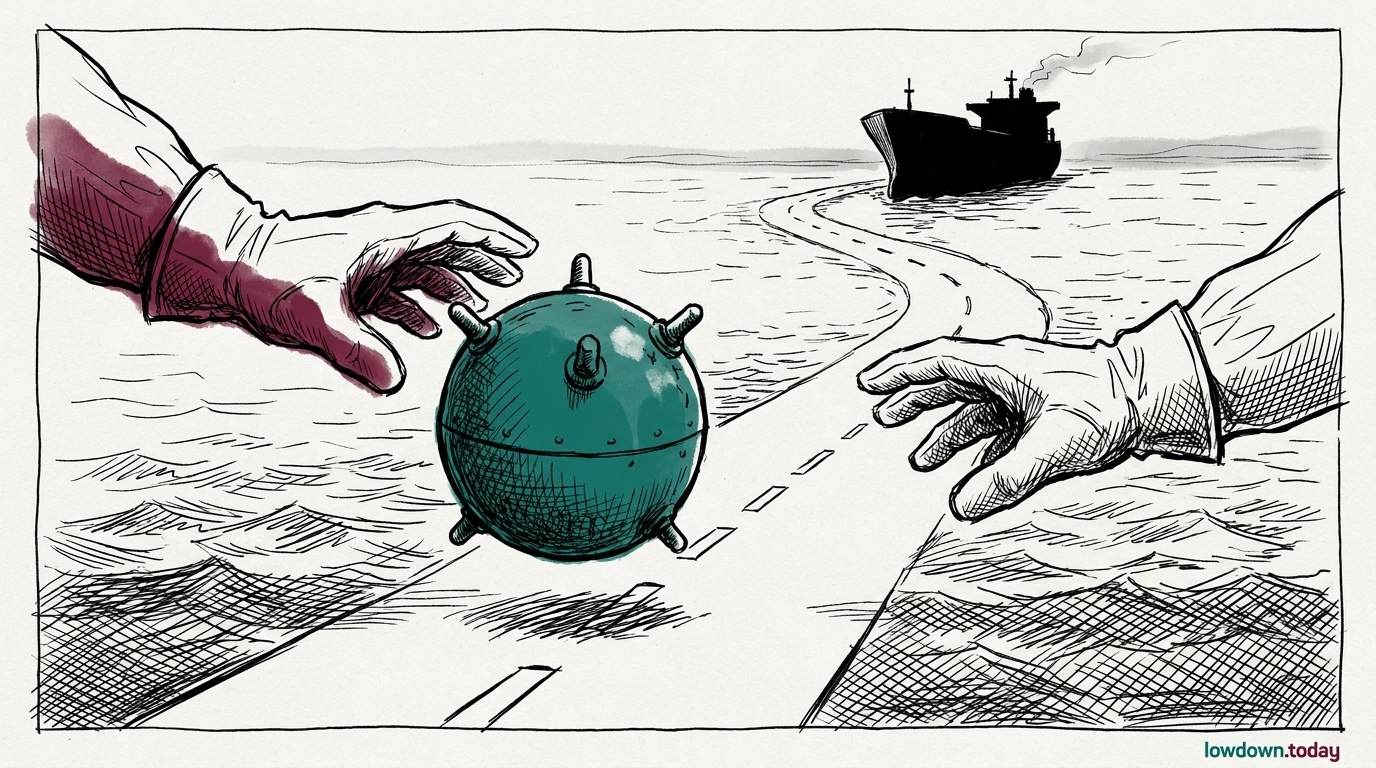
Hormuz toll system carried 20 transits per day before ceasefire

1 min read
16:40UTC

Eleven flag states had paid the toll to transit by 5 April; the ceasefire ratifies the operating model.

ConflictDeveloping
Key takeaway

The toll system Iran built was already running before the ceasefire; the ceasefire just labelled it.

The 20 daily transits across 11 flag states are the operational reality the ceasefire's 'coordinated passage' clause now ratifies. Iran's permanent customs authority over the strait, legislated in late March , turned out to be the architecture both sides have now signed onto.

The recovery from near-zero transits in late March to 20/day by 5 April happened through individual bilateral toll deals, not through any US enforcement action. Trump's Truth Social formulation that the US 'will be helping with the traffic buildup in the strait of Hormuz' aligns the rhetoric with the operating reality.

Deep Analysis

In plain English

Eleven countries had already been paying Iran for permission to send ships through the Strait of Hormuz before the ceasefire was signed. Twenty ships went through per day on 5 April, compared to about 138 a day before the war. The deal Trump just signed says Iran will keep doing exactly this for two weeks.

What could happen next?
  • Precedent

    The toll system is operating practice and now codified in the ceasefire.

First Reported In

Update #62 · Two victories, two different lists

Seatrade Maritime· 8 Apr 2026
Read original
Different Perspectives
China's foreign ministry
Spokesman Lin Jian rejected Treasury Secretary Scott Bessent's 25 August warning that Iranian oil buyers face an "economic D-Day", saying sanctions do not help and that Beijing would safeguard its own rights and interests. China's Iranian crude imports had already halved for unrelated reasons.
Iraq's government and Erbil authorities
Erbil authorities said 10 explosive-laden drones were shot down over the city on 1-2 September with no casualties. Iraq's government condemned the attacks without naming Iran as their source, and neither Washington nor Baghdad confirmed the IRGC's claim to have hit US bases there.
Bahrain Defence Force
The General Command said air defences intercepted several Iranian missiles and drones on 1-2 September and called the use of such weapons against civilians and private property a flagrant violation of international humanitarian law.
Kuwait's Fire Force and foreign ministry
KUNA reported a hostile Iranian drone struck a residential complex in Kuwait City on 2 September; Fire Force spokesman Brigadier General Mohammad Al-Gharib said losses were confined to property. Kuwait's foreign ministry called the attack a clear breach of its sovereignty.
Jordan's Armed Forces
Petra carried a statement that air defences intercepted eight missiles violating Jordanian airspace early on 31 August and 10 of 13 fired on 1 September. The statement named no target and did not address the IRGC's claim to have struck Camp Titin and killed US personnel.
CENTCOM
CENTCOM
CENTCOM's 1 September target list named IRGC air defence, radar, maritime and mine-laying sites in Iran but no tanker, after Axios reported anonymous officials describing a Trump-approved "tanker for tanker" drone policy. A CENTCOM spokesman declined to confirm the policy and referred questions to policymakers.