Skip to content
You can now search across every topic, entity and event.What's new
Iran Conflict 2026
20AUG

The August trap: three clocks, one week

4 min read
16:36UTC

General License X expires on 21 August, the Persian Gulf Strait Authority starts charging Hormuz fees around 17 August, and Iran's dollar-free payment corridor finishes Stage 3 the same month.

ConflictAssessed
Key takeaway

Iran's relief window is the exact window it uses to make sanctions optional.

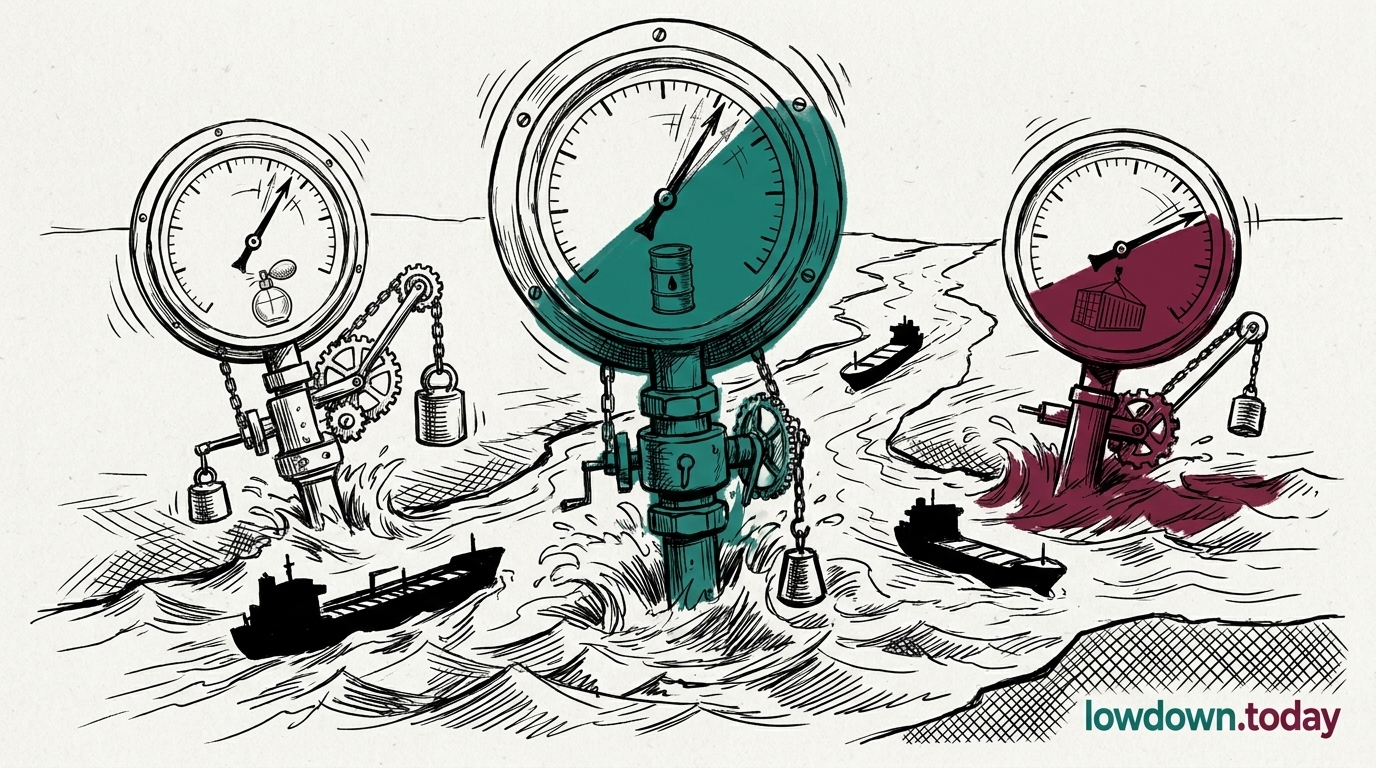
General License X expires on 21 August 2026, four days after the Persian Gulf Strait Authority (PGSA) begins charging Hormuz transit fees around 17 August . The PGSA is the IRGC body that controls strait access. A third clock lands in the same week: Shetab-Mir, Iran's dollar-independent payment corridor built with Moscow, is set to finish its third integration stage around August . Three deadlines set by three different actors fall within four days of each other.

Read the sequence as a mechanism. The 60-day relief window is precisely the window in which Iran completes the infrastructure that makes the next round of sanctions survivable. If the nuclear sub-talks fail by mid-August, the licence expires, the oil sanctions GL X just lifted snap back automatically, the PGSA starts billing every transit as IRGC revenue, and Iran's payment rails are live just as the dollar squeeze returns.

Two of these clocks are not this desk's to read. The freight and fee economics of a fee-charged, dark-corridor Hormuz belong to the European oil desk. So does the parallel sanctions track: Shetab-Mir is an Iran-Russia build, and GL X's amendment of the Russia-related General License 134 ties this licence to Moscow's sanctions story, which the Russia-ukraine desk owns. Lowdown reads the convergence for what it does to the deal's credibility. The MOU's 60-day nuclear window was meant to be a deadline for Iran; tied to a payment-rails completion date, it becomes a deadline for Washington's leverage instead.

Deep Analysis

In plain English

Three different deadlines all land in the third week of August, and each one matters. First, the US oil-sanctions permission slip expires on 21 August. Second, Iran's Revolutionary Guard has set around 17 August as when ships crossing the Strait of Hormuz must start paying mandatory transit fees. Third, Iran is finishing the last stage of a joint payment system with Russia, called Shetab-Mir, that lets them move money without using US dollars at all. The striking thing is the timing: the 60-day period Washington gave Iran to sell oil is almost exactly the period Iran needs to finish building the financial plumbing that makes future US sanctions less painful. Whether that overlap is coincidence or calculation is disputed, but the effect is the same.

Deep Analysis
Root Causes

The three-clock convergence in August reflects Iran's deliberate use of the ceasefire's diplomatic bandwidth to advance its infrastructure while the other side's attention is on the nuclear and Lebanon files.

The PGSA fee schedule, reserved from around 17 August, was publicly announced by the IRGC on 20 June , two days before GL X was issued. Iran did not suspend or delay the PGSA timeline when GL X arrived, confirming that the fee structure and the oil-relief licence are parallel, not competing, tracks. Iran earns from the PGSA whether or not GL X continues; GL X earns Iran an additional revenue stream without displacing it.

Shetab-Mir's Stage 3 timeline, confirmed by Central Bank Governor Hemmati in Moscow on 16 June , predates GL X by six days. The payment infrastructure was already on a fixed August schedule that GL X did not accelerate or change. Washington issued the relief instrument without conditioning it on a pause or extension of Shetab-Mir integration, meaning the 60-day window simultaneously provides dollar revenue today and dollar-independent infrastructure for tomorrow.

What could happen next?
  • Risk

    The 60-day window gives Iran time to complete Shetab-Mir Stage 3, making a GL X snap-back on 21 August less economically damaging to Tehran than the original sanctions regime.

    Short term · Assessed
  • Consequence

    PGSA mandatory fees beginning around 17 August convert a military-controlled transit point into a permanent IRGC revenue instrument, regardless of what happens to GL X or nuclear talks.

    Medium term · Reported
  • Meaning

    The three-clock convergence signals that Iran is treating the 60-day window as infrastructure time, not compliance time, which changes the incentive structure for any GL X renewal negotiation.

    Immediate · Assessed
First Reported In

Update #136 · Trump's first Iran paper is an oil licence

OFAC/US Treasury· 23 Jun 2026
Read original
Different Perspectives
UK Maritime Trade Operations
UKMTO logged six armed men boarding a tanker 136 nautical miles east of Al Mukalla on 20 August and redirecting it toward Somalia. A vessel steered toward the Somali coast reads as an attempted seizure, a distinct hazard from the stand-off strikes the same lane has seen before.
Mohammad Bagher Ghalibaf
Iran's Majlis speaker received Iraq's Hormuz carve-out request in Baghdad on 19 August, a request that treats passage as Tehran's to grant. Ghalibaf's authority over that grant sits alongside the Revolutionary Guard's separate transit rules, which have moved independently of Iran's foreign ministry before.
Haibat al-Halbousi
Haibat al-Halbousi
Iraq's parliament speaker asked Iran for special consideration on Iraqi Hormuz oil exports during Ghalibaf's 19 August Baghdad visit. Iraq presses the request from a weak position: Iran's central bank is simultaneously demanding Baghdad release Iranian reserves parked in Iraqi accounts.
Federal Department of Economic Affairs, Education and Research
Switzerland's economics ministry updated the Article 21 forms governing lawful Iran money transfers on 19 August, with only the revised forms accepted from 26 August. Bern operates one of the few remaining legal Iran payment channels and has just set a hard cutover on its control point.
Motegi Toshimitsu
Motegi Toshimitsu
Japan's foreign minister said in Muscat on 20 August that Tokyo wants closer coordination with Oman on safe Hormuz and Bab el-Mandeb passage. Japan has no naval presence of its own in the strait, so it is routing the ask through the state negotiating with Iran instead.
Badr bin Hamad Al Busaidi
Oman's foreign minister joined Japan's in Muscat on 20 August to call for intensified coordination on Hormuz and Bab el-Mandeb navigation. Oman also runs the mediation track with Tehran, so the appeal travels through the same channel as the negotiation.