Skip to content
You can now search across every topic, entity and event.What's new
Iran Conflict 2026
7AUG

Iran claims and denies the same drone

2 min read
12:08UTC

Two Iranian officials told the New York Times the Damietta drone was Tehran's, meant to show it can disrupt energy supply. Araghchi calls the same attack an Israeli false flag.

ConflictDeveloping
Key takeaway

Tehran briefed the threat anonymously and denied it publicly, keeping the signal and the deniability.

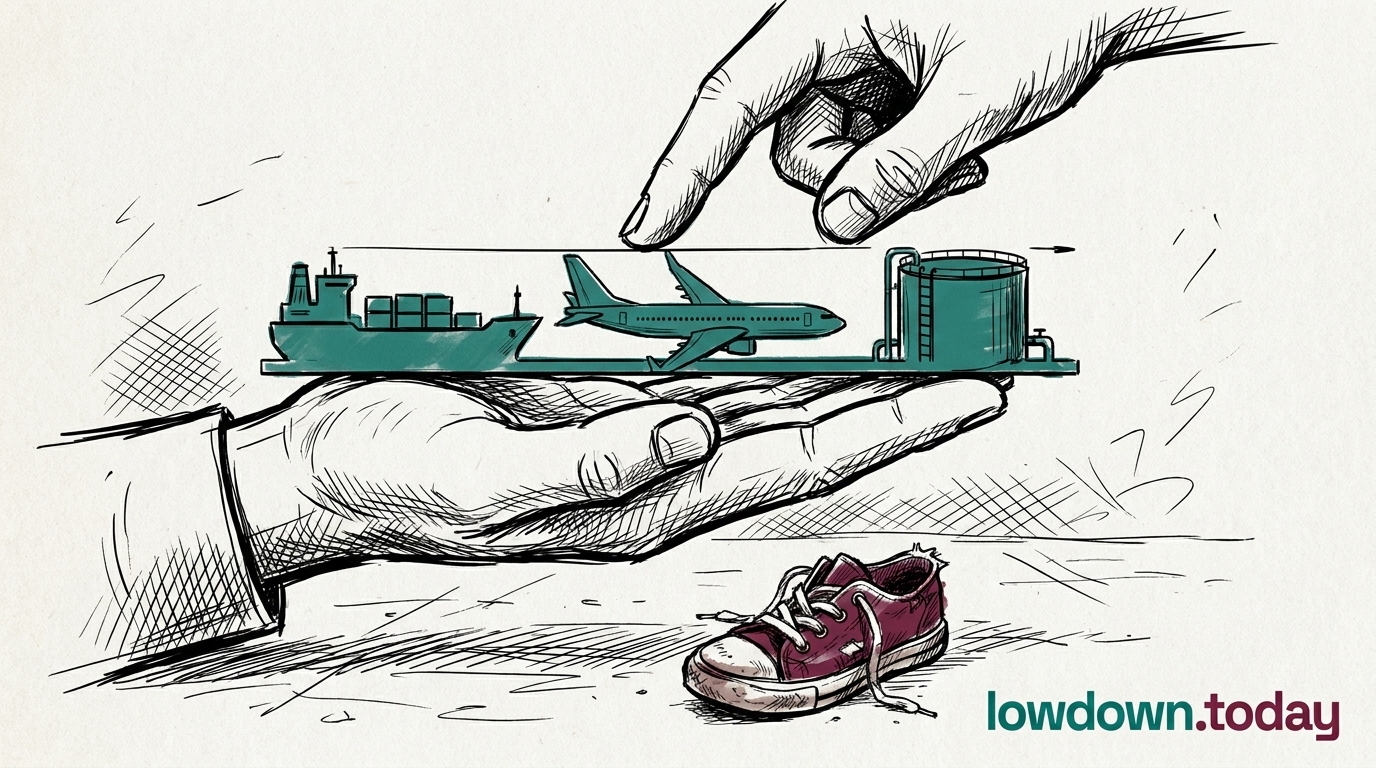
Two Iranian officials told the New York Times that the 29 July drone strike on the floating storage and regasification unit Energos Winter at Egypt's Damietta port used Iranian drones, and was meant to demonstrate Tehran's ability to disrupt shipping and energy supply 1. They spoke anonymously and did not say whether Iran flew the drone or a proxy did. Foreign Minister Abbas Araghchi, on the record, calls the same attack an Israeli false flag 2.

The strike itself is already on this record: a drone hit the American-owned vessel at the Mediterranean port in the afternoon of 29 July and fire spread to a second gas carrier alongside it . What is new is that an Iranian source of any kind has been attached to it, and that the attachment arrived alongside an official denial rather than instead of one.

That pairing carries a commercial price. War-risk cover, the premium a shipowner pays to insure a hull sailing into a conflict zone, is priced off patterns, and the Houthis, the Yemeni movement attacking Red Sea shipping through this war, move premiums by announcing in advance what they intend to hit. Underwriters can model a stated rule. An unclaimed drone on the Suez approach gives them damage with no rule behind it, and an unpriceable risk costs more than a declared one.

Both accounts may survive scrutiny. Two unnamed officials briefing a newspaper are not the Iranian state admitting anything, and Cairo has named no author. No government has published debris analysis, which leaves Araghchi's denial untested against physical evidence.


Deep Analysis

In plain English

A drone hit an American-owned gas ship, the Energos Winter, at the Egyptian port of Damietta on 29 July. Nobody officially claimed it. Now two unnamed Iranian officials have told the New York Times that Iran's own drones did it, meant to show Iran can hit shipping and energy targets. But Iran's foreign minister, on the record, says Israel faked the attack to look like Iran did it. Both cannot be Iran's real position. Egypt has named no author, and its cabinet says it will report findings only once the investigation ends.

Deep Analysis
Root Causes

War-risk insurance premiums are set against a known author, since underwriters price the pattern of who has attacked what before, and the Houthis have moved Red Sea premiums for years by publicly claiming targets in advance.

An attack with two competing authorship claims from the same government, an anonymous briefing plus an on-the-record denial, gives underwriters no rule to price against, which structurally does more damage to Gulf and Mediterranean shipping costs than a single claimed strike would.

Escalation

Ambiguous rather than escalatory or de-escalatory on its own: an anonymous claim paired with an official denial reads as a deliberate hedge, keeping the option to escalate further open without committing to it.

What could happen next?
  • Risk

    Insurers may raise war-risk premiums for vessels near Damietta and the Suez approach precisely because no accepted author exists to price against.

    Short term · Reported
  • Meaning

    An anonymous claim paired with an on-the-record denial functions as a hedged signal, reaching Washington and Cairo without Tehran accepting formal responsibility.

    Immediate · Reported
  • Precedent

    If unresolved, the Damietta strike would join Abqaiq and Nord Stream as attacks whose authorship never becomes an accepted fact.

    Long term · Suggested
First Reported In

Update #165 · Gulf capitals talk Trump out of a strike

Times of Israel· 3 Aug 2026
Read original
Causes and effects
This Event
Iran claims and denies the same drone
A capability signal briefed anonymously and disowned publicly delivers the threat while leaving Tehran nothing to answer for.
Different Perspectives
Turkiye
Turkiye
Erdogan followed the Pakistani delegation to Jeddah for an instrument that has not been signed. Ankara's entry widens Saudi Arabia's defence architecture beyond the existing Pakistan pact, adding a second non-Gulf military partner mid-conflict.
Oman
Oman
Muscat is the corridor's broker but has published nothing about the arrangement Fars describes on its behalf. The account leaves Oman administering outbound traffic only, a narrower role than the shared route its mediation has rested on since 1979.
Pakistan
Pakistan
Islamabad sent Sharif, Munir and Dar to Jeddah to widen a defence commitment it has honoured in cheaper registers since March, when Dar invoked the Saudi mutual defence pact. Jeddah tests whether that hedge becomes a binding trilateral instrument with Turkiye.
United States
United States
Washington rejected the Majlis Hormuz bill outright while CENTCOM's own tally kept climbing to 49 vessels redirected since 14 July. Both instruments tightened in the same week Trump promised the strait would reopen soon.
Iran
Iran
Iran's foreign ministry is selling a phased Hormuz corridor through Oman and denying any percentage cargo tariff, while its own Majlis is legislating fines to 20% and a bar on Israeli-linked cargo. The two accounts, from the same government, do not agree with each other.
Saudi Arabia
Saudi Arabia
Riyadh published a target forecast, not an attribution, for the campaign it says the Najran strike previewed. That keeps an Article 51 case available while it formalises a trilateral defence architecture with Pakistan and Turkiye.



