Skip to content
Welcome, thoughtbot's Giant Robots listeners!Start here
Iran Conflict 2026
7AUG

Hormuz logged two ships, not 94

3 min read
12:08UTC

Two ships transited the Strait of Hormuz across 15-16 June, against a pre-war rate of 94 a day. The memorandum promises a full reopening on Friday, yet not one major operator has routed a tanker through on the strength of it.

ConflictDeveloping
Key takeaway

Markets are pricing the gap between the signed deal and a moving tanker, not the deal itself.

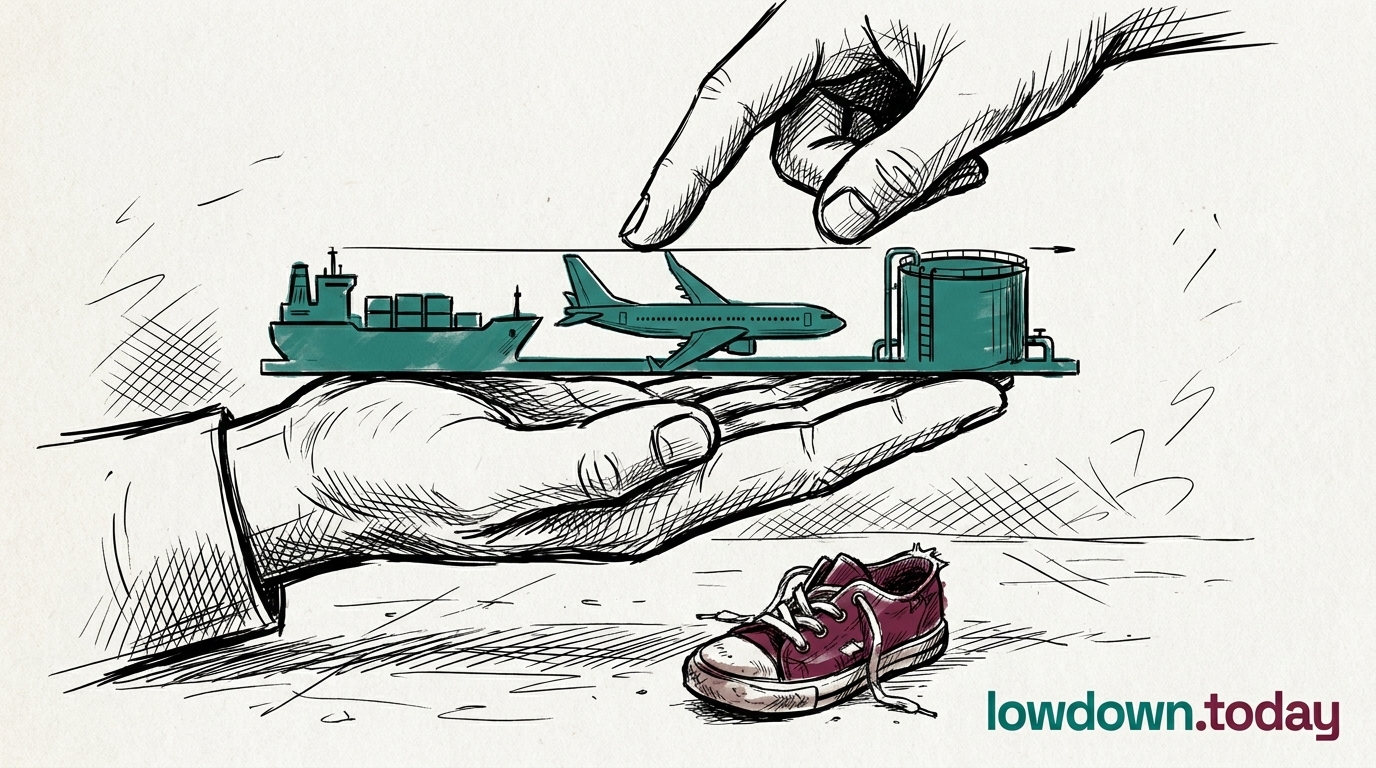
Two ships transited the Strait of Hormuz across 15-16 June, the 33-kilometre Gulf chokepoint that carries about a fifth of the world's seaborne oil.⁠1 Before the war the strait handled roughly 94 vessels a day. The newly signed memorandum promises a full reopening when the deal is formalised in Geneva on Friday, yet no major operator has sent a tanker through on the strength of it.

Underwriters, not nerves, keep the tankers in port. Protection-and-indemnity clubs, the mutual insurers that cover a vessel's third-party liability, will not underwrite a Hormuz crossing while the IRGC, Iran's Islamic Revolutionary Guard Corps, still runs the toll authority it set up on 5 May and has refused to dissolve. Iran reasserted its sovereignty over the strait and its right to charge for passage the day of the signing, so the clubs have no security grounds to reinstate cover. Without cover, no major charterer sails. Jotaro Tamura, a shipping executive quoted by the Financial Times, said operators will wait weeks until conditions change "on the water".⁠2

Brent Crude settled near $83.61, down a further 4.3 per cent and below the two-month low it had already reached when the deal first looked probable. That is not a peace dividend. Traders are pricing the distance between signed paper and a moving tanker, discounting the chance that Friday produces actual flows rather than a ceremony. Lower crude eases fuel costs for importers, but with the toll authority intact and the underwriting absent, the relief rests on cargoes no one will yet insure.

Deep Analysis

In plain English

the strait of Hormuz is a narrow waterway between Iran and Oman through which roughly one-fifth of the world's oil travels. Before the war, about 94 ships passed through each day. On 15-16 June, only two did. Shipping companies cannot send a vessel worth hundreds of millions of pounds into the strait without insurance covering seizure or damage. Protection-and-indemnity clubs, which cover almost all large cargo ships, have refused to write that cover since March. The major insurance clubs, which together cover almost all big cargo ships, will not write that cover while Iran's military still controls the waterway and there is no written, legally binding safety framework. A signed-but-unpublished diplomatic document does not change that. Until the insurance question is resolved, oil tankers will wait outside regardless of what politicians announce.

Deep Analysis
Root Causes

P&I cover for Hormuz transits ceased because two separate legal conditions remain unmet. First, Lloyd's Joint Hull Committee guidance, circulated on 19 May 2026, requires either a written rules-of-engagement document from the 26-nation coalition or a published PGSA (Persian Gulf Strait Authority) transit framework before the market will price the route.

Neither exists. Second, the IRGC's Persian Gulf Strait Authority, created 5 May, has registered zero commercial vessels; the MOU does not dissolve the PGSA, meaning the authority that P&I clubs treat as an extortion mechanism remains operational on the day of the signing.

The market's assessment is therefore that paper diplomacy has not changed the operational facts: the IRGC can still board, delay or seize vessels in Iranian territorial waters, and no insurer has indemnity protection against that outcome.

What could happen next?
  • Consequence

    P&I clubs will not restore cover until either a UN Security Council resolution or a published government certification of safe transit exists, conditions that neither the MOU nor the Geneva ceremony address.

    Short term · Assessed
  • Risk

    If a vessel transits without P&I cover and is seized or damaged, the resulting uninsured loss falls on the ship owner directly; no government indemnity mechanism currently exists.

    Immediate · Assessed
  • Opportunity

    Iranian crude re-entering the market at full pre-war volume would release approximately 1.5 million barrels per day, worth roughly $4-5 per barrel on the Brent price, if Hormuz fully reopens within a 60-day window.

    Medium term · Suggested
First Reported In

Update #129 · Iran deal signed, but no paper to show

Financial Times· 16 Jun 2026
Read original →
Different Perspectives
Office for Budget Responsibility
The OBR's 28 October forecast assumed $82 oil for 2026 and 2027, from market prices for the ten working days to 19 August, and blamed dearer wholesale energy on the war without naming Iran. It expects CPI inflation close to 4% in early 2027 even at that price.
Hengaw, Kurdish rights group
Hengaw reported the 3 November hangings of Amirhossein Maleki and Amirhossein Ebrahimi in Isfahan, saying Ebrahimi was tortured into confessing and that nine of 12 people sentenced to death in the case have now been hanged. Iran's judiciary holds that the defendants killed members of the security forces.
FINTRAC, Canada's financial intelligence unit
FINTRAC worked with the US Treasury on the 6 November designation of eight money services businesses in British Columbia, Ontario and Quebec. Treasury says the businesses still operate, some under new names, so closing them falls to Ottawa.
Abdul Qadir al-Dakhil, Governor of Nineveh
Al-Dakhil cancelled three Mosul International Airport contracts on 7 November over alleged links to armed groups, after meeting Prime Minister Ali al-Zaidi in Baghdad. He named no group or company, and said the contracts will go to international companies.
Kuwait
Kuwait
Kuwait condemned the Houthi missile fired towards the Madinah region on 5 November and restated its support for Saudi Arabia, the Qatar News Agency reported. Its state tanker company, Kuwait Oil Tankers Company, is among the Gulf state fleets on Iran's expanded Hormuz list.
Scott Bessent, US Treasury Secretary
Treasury designated an alleged Chandigarh false-flag network on 4 November and eight Canadian exchangers on 6 November, while State sanctioned alleged MANPADS intermediaries. None of the actions touches an oil buyer; they target the paper, cash and procurement around Iran's trade.

Written with AI from Lowdown's published reporting. Not individually reviewed by an editor. Editorial standards.
