Skip to content
You can now search across every topic, entity and event.What's new
Iran Conflict 2026
31JUL

Zelenskyy confirms 3,000 km drone range

2 min read
09:24UTC

Volodymyr Zelenskyy confirmed on 21 June that Ukrainian drones now reach 3,000 km, placing Russia's Siberian oil heartland inside the strike map for the first time.

ConflictDeveloping
Key takeaway

A confirmed 3,000 km drone range puts most of Russia's refining map within reach.

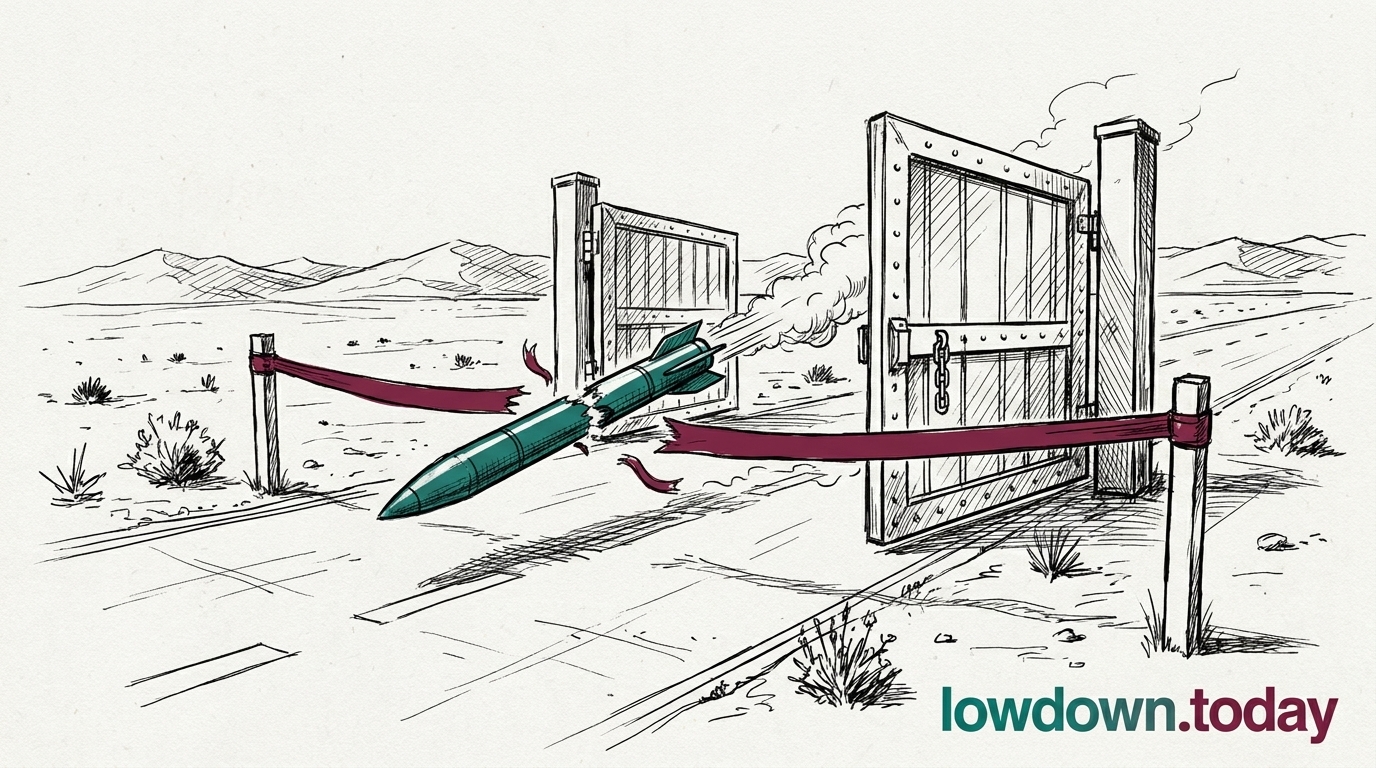
Volodymyr Zelenskyy confirmed on 21 June that Ukrainian drones now have an operational range of 3,000 km 1. The Ukrainian president made the statement in Kyiv days after Ukraine's drones reached the Tyumen refinery in western Siberia , and it reframes that attack from a single feat into a repeatable capability.

Range changes the arithmetic of defence. A one-off strike forces a one-off response; a confirmed 3,000 km reach forces Russia to assume every plant inside that radius is a target every night. The figure puts assets across the Urals and into Siberia within the envelope, the very depth that had let those refineries run without serious air cover. Defending a 3,000 km arc with the interceptor stock Russia has is a different problem from defending the front.

For ordinary Russians the announcement lands as a forecast, not a headline. Refineries that fed regional forecourts undisturbed now carry strike risk, and that risk is what turns scattered queues into the kind of sustained shortage no single plant loss explains. Zelenskyy has put a number on how much of Russia's refining map is now contestable, and the number is most of it.


Deep Analysis

In plain English

On 21 June, Ukraine's President Zelenskyy publicly confirmed that Ukrainian drones can now fly up to 3,000 km. That is roughly the distance from Paris to Tehran, or from London to the Ural Mountains. The day before, a Ukrainian drone had hit a refinery about 2,000 km from Ukraine to prove the point. This matters because Russia has oil refineries, military bases, and industrial plants spread across a vast country. Russia assumed most of that country was safe from Ukrainian attack. The 3,000 km range means the safe zone has shrunk dramatically: targets well into Siberia are now theoretically reachable.

Deep Analysis
Root Causes

Ukraine's drone development programme, run through the Ministry of Digital Transformation and private defence firms since 2022, was structurally shaped by Western weapons restrictions.

Because long-range Western systems were withheld or provided in limited quantities, Ukrainian engineers built indigenous designs capable of deep penetration. The 3,000 km range published on 21 June is the product of four years of constrained innovation: each prior range threshold (500 km, 1,000 km, 1,500 km) was successively broken as propulsion, guidance, and fuel-load engineering matured under wartime pressure.

Escalation

This announcement represents a doctrinal escalation: by publicly confirming the range, Zelenskyy converts a one-off capability demonstration into an explicit threat. This will compel Russian air-defence resource reallocation and may change the economics of operating large fixed plants in the newly exposed zone.

What could happen next?
  • Consequence

    Russia must now treat all fixed installations within 3,000 km of Ukraine as potentially targetable, forcing air-defence resource allocation decisions across a much larger geographic area.

    Immediate · Assessed
  • Risk

    Public confirmation of the 3,000 km range creates a deterrence signal that may provoke Russian escalation in other domains as a counter-message.

    Short term · Reported
  • Opportunity

    Ukraine can now credibly threaten the full range of Russia's Siberian energy infrastructure in negotiations or as leverage for future weapons transfers from Western partners.

    Medium term · Reported
First Reported In

Update #21 · Ukraine's drones reach Russia's petrol pumps

bne IntelliNews· 24 Jun 2026
Read original
Causes and effects
This Event
Zelenskyy confirms 3,000 km drone range
A confirmed 3,000 km range converts one-off deep strikes into a standing threat against refineries Russia had treated as permanently safe.
Different Perspectives
Shipping and insurance underwriters
Underwriters can price Houthi strikes because the group announces its targets, but an unclaimed drone at Damietta and a mandatory Iranian insurance scheme both deny them a pattern to price against. War-risk premiums are increasingly being set by the absence of a claimant, not the scale of the damage.
Jordan
Jordan
Azraq absorbed its fourth Iranian strike in seven weeks, again drawing no direct Jordanian retaliation, only an American one. Amman's exposure, hosting US basing without the Patriot density of Gulf allies, has not changed even as the war around it widens.
Houthi movement
Houthi movement
The Houthis' 20 July blockade of Saudi-linked shipping is the injury Riyadh's new 43-nation coalition directly answers, yet the group itself was never asked to join and remains outside every proposal on the table. Sanaa-aligned commentators call the coalition a paper reassurance for insurers rather than a deployable force.
Egypt's Cabinet
Egypt's Cabinet
Egypt confirmed the Damietta blaze was an attack, not an accident, on soil the war had never touched before. Cairo now faces an unclaimed threat to a facility supplying roughly 7% of its domestic gas, with no author to hold accountable and no pattern yet to defend against.
Oman
Oman
Muscat is running the only channel Iran will use, a voluntary Hormuz fee modelled on Malacca, but stayed out of Saudi Arabia's new naval coalition entirely. Oman's mediating leverage depends on treating Hormuz as shared and non-exclusive, the opposite of what Tehran is now demanding of it.
Iraq's Prime Minister
Al-Zaidi cancelled his first official Riyadh visit and convened the Coordination Framework, the coalition that keeps him in power and whose factions sit inside the PMF that Saudi jets just struck. He is caught between a five-year Saudi investment relationship and armed groups inside his own state he does not fully control.



