Skip to content
Welcome, thoughtbot's Giant Robots listeners!Start here
Iran Conflict 2026
31JUL

North Korean rockets on Russian robots

2 min read
09:24UTC

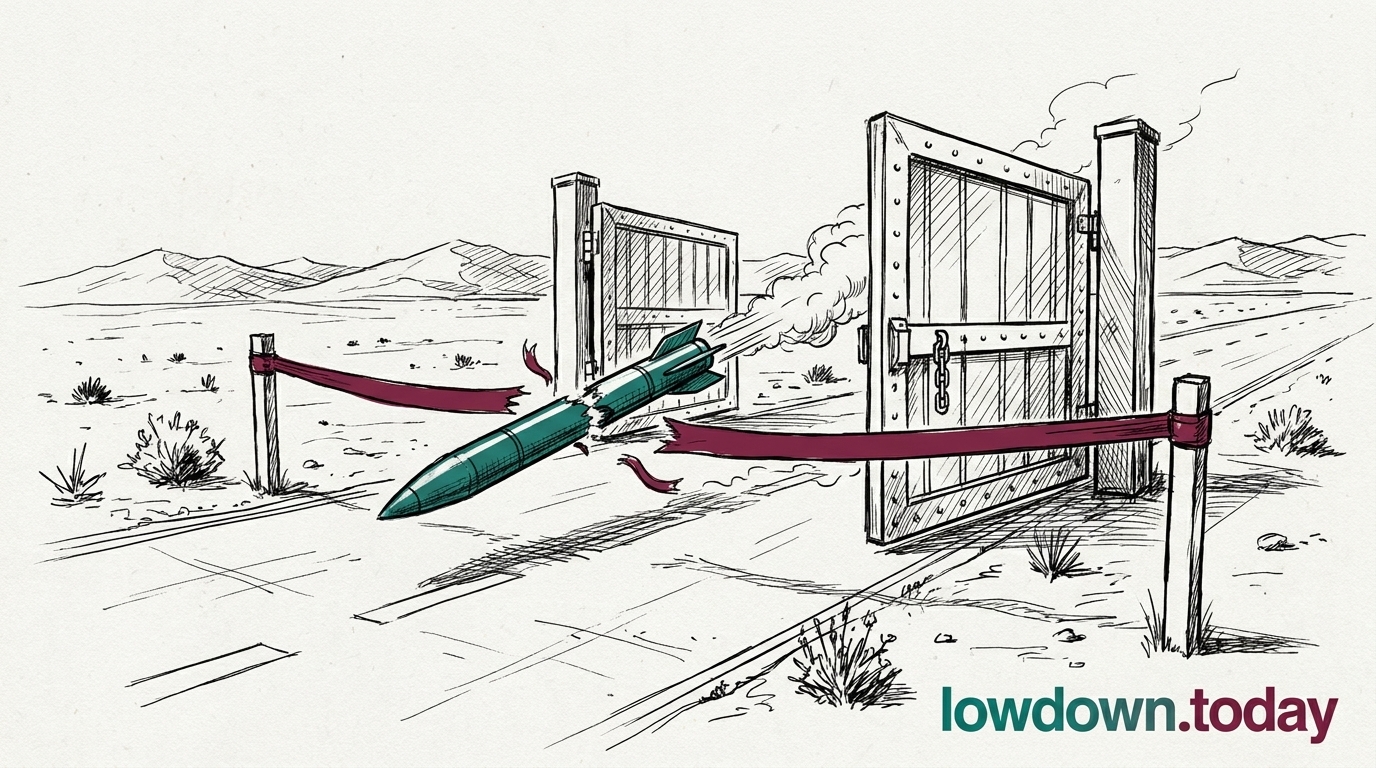
ISW reported on 7 June the first sighting of North Korean Type-75 rocket artillery mounted on Russian unmanned ground vehicles in the Kharkiv direction.

ConflictDeveloping
Key takeaway

Russia mounted North Korean Type-75 rockets on crewless robots near Kharkiv, a first for DPRK artillery.

The Institute for the Study of War (ISW), a Washington think tank, reported on 7 June the first sighting of North Korean Type-75 107mm MLRS (multiple-launch rocket systems) mounted on Russian UGVs (Unmanned Ground Vehicles) in the Kharkiv direction⁠1. It is the first combat integration of DPRK (Democratic People's Republic of Korea) rocket artillery onto an autonomous platform.

The Type-75 is a North Korean copy of China's Type-63 launcher. The NRTK Kurier and Impulse robot vehicles add electric-drive aiming so the rockets can be laid remotely, putting a crewless launcher closer to Ukrainian positions than a manned vehicle would risk.

The sighting marks a new stage in the Pyongyang-Moscow supply line. North Korea has already sent Russia manpower and munitions, and Ukraine struck back at that pipeline directly in May, killing 65 drone cadets at a training facility. Mounting DPRK rockets on autonomous platforms turns a manpower contribution into a remote-fire capability that needs fewer of the troops Ukraine has been targeting.


Deep Analysis

In plain English

A UGV (unmanned ground vehicle) is a crewless, remotely controlled robot that can carry weapons. Russia has been testing these on the battlefield, because a robot can advance under fire where a soldier would die. The Type-75 is a North Korean rocket launcher, similar to a truck-mounted multi-barrel rocket system, but derived from a 1960s Chinese design. Putting North Korean rockets onto a Russian robot means a remote operator can fire a barrage of rockets without exposing any crew. ISW, a Washington-based think tank that tracks the war daily, confirmed the first sighting of this combination near Kharkiv on 7 June. The significance is the integration: two separate military supply chains, one from Pyongyang and one from Russian robotics firms, have been combined into a single weapons system.

Deep Analysis
Root Causes

North Korea began supplying Russia with artillery shells in late 2022 and escalated to troop deployments in late 2024. The Type-75 MLRS transfer is the next step in a deepening DPRK-Russia defence supply relationship that exchanges Russian technology and economic relief for North Korean munitions and manpower.

Russia's UGV development accelerated after its infantry-assault attrition rates became untenable in 2024; the Kurier and Impulse platforms are part of a broader effort to substitute machines for soldiers in breach-and-clear roles.

Escalation

The Type-75 UGV combination is an escalation in the Russia-DPRK arms axis rather than on the Ukraine front line directly. If it proves effective, it creates a template for mounting other DPRK weapons on Russian platforms, deepening the two countries' military integration in ways that will concern Seoul and Tokyo.

What could happen next?
  • Consequence

    Ukraine's electronic-warfare units near Kharkiv must now counter remote-fire rocket platforms in addition to infantry-operated ones, expanding the countermeasure burden.

  • Precedent

    First combat integration of DPRK rocket artillery on autonomous ground platforms creates a template Russia can replicate with other North Korean weapons systems.

First Reported In

Update #19 · Ukraine burns the Baltic Fleet at Kronstadt

Institute for the Study of War· 9 Jun 2026
Read original →
Causes and effects
This Event
North Korean rockets on Russian robots
It is the first combat integration of DPRK rocket artillery onto an autonomous platform, letting a crewless launcher edge toward Ukrainian lines without risking a crew.
Different Perspectives
United States (Joint Maritime Information Center)
The JMIC, the US-led naval reporting cell, rated the Hormuz threat "severe" in its 25 October advisory, as reported by gCaptain, and warned of possible renewed mining. Eight days earlier it found no substantiation for the Guards' mine claims, while US-facilitated transits ran at about 34 a day.
United Kingdom (CPS and Counter Terrorism Policing)
The CPS charged two men under the National Security Act 2023 over the RAF Fairford incident, and Counter Terrorism Policing said it believes the foreign intelligence service involved is Iran's, LBC reported. The case now runs through the courts; both men are charged, not convicted.
Aden and Yemen's recognised government
The Houthis told people to leave Aden airport, in the government-held south, before a missile fell there on 28 October, AFP reported, and police reported a second attack that afternoon. The fight between Riyadh and the Houthis is landing on the south's main civilian airport.
Qatar (mediators)
Qatar (mediators)
Qatar-led mediators put new terms to Iran this week, which an Iranian official called "ideas, not a proposal". Riyadh framed the Tehran meeting as support for Qatari and Pakistani mediation, keeping Doha at the centre of the indirect channel.
Korea Shipowners' Association
The association said the ships Iran listed were sub-chartered to an overseas oil company, not owned by Sinokor, carried no South Korean crew, and that Sinokor was unaware of the warning. South Korea's shipowners are contesting whose vessels the notice covers before it takes effect.
Kuwait (foreign ministry)
Kuwait summoned Iran's ambassador, Mohammad Toutounji, and handed him a protest note over the embassy's denial that its citizen took part in the alleged plot against Interior Minister Fahad Al-Yousef. Kuwait is answering through its courts and a diplomatic protest, citing international law and the UN Charter.

Written with AI from Lowdown's published reporting. Not individually reviewed by an editor. Editorial standards.