Skip to content
Welcome, thoughtbot's Giant Robots listeners!Start here
Iran Conflict 2026
31JUL

Navy says it cleared two Hormuz lanes

2 min read
09:24UTC

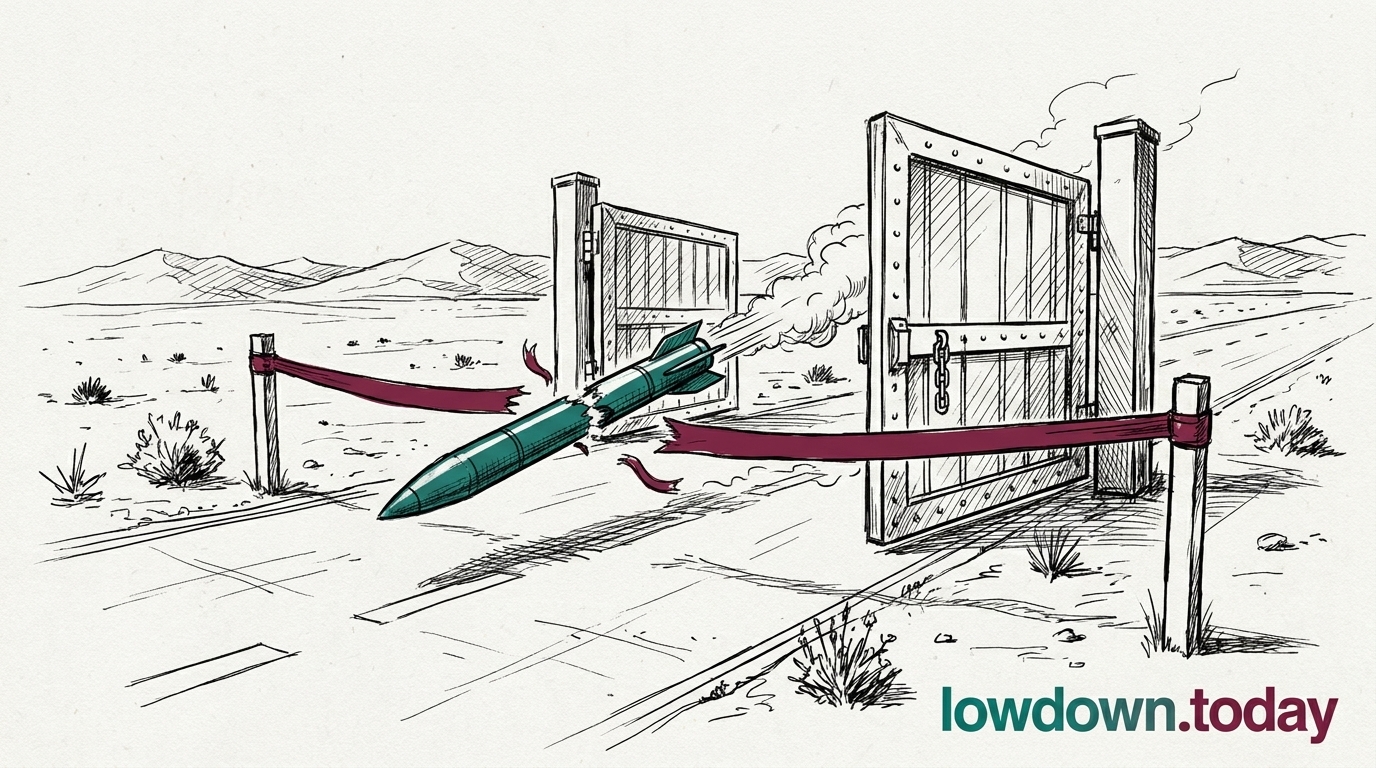
Admiral Brad Cooper said Navy divers, SEALs and aircraft from four services removed Revolutionary Guard mines from two Strait of Hormuz transit routes. He gave no total for the mines removed.

ConflictDeveloping
Key takeaway

Cooper declared two Hormuz routes clear without publishing a mine count or a survey.

Admiral Brad Cooper, commander of US Central Command (CENTCOM), the American military command responsible for the Middle East, said on Friday 28 August that Navy divers, Navy SEALs and aircraft drawn from four services had cleared mines from two transit routes in the Strait of Hormuz. The mines were laid in the spring by the Islamic Revolutionary Guard Corps (IRGC), Iran's parallel armed force, which answers to the Supreme Leader rather than to the defence ministry. "The circumstances were challenging and dangerous, to say the least, but we got the job done," Cooper said⁠1.

Cooper's announcement withholds the operational detail. It carries no count of mines removed or disabled, no account of how they were laid, no chart of the two routes and no date on which the sweep began. CENTCOM has run an escort corridor through this water since early May, and the region has been building around the risk it manages: DP World accelerated Fujairah port facilities designed to bypass the strait altogether.

Iran can seed a channel far faster than the US Navy can sweep it, and that ratio is the weapon. A small boat does the laying overnight; clearing the same water needs purpose-built hulls, divers in the water and days of methodical search. Iran leaned on that asymmetry through the 1987-88 Tanker War, when American reflagging and convoy escort ran alongside repeated re-mining and the strait never actually closed. Escorting does not clear water, and clearing water does not keep it clear.

Tehran has already converted the strait's condition into a financial claim, demanding compensation running to trillions of dollars for coastline damage. A route the US Navy declares clear and Iran declares mined is a route both governments can price.


Deep Analysis

In plain English

The US Navy says it swept two shipping lanes through the strait of Hormuz, the narrow waterway between Iran and Oman that a large share of the world's seaborne oil passes through. Divers, Navy SEALs and aircraft searched for and removed mines that Iran had laid. "Cleared" describes a single search, not a permanent guarantee. Nobody outside the US Navy has published proof the routes stayed clear, which matters to anyone whose fuel price depends on tankers moving through that water without being blown up.

Deep Analysis
Root Causes

No international body maintains a real-time mine registry for the strait of Hormuz. The IMO and IMB have no verification mandate inside an active conflict zone, so commercial insurers and flag states have nothing to check a clearance claim against except the transit record itself.

Mine warfare compounds the gap. Contact mines can be found by sweep gear, but a corridor can be reseeded overnight with a handful of moored mines from a small boat, leaving no trace for a visual or sonar pass that already moved on.

First Reported In

Update #175 · Iran says it re-mined the cleared lanes

Task & Purpose· 3 Sept 2026
Read original →
Causes and effects
This Event
Navy says it cleared two Hormuz lanes
The command that escorts merchant traffic through the strait declared two routes clear without publishing anything a third party could check.
Different Perspectives
United States (Joint Maritime Information Center)
The JMIC, the US-led naval reporting cell, rated the Hormuz threat "severe" in its 25 October advisory, as reported by gCaptain, and warned of possible renewed mining. Eight days earlier it found no substantiation for the Guards' mine claims, while US-facilitated transits ran at about 34 a day.
United Kingdom (CPS and Counter Terrorism Policing)
The CPS charged two men under the National Security Act 2023 over the RAF Fairford incident, and Counter Terrorism Policing said it believes the foreign intelligence service involved is Iran's, LBC reported. The case now runs through the courts; both men are charged, not convicted.
Aden and Yemen's recognised government
The Houthis told people to leave Aden airport, in the government-held south, before a missile fell there on 28 October, AFP reported, and police reported a second attack that afternoon. The fight between Riyadh and the Houthis is landing on the south's main civilian airport.
Qatar (mediators)
Qatar (mediators)
Qatar-led mediators put new terms to Iran this week, which an Iranian official called "ideas, not a proposal". Riyadh framed the Tehran meeting as support for Qatari and Pakistani mediation, keeping Doha at the centre of the indirect channel.
Korea Shipowners' Association
The association said the ships Iran listed were sub-chartered to an overseas oil company, not owned by Sinokor, carried no South Korean crew, and that Sinokor was unaware of the warning. South Korea's shipowners are contesting whose vessels the notice covers before it takes effect.
Kuwait (foreign ministry)
Kuwait summoned Iran's ambassador, Mohammad Toutounji, and handed him a protest note over the embassy's denial that its citizen took part in the alleged plot against Interior Minister Fahad Al-Yousef. Kuwait is answering through its courts and a diplomatic protest, citing international law and the UN Charter.

Written with AI from Lowdown's published reporting. Not individually reviewed by an editor. Editorial standards.