Skip to content
You can now search across every topic, entity and event.What's new
Iran Conflict 2026
23JUL

VLCC tanker rates hit all-time $423,736

3 min read
19:27UTC

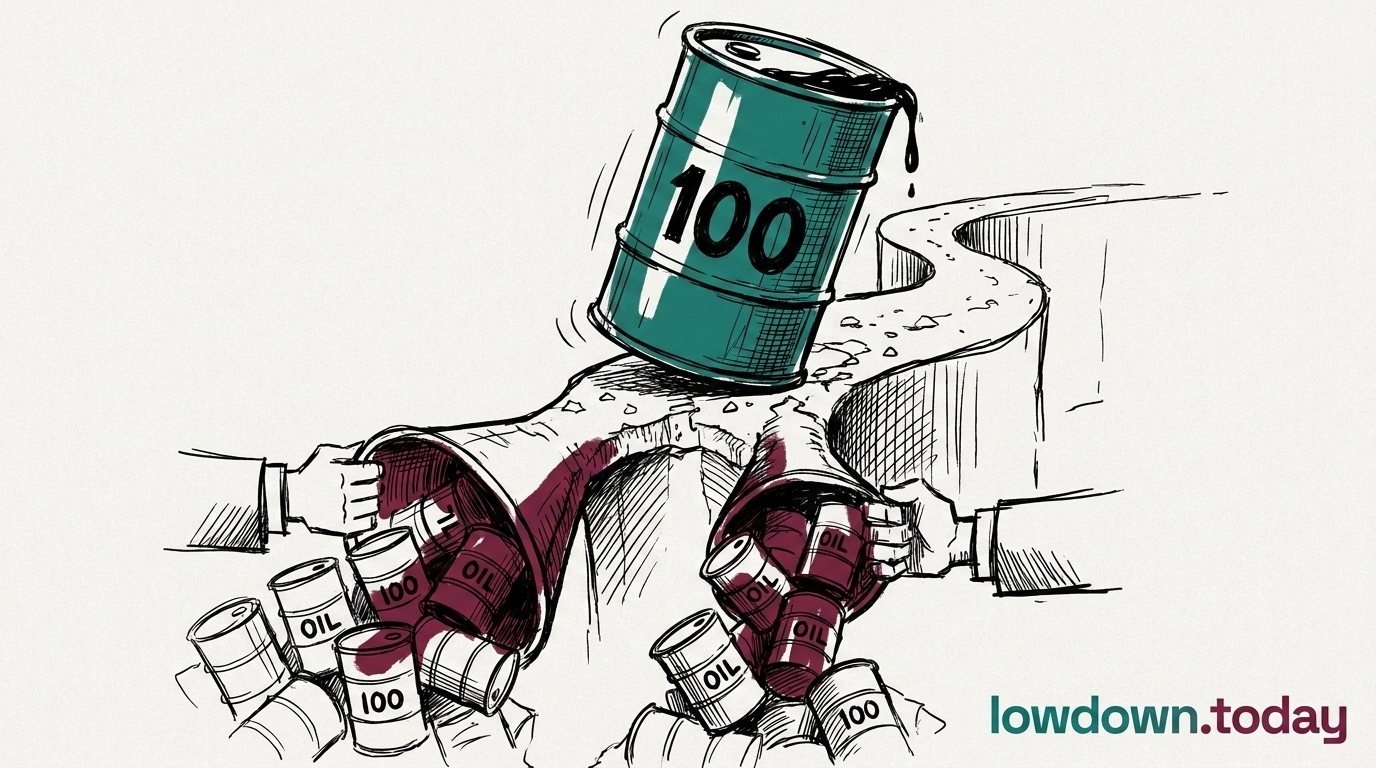
VLCC daily hire hit $423,736 — breaking a record that had stood since the first Gulf War. The per-voyage war risk premium alone now costs $400,000.

ConflictDeveloping
Key takeaway

The $400,000 war risk premium — not the record freight rate — is the actual closure mechanism: insured voyages remain commercially viable, meaning the P&I withdrawal rather than freight economics is sealing the route.

VLCC daily freight rates reached $423,736 on Day 4 of the conflict — an all-time record that exceeds the previous peak set during the First Gulf War in 1991. War risk premiums for a single Very Large Crude Carrier voyage hit $400,000, up 60% from the $250,000 pre-conflict level. The 1991 record had stood for 35 years. It fell in four days.

Those costs compound through the supply chain. A VLCC carries approximately two million barrels of crude oil. At $400,000 in war risk premium alone — before fuel, crew, port charges, and the record daily hire rate — the per-barrel insurance cost has risen from roughly 13 cents to 20 cents. That increment is small per barrel. It is not small across a market that moves roughly 100 million barrels per day. Combined with Brent Crude's climb from $73 before the strikes to $85–90 on 1 March , and European gas prices surging 45–54% after Iran struck Qatar's Ras Laffan LNG facility , the cost increases are stacking at every stage from wellhead to refinery gate.

The rate record reflects a structural shortage of available tonnage in navigable waters, not a surge in demand. More than 150 tankers were anchored in open Gulf waters on 1 March , unable to transit Hormuz, unable to load, unable to discharge. The ships exist; they cannot move. Charterers bidding for the diminishing pool of tankers willing to operate outside the risk zone are paying war-economy prices for peacetime routes — driving up freight costs globally, including on voyages nowhere near the Persian Gulf.

Deep Analysis

In plain English

Shipping a supertanker of oil through the Gulf now costs a record amount per day, and on top of that, the insurance for a single trip has jumped to $400,000 — up from $250,000 before the conflict. These are the highest costs ever recorded for tanker shipping, surpassing even the first Gulf War. The practical effect: even if you could afford the voyage, most shipping companies cannot legally operate without P&I insurance, so the financial system is blocking ships that the military has not physically stopped.

Deep Analysis
Synthesis

The record freight rate is a symptom, not the cause of closure. The causal chain runs: JWC listing → mandatory war risk cover → P&I withdrawal → commercial inoperability. This chain unwinds on the insurance market's own administrative timeline, not a military or political one — a ceasefire stops the shooting but does not reinstate underwriting. The rate record marks the point at which the Persian Gulf has become, in market terms, effectively uninsurable at prices acceptable to commercial operators.

Root Causes

The Lloyd's Joint War Committee (JWC) designates areas as 'listed' war risk zones, automatically triggering mandatory additional war risk cover requirements across the entire London market. Once the JWC lists the Persian Gulf — a threshold the P&I withdrawals imply has been crossed — standard hull and cargo underwriters are contractually required to exclude the area, forcing the separate and more expensive war risk market to carry all exposure. This market architecture transforms a regional conflict into a global insurance event operating under its own regulatory logic.

Escalation

War risk premiums at 60% above pre-conflict levels and still rising indicate the market expects no rapid resolution. P&I reinstatement requires full syndicated risk reassessment taking weeks minimum, meaning even a ceasefire today would not immediately deflate the premium — freight market stress will outlast any diplomatic breakthrough on its own administrative timeline.

What could happen next?
  • Consequence

    Consumer fuel prices in Europe and Asia are likely to rise within 2–4 weeks if Hormuz disruption continues at this scale, as refiners exhaust near-term strategic reserve cushions.

    Short term · Assessed
  • Risk

    If floating storage demand rises due to contango, the effective tanker supply available for active voyages contracts further, creating a self-reinforcing freight rate spiral independent of the conflict's trajectory.

    Immediate · Suggested
  • Precedent

    The P&I withdrawal establishes that modern shipping insurance markets can impose an effective blockade independently of military action — a mechanism with no clear equivalent in any previous Gulf conflict.

    Long term · Assessed
First Reported In

Update #14 · Natanz unverified; Hormuz sealed

Al Jazeera· 3 Mar 2026
Read original
Causes and effects
This Event
VLCC tanker rates hit all-time $423,736
All-time record freight rates signal structural disruption to global oil transport, with costs compounding through every stage of the energy supply chain from production to delivery.
Different Perspectives
India
India
India buys more Saudi crude than any other country and has 2.5 million nationals working in the kingdom, so a $100 Brent and a live strike on Saudi tankers reach New Delhi through both fuel bills and remittance risk. Neither channel has an alternative route the way Saudi Arabia's own pipeline does.
Qatar
Qatar
Qatar co-authored the four-mediator ten-day ceasefire proposal alongside Egypt, Pakistan and Oman, centred on resuming Hormuz navigation, while separately pursuing its dated compensation claim against Iran at the UN Security Council filed on 21 July. Doha is mediating and litigating in the same week.
Israel
Israel
Israeli intelligence, reported by the Wall Street Journal, assesses Iran moved thousands of centrifuges and part of its roughly 440kg enriched-uranium stock into Pickaxe Mountain after the June 2025 strikes on its three main nuclear sites. Some of the US refuelling aircraft now deploying to the region are bound for Israeli bases and Ramon Airport.
Houthis
Houthis
Yahya Saree announced the missile and drone strikes on the Encelia and Layla on 22 July as enforcement of the embargo his forces had declared by radio warning alone two days earlier. Six vessels already turned back on the broadcast; the strike shows Houthi forces will use weapons once warnings stop working.
Saudi Arabia
Saudi Arabia
Saudi Arabia's state news agency confirmed only a fire on the Encelia's bow, with the crew safe; the Layla strike remains unconfirmed by Riyadh. The kingdom built its Petroline pipeline specifically to bypass Hormuz through the Red Sea, so the tanker fire lands on the route Riyadh had already spent billions escaping.
United States
United States
Washington is weighing both ten-day proposals but wants a longer truce than either offers, and moved F-16 and F-35 jets plus refuelling aircraft into the region while it decides. That deployment, not Trump's Pickaxe Mountain remarks, is the measurable US action, buying options for the day talks fail rather than betting on them.