Skip to content
You can now search across every topic, entity and event.What's new
Iran Conflict 2026
23JUL

Netanyahu grants blanket kill authority

3 min read
19:27UTC

For the first time, Israel's military and intelligence services can kill senior adversary figures without waiting for cabinet approval — a change a senior Israeli official called unprecedented.

ConflictDeveloping
Key takeaway

Pre-authorised lethal authority removes the political friction that historically created pause for diplomatic alternatives.

Netanyahu and Defence Minister Katz granted the IDF and Mossad blanket authorisation to carry out targeted killings of senior Iranian and Hezbollah figures without prior political sign-off when time-sensitive intelligence emerges 1. A senior Israeli official told Ynet the policy is unprecedented: "This has never happened before" 2. Previous operations — including the killing of Hamas political chief Ismail Haniyeh in Tehran in July 2024 — required cabinet-level approval for each target.

The cabinet's role in Israeli assassination policy was never procedural. It weighed diplomatic fallout, alliance costs, and the risk of retaliatory escalation against operational gain. The 2004 assassinations of Hamas founders Ahmed Yassin and Abdel Aziz al-Rantisi, carried out weeks apart, were both individually cabinet-approved — and both drew international condemnation that political leaders had factored into their decision. Removing this filter transfers the risk calculus to military and intelligence commanders whose institutional incentive favours action over restraint.

The authorisation formalises what the past seventy-two hours demonstrated in practice. IDF spokesman Brig. Gen. Effie Defrin — who disclosed operational plans extending through Passover — stated on camera that Mojtaba Khamenei "is not immune" and that Israel would "pursue him, find him, and neutralise him." This is the first public threat by an Israeli military official against a sitting Supreme Leader. Two days before the Larijani strike, the Israeli Air Force destroyed an aircraft used by the late Ali Khamenei at Mehrabad Airport in Tehran 3. The pattern — destroying a leader's transport, killing his senior officials, publicly threatening his successor, then removing the political approval requirement — is systematic.

Three weeks ago, Netanyahu told reporters he would not "take out a life insurance policy" on adversary leaders . The blanket authorisation resolves that ambiguity in practice. The tent encampment where the Basij commander and his deputy were found shows Iranian leaders are already mobile; the pre-authorisation is designed to match the speed of that adaptation. Intelligence on dispersed targets is perishable — a cabinet convened at 2 a.m. to approve a strike on a figure who will move by dawn was precisely the constraint Israel has now discarded.

Deep Analysis

In plain English

Normally, before Israel kills a senior enemy official, cabinet ministers — sometimes the full security cabinet — must personally approve that specific operation. Intelligence is presented, risks are debated, and politicians sign off. This new authority inverts that: the military and Mossad can now act the moment a targeting opportunity arises, without calling politicians. The stated reason is operational: intelligence windows on senior figures close within hours. The unstated effect is structural: it removes the deliberative pause that has occasionally created space for backchannels to intervene before a strike proceeds.

Deep Analysis
Synthesis

By removing cabinet-level approval, Netanyahu has shifted accountability downward: future killings become military decisions attributed to the IDF and Mossad rather than political decisions attributed to the government. This creates potential legal insulation for political leadership under international law's distinction between command responsibility and direct authorisation, while accelerating operational tempo.

Root Causes

The procedural change also serves a domestic political function: it reduces the leverage of Netanyahu's coalition partners, who previously held influence through the cabinet approval process. Centralising authority in military and intelligence hands insulates targeting decisions from coalition politics while framing the shift as operational necessity.

Escalation

Cabinet approval delays have historically functioned as an informal brake in Israeli escalation cycles — the Qatar backchannel for Gaza ceasefires, for instance, exploited approval timelines to deliver messages before operations launched. Removing this mechanism makes inadvertent escalation more likely during periods of high targeting tempo, independent of any party's stated intentions.

What could happen next?
  • Precedent

    The first standing Israeli pre-authorisation for killing senior foreign officials establishes an institutional framework that will persist beyond the current conflict and current leadership.

    Long term · Assessed
  • Risk

    Elimination of the cabinet approval pause removes the mechanism that has historically allowed backchannels to intervene before strikes proceed, making de-escalation structurally harder.

    Short term · Assessed
  • Consequence

    Coalition partners lose their leverage through approval-process delays, consolidating operational authority in military and intelligence hands for the duration of the war.

    Medium term · Assessed
  • Risk

    Undefined criteria for 'senior figures' creates scope for gradual expansion of the authorised target set beyond the current Iranian and Hezbollah leadership categories.

    Medium term · Suggested
First Reported In

Update #40 · Larijani dead; Israel hunts the new leader

Times of Israel· 18 Mar 2026
Read original
Causes and effects
Different Perspectives
India
India
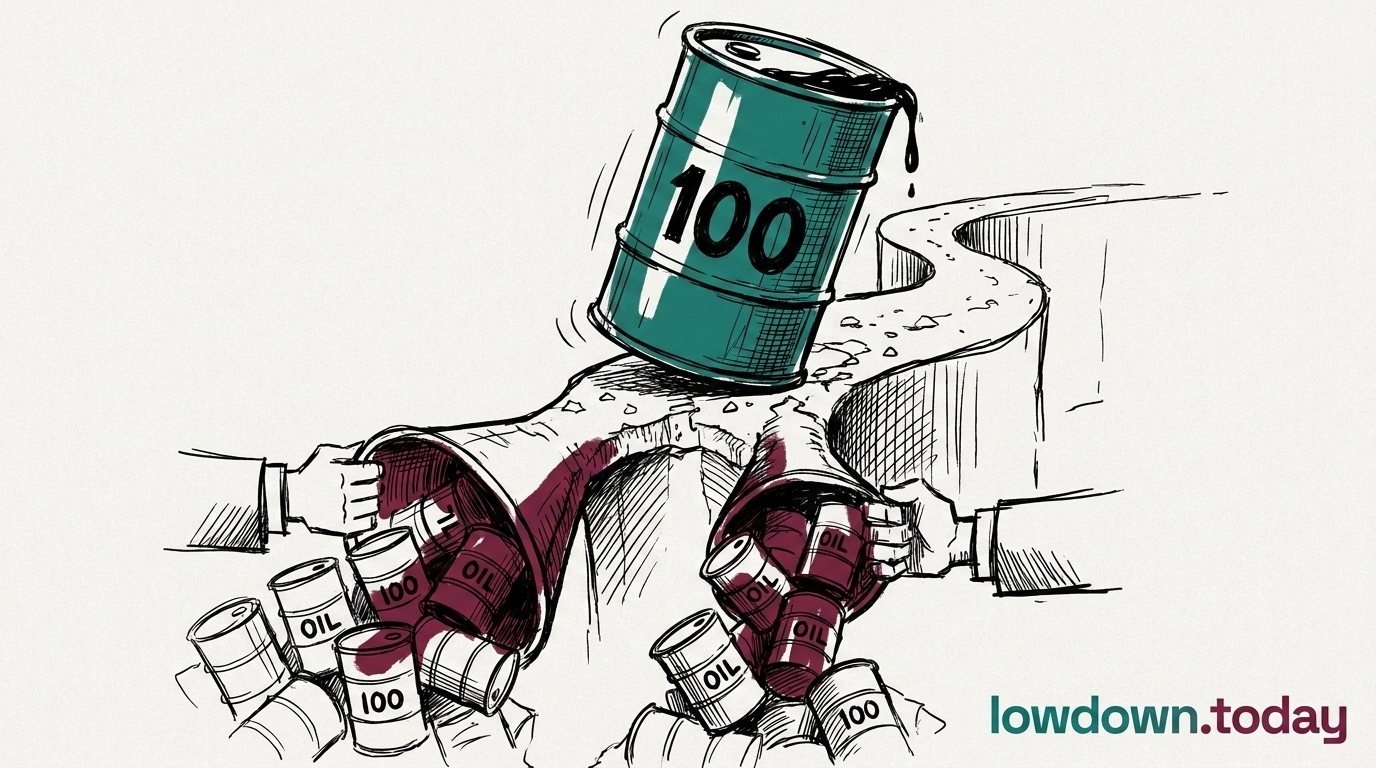
India buys more Saudi crude than any other country and has 2.5 million nationals working in the kingdom, so a $100 Brent and a live strike on Saudi tankers reach New Delhi through both fuel bills and remittance risk. Neither channel has an alternative route the way Saudi Arabia's own pipeline does.
Qatar
Qatar
Qatar co-authored the four-mediator ten-day ceasefire proposal alongside Egypt, Pakistan and Oman, centred on resuming Hormuz navigation, while separately pursuing its dated compensation claim against Iran at the UN Security Council filed on 21 July. Doha is mediating and litigating in the same week.
Israel
Israel
Israeli intelligence, reported by the Wall Street Journal, assesses Iran moved thousands of centrifuges and part of its roughly 440kg enriched-uranium stock into Pickaxe Mountain after the June 2025 strikes on its three main nuclear sites. Some of the US refuelling aircraft now deploying to the region are bound for Israeli bases and Ramon Airport.
Houthis
Houthis
Yahya Saree announced the missile and drone strikes on the Encelia and Layla on 22 July as enforcement of the embargo his forces had declared by radio warning alone two days earlier. Six vessels already turned back on the broadcast; the strike shows Houthi forces will use weapons once warnings stop working.
Saudi Arabia
Saudi Arabia
Saudi Arabia's state news agency confirmed only a fire on the Encelia's bow, with the crew safe; the Layla strike remains unconfirmed by Riyadh. The kingdom built its Petroline pipeline specifically to bypass Hormuz through the Red Sea, so the tanker fire lands on the route Riyadh had already spent billions escaping.
United States
United States
Washington is weighing both ten-day proposals but wants a longer truce than either offers, and moved F-16 and F-35 jets plus refuelling aircraft into the region while it decides. That deployment, not Trump's Pickaxe Mountain remarks, is the measurable US action, buying options for the day talks fail rather than betting on them.