Skip to content
You can now search across every topic, entity and event.What's new
Iran Conflict 2026
23JUL

Araghchi meets Wang Yi in Beijing

3 min read
19:27UTC

Iranian Foreign Minister Abbas Araghchi met Chinese counterpart Wang Yi in Beijing on 6 May, the first such visit since the war began on 28 February, eight days before the scheduled Trump-Xi summit on 14-15 May.

ConflictDeveloping
Key takeaway

Beijing now hosts the only Iran channel running in parallel to Washington's, eight days before Trump-Xi.

Iran's Foreign Minister Abbas Araghchi met Chinese counterpart Wang Yi in Beijing on Wednesday 6 May, the first such visit since the war began on 28 February 1. Wang Yi told Araghchi that China is 'deeply distressed' by the conflict and offered Beijing 'a greater role in restoring peace and tranquility'. Araghchi replied that China is 'a close friend' and that bilateral cooperation 'will become stronger under current circumstances'. The Trump-Xi summit is scheduled for Thursday 14 and Friday 15 May, also in Beijing.

The pause sits inside that schedule. Trump paused Project Freedom on Tuesday 5 May; Araghchi met Wang Yi on Wednesday 6 May; Trump-Xi convenes eight days later. Two days before Araghchi's visit, MOFCOM (China's Ministry of Commerce) activated China's 2021 Blocking Rules and named five refineries protected from OFAC Iran compliance, including Hengli Petrochemical and four Shandong and Hebei independents . The same week the United States was deploying destroyers to enforce its blockade against Iranian oil flows, China was writing the legal counter-instrument that protects roughly 400,000 barrels per day of refining capacity from compliance.

Wang Yi's call for a 'comprehensive ceasefire' goes further than the US framing of a 'pause'. Trump's stated reason for pausing was Pakistan; the schedule said Beijing. A US-China confrontation over Iran-sanctions enforcement on the eve of a 14-15 May summit was the overhang the pause removed. Beijing's diplomatic position now combines a public ceasefire call, a domestic legal shield for its refiners and a face-to-face meeting with Tehran's chief diplomat, all sequenced into the eight-day window before Trump arrives.

Deep Analysis

In plain English

Iran's top diplomat flew to Beijing on 6 May and met China's foreign minister Wang Yi, who offered China a 'greater role in restoring peace'. This was the first such visit since the war started in late February. China matters here because it buys most of Iran's oil. Despite US sanctions, China has kept buying Iranian crude through workarounds. If the Strait of Hormuz stays blocked, even those workarounds get harder. China also has a summit with Trump scheduled for 14-15 May, so it wants to show it can help end the conflict, which gives it more leverage with the US. The meeting happened the day after Trump paused the US naval operation, suggesting both sides are testing whether diplomacy can produce a deal before the pause ends.

Deep Analysis
Root Causes

China's stake in a Hormuz resolution runs through its MOFCOM-shielded crude flows: of the 153.7 million barrels of Iranian crude on water in mid-April (per Windward data cited in prior updates), 84.9% was China-bound. China cannot sustain that flow if P&I war-risk exclusions prevent Iranian tankers from obtaining any insurance, even Chinese state reinsurance, for transits through waters now explicitly designated as combat zones by UKMTO.

The timing of the meeting, eight days before the Trump-Xi summit, is the second structural driver. China needs to demonstrate to the US that it can deliver Iranian de-escalation as a tradeable diplomatic asset. If Araghchi leaves Beijing and Iran resumes attacks, Wang Yi loses face before the summit opens.

What could happen next?
  • Consequence

    China's public ceasefire call eight days before the Trump-Xi summit creates a diplomatic timeline: if no progress is made by 14 May, Wang Yi's offer of mediation becomes a personal credibility liability.

  • Opportunity

    Beijing's interest in a Hormuz resolution aligns with Washington's pause, creating a narrow window in which Chinese diplomatic pressure on Tehran could unlock IRGC concessions the Pakistan channel alone cannot achieve.

First Reported In

Update #89 · Truxtun gets through; Trump pulls back

Al Jazeera· 6 May 2026
Read original
Different Perspectives
India
India
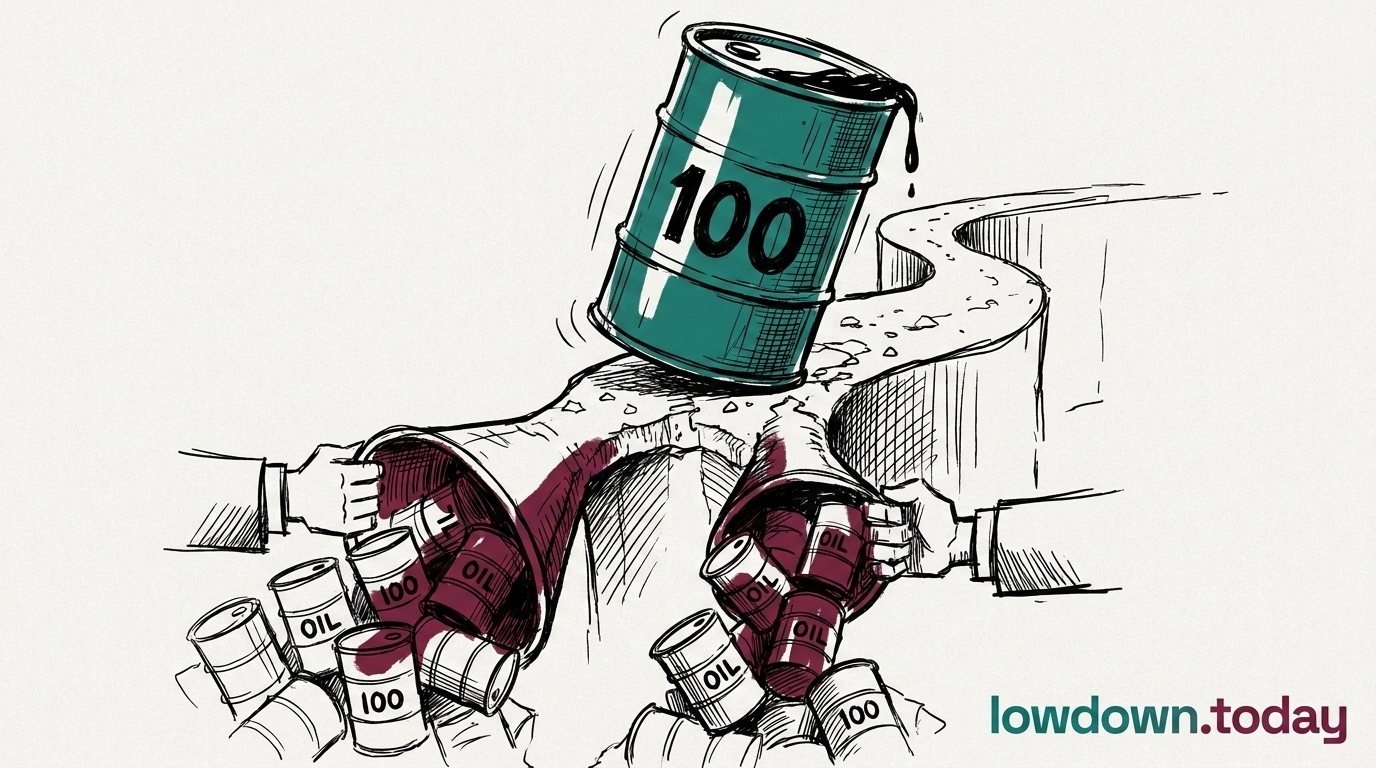
India buys more Saudi crude than any other country and has 2.5 million nationals working in the kingdom, so a $100 Brent and a live strike on Saudi tankers reach New Delhi through both fuel bills and remittance risk. Neither channel has an alternative route the way Saudi Arabia's own pipeline does.
Qatar
Qatar
Qatar co-authored the four-mediator ten-day ceasefire proposal alongside Egypt, Pakistan and Oman, centred on resuming Hormuz navigation, while separately pursuing its dated compensation claim against Iran at the UN Security Council filed on 21 July. Doha is mediating and litigating in the same week.
Israel
Israel
Israeli intelligence, reported by the Wall Street Journal, assesses Iran moved thousands of centrifuges and part of its roughly 440kg enriched-uranium stock into Pickaxe Mountain after the June 2025 strikes on its three main nuclear sites. Some of the US refuelling aircraft now deploying to the region are bound for Israeli bases and Ramon Airport.
Houthis
Houthis
Yahya Saree announced the missile and drone strikes on the Encelia and Layla on 22 July as enforcement of the embargo his forces had declared by radio warning alone two days earlier. Six vessels already turned back on the broadcast; the strike shows Houthi forces will use weapons once warnings stop working.
Saudi Arabia
Saudi Arabia
Saudi Arabia's state news agency confirmed only a fire on the Encelia's bow, with the crew safe; the Layla strike remains unconfirmed by Riyadh. The kingdom built its Petroline pipeline specifically to bypass Hormuz through the Red Sea, so the tanker fire lands on the route Riyadh had already spent billions escaping.
United States
United States
Washington is weighing both ten-day proposals but wants a longer truce than either offers, and moved F-16 and F-35 jets plus refuelling aircraft into the region while it decides. That deployment, not Trump's Pickaxe Mountain remarks, is the measurable US action, buying options for the day talks fail rather than betting on them.