Skip to content
You can now search across every topic, entity and event.What's new
Iran Conflict 2026
19JUL

Israel hands back Debbine, keeps the zone

3 min read
14:05UTC

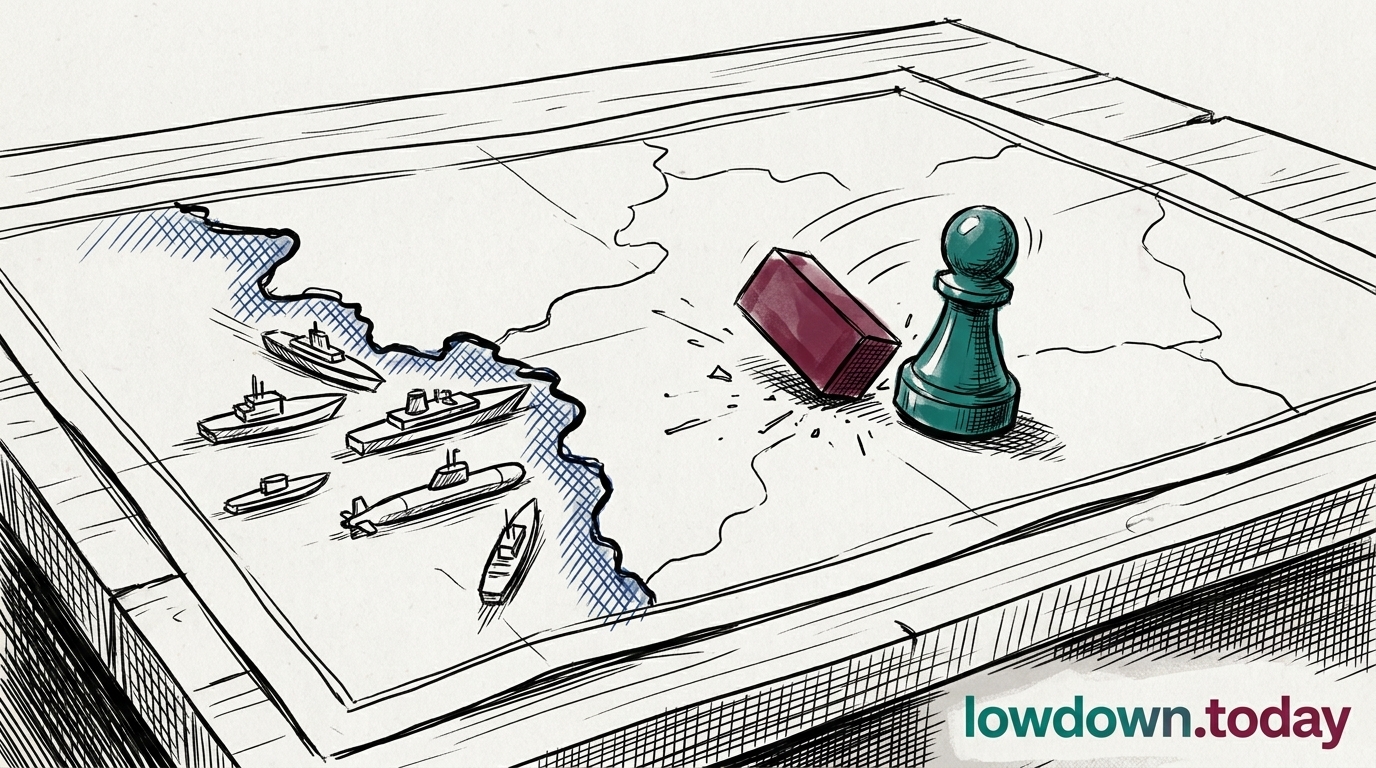
The IDF redeployed from the southern Lebanese village of Debbine toward Khiam on 22 June, calling it 'dynamic defense'; the Lebanese Army and UNIFIL moved in behind, while Netanyahu said troops would stay 'as long as necessary'.

ConflictDeveloping
Key takeaway

Israel gave back one village while holding its 10km Lebanon zone, leaving Iran's withdrawal demand unmet.

The Israel Defense Forces (IDF) carried out a localised redeployment on 22 June from the southern Lebanese village of Debbine toward Khiam, in the Marjeyoun district, which it described as "dynamic defense" rather than a withdrawal 1. A Lebanese Army engineering unit and the United Nations Interim Force in Lebanon (UNIFIL), the peacekeeping mission patrolling the south, moved into Debbine to reopen roads behind the pullback.

The wider footprint did not move. Benjamin Netanyahu, the Israeli Prime Minister, said troops would stay "as long as necessary", holding a security zone up to 10km deep that the IDF reaffirmed with a fresh deployment map on 21 June. The redeployment followed orders to hold position after the IDF killed more than 20 people in Lebanon on 20 June and 16 on 21 June .

Iran's condition for staying at the Switzerland table is Article 1 of the memorandum: an end to the war on all fronts, Lebanon included. One village handed to the Lebanese Army does not meet a demand for full withdrawal, and Tehran has not said it does. The move is the minimum Israel could offer to keep the talks alive without conceding the zone it fought for.

Deep Analysis

In plain English

Israeli forces pulled back from the village of Debbine in southern Lebanon and moved toward the town of Khiam on 22 June. The IDF described the move as dynamic defense. Lebanese army engineers and UN peacekeepers moved into Debbine right away to reopen roads. This sounds like progress but is more limited than it appears. Israel still controls the wider security zone (up to 10 kilometres deep into Lebanese territory), and Prime Minister Netanyahu said troops would stay as long as needed. Iran had demanded a full Israeli withdrawal from Lebanon as a condition for the nuclear deal to move forward, and this single-village move does not come close to meeting that demand.

Deep Analysis
Root Causes

Netanyahu's hold-in-place directive on 20-21 June and the Debbine redeployment on 22 June represent two ends of the same political constraint: Israeli domestic coalition politics cannot survive a full Lebanon withdrawal, but Washington's pressure (and the Switzerland round's Article 1 dynamic) requires some visible movement.

The IDF's framing of the move as "dynamic defense" rather than "withdrawal" is legally significant: it avoids triggering the ceasefire agreement's withdrawal-compliance audit, which the Lebanese government would otherwise use to claim Israel had acknowledged an obligation to withdraw. Dynamic defense keeps the legal baseline unchanged.

Escalation

Minimal de-escalation on the Lebanon sub-track; does not alter the Iran Article 1 precondition calculus. The security zone's unchanged perimeter means the conditions that caused the IRGC's 20 June closure declaration persist.

What could happen next?
  • Consequence

    The LAF's move into Debbine is the first post-MOU physical expansion of Lebanese state authority in the security zone; it gives the Lebanese government a domestic-audience win without requiring Israeli strategic concession.

  • Risk

    Iran's Article 1 precondition remains unmet; the Debbine redeployment provides no basis for Tehran to de-escalate its Hormuz or proxy-pressure posture, keeping the MOU's Article 1 compliance dispute open.

First Reported In

Update #135 · Trump's threats peak, his paper stays blank

L'Orient Today· 22 Jun 2026
Read original
Different Perspectives
International Group of P&I Clubs
The Group has kept its Hormuz war-risk exclusion in force through the entire shipping recovery, even as London hull war-risk premiums fell to about 2% of vessel value. A burning LNG carrier off Limah is now the fresh case for holding that line, with mutual pooling meaning one hit reprices the strait for every owner at once.
Jordan
Jordan
Jordan's government said no threats existed at Aqaba hours before Iranian missiles landed there, and has not addressed the IRGC's claim that Jordanian civilians and soldiers supplied targeting intelligence for the strike. Amman hosts forces it does not command and is saying as little as it can.
United States (CENTCOM)
The Pentagon named two of the seventeen American dead, 1st Lieutenant Tyler Feehan and Private Isabella Gonzales, both killed at Jordan's Muwaffaq Salti Air Base, days after its Amman embassy had warned citizens away from Aqaba's airport and seaport. Washington is naming its own cost while flagging threats it declines to attribute publicly.
Iran
Iran
Iran said on Monday it disabled two oil tankers crossing the Strait of Hormuz without its permission, asserting a right to license passage through the strait it borders. Tehran named neither vessel, and CENTCOM had already denied a comparable Iranian claim on 18 July.
Qatar
Qatar
Qatar moved from summoning Iran's deputy ambassador on 8 July to a dated written claim at the UN Security Council thirteen days later, citing Resolution 2817 and reserving its Article 51 right of self-defence. Doha is building a permanent record while still hosting CENTCOM's forward headquarters and mediating with Tehran.
CENTCOM
CENTCOM
CENTCOM confirmed a third American service member died in northern Iraq on 19 July clearing unexploded ordnance from a downed Iranian drone, and recovered unidentified remains at Muwaffaq Salti Air Base in Jordan. The Pentagon has framed its Khuzestan strikes as degrading IRGC capacity, a rationale that stretches to explain a reactor foundation with no nuclear material in it.