Skip to content
You can now search across every topic, entity and event.What's new
Iran Conflict 2026
7JUL

Insurers cut the price, not the risk

3 min read
09:35UTC

London hull war-risk premiums halved to around 2% of vessel value over six days, yet the $40 billion US-backed Hormuz reinsurance facility has had zero uptake, blocked by a sanctions-compliance trap no price cut can fix.

ConflictDeveloping
Key takeaway

A $40bn facility and a halved premium mean nothing while PGSA and OFAC rules cancel each other out.

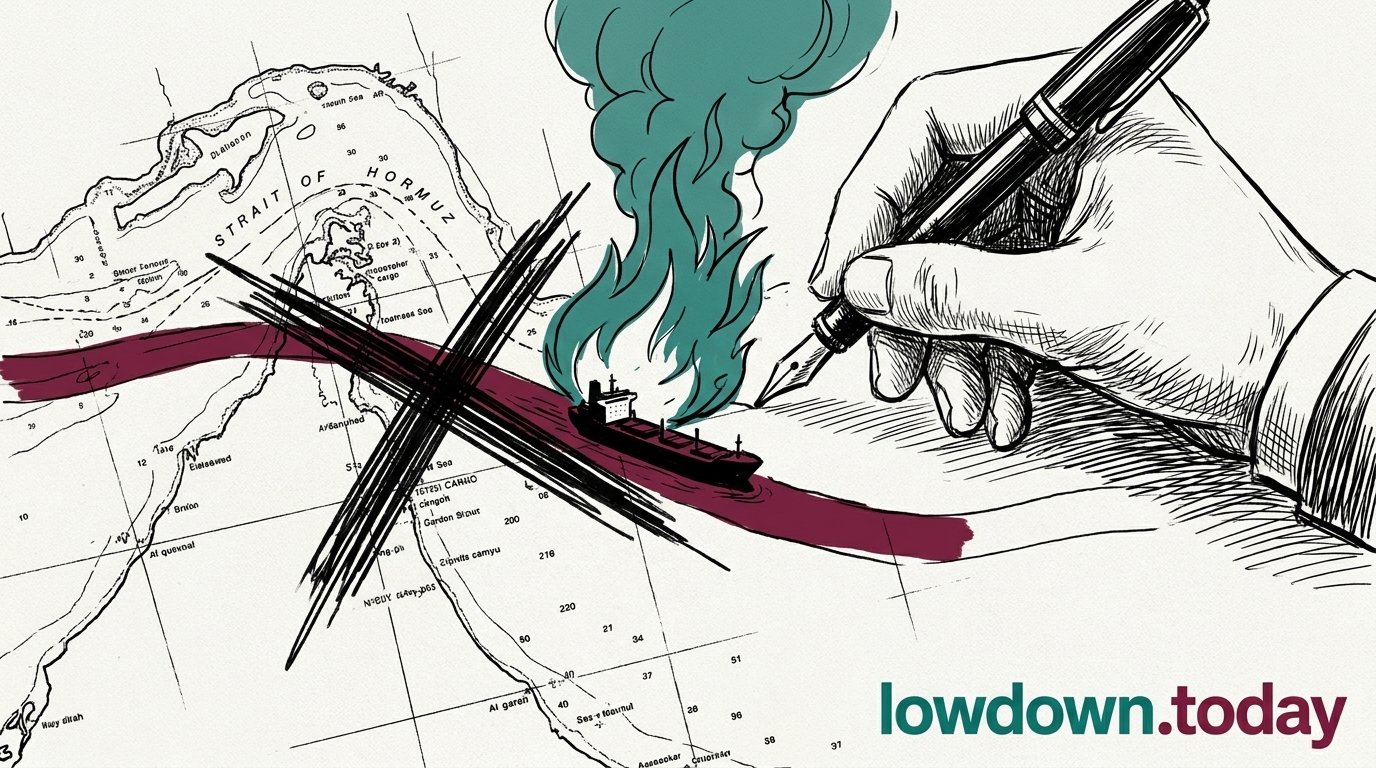
London hull war-risk premiums halved over six days to around two per cent of vessel value, down from a five per cent peak but still 20 times the 0.1 per cent charged before the conflict 1. That war-risk premium is the surcharge underwriters add for sailing a vessel into a designated danger zone, and at two per cent of hull value it remains punishing. London underwriters cut the price without restoring the cover, and the US Development Finance Corporation's $40 billion Chubb-backed reinsurance facility, built specifically to underwrite Hormuz crossings, has recorded zero uptake. Not one ship has used it.

The plumbing explains the refusal. A Protection and Indemnity (P&I) club, the mutual body that insures a shipowner's liabilities, will not reinstate cover until the navigable channels are swept. Iran's Persian Gulf Strait Authority (PGSA) requires every transit to register through an Iranian-sanctioned system, which collides head-on with the Office of Foreign Assets Control (OFAC) compliance that binds London P&I clubs. OFAC is the US Treasury sanctions bureau whose rules reach any insurer clearing dollars or touching US-connected firms.

The IRGC's Channel 16 demand sharpens the bind. Coordinating with the corps to satisfy Iranian rules breaches the sanctions exposure of the other regime, so an underwriter cannot comply with both authorities at once. The Lloyd's-Chubb $400 million consortium launched on 19 June and has reinstated nothing. Until the channels are swept and the PGSA-OFAC conflict is resolved, the price of cover is academic because the cover itself does not exist.

Deep Analysis

In plain English

When ships cross a dangerous stretch of water, they need insurance, like a car driver needs motor insurance before they can legally use the road. Right now, no mainstream insurance company will cover ships crossing the Strait of Hormuz, because the route still has uncleared mines and Iran has set up a registration system that foreign insurers cannot legally use under US sanctions rules. The US government set up a $40 billion insurance scheme with a major insurer, Chubb, specifically to fix this. Not a single ship has used it. To use the scheme, a ship still has to register with Iran's official body (the PGSA). Registering with that body puts insurers at risk of breaching American sanctions. No ship has used it.

Deep Analysis
Root Causes

A regulatory conflict between two overlapping legal frameworks blocks the DFC facility. OFAC sanctions designate the IRGC and its affiliated bodies. The PGSA, as an IRGC-commanded body, either falls under formal designation or derivative liability rules for IRGC-directed entities. Any London P&I club that pays fees to, coordinates with, or registers through the PGSA creates a sanctions exposure that its US-dollar clearing banks, all of which operate under OFAC jurisdiction, cannot accommodate.

The DFC-Chubb facility addressed the capital question (who backs the cover) without resolving the access question (how does the insurer legally interact with the entity that controls transit approval). Until a specific OFAC general licence authorises P&I clubs to interact with the PGSA for transit-notification purposes, no Western insurer can reinstate cover regardless of the facility's size.

What could happen next?
  • Consequence

    Zero uptake on the DFC facility means insured commercial transit through Hormuz by Western-flagged vessels has not resumed; the normalisation priced by Brent markets has no corresponding physical insurance layer.

    Immediate · Assessed
  • Risk

    If the PGSA-OFAC conflict is not resolved by a new targeted OFAC general licence before GL X expires on 21 August, the insurance impasse will outlast the sanctions relief window, freezing the physical reopening past the political window the MOU created.

    Medium term · Reported
  • Opportunity

    A narrow OFAC general licence authorising P&I clubs to interact with the PGSA for transit-notification purposes only, not for fee payment, could unblock the DFC facility without requiring a sanctions designation reversal on the IRGC itself.

    Short term · Suggested
First Reported In

Update #138 · Three flags over Hormuz, none enforced

Insurance Business Magazine· 25 Jun 2026
Read original
Different Perspectives
Oil market and P&I insurers
Brent cleared $87 intraday only once CENTCOM's blockade became physical rather than declared, even though P&I Clubs had already excluded Hormuz war risk a week earlier on 7 July: capital hedged ahead of enforcement, but prices moved only after it.
UAE reporting
UAE reporting
UAE reporting placed the Omani tanker deaths at one seafarer against the International Maritime Agency's count of two, the first time in this war that a Gulf state's casualty figures have diverged from an international monitor's.
Jordan
Jordan
Iranian strikes reached Jordan again on 14 July as part of the Gulf-wide retaliation for the Hormuz blockade, extending the conflict's geographic footprint to a state with no direct stake in the strait itself.
Bahrain
Bahrain
Bahrain sounded air-raid sirens on 14 July during Iran's Gulf-wide retaliation, the same day CENTCOM's blockade order and fourth night of strikes pushed the conflict's physical reach into the wider Gulf littoral.
Kuwait
Kuwait
Kuwait intercepted Iranian missiles and drones on 14 July as Tehran's blockade retaliation reached Gulf states beyond Iran's immediate shoreline, confirming Kuwaiti airspace now sits inside Iran's retaliatory envelope.
Oman
Oman
Oman absorbed the war's first tanker casualties in its own waters on 14 July, with two supertankers disabled and seafarers killed, putting the sultanate's shipping lanes directly in the path of the blockade fight for the first time.