Skip to content
You can now search across every topic, entity and event.What's new
Iran Conflict 2026
1JUL

MOU text still secret 24h after sign

3 min read
11:26UTC

Vance promised the memorandum text by Wednesday and never released it; US officials told CNN Iran's binding commitments are verbal side-deals, not in the signed document.

ConflictDeveloping
Key takeaway

Iran's binding commitments are verbal, so neither legislature can review or enforce the deal.

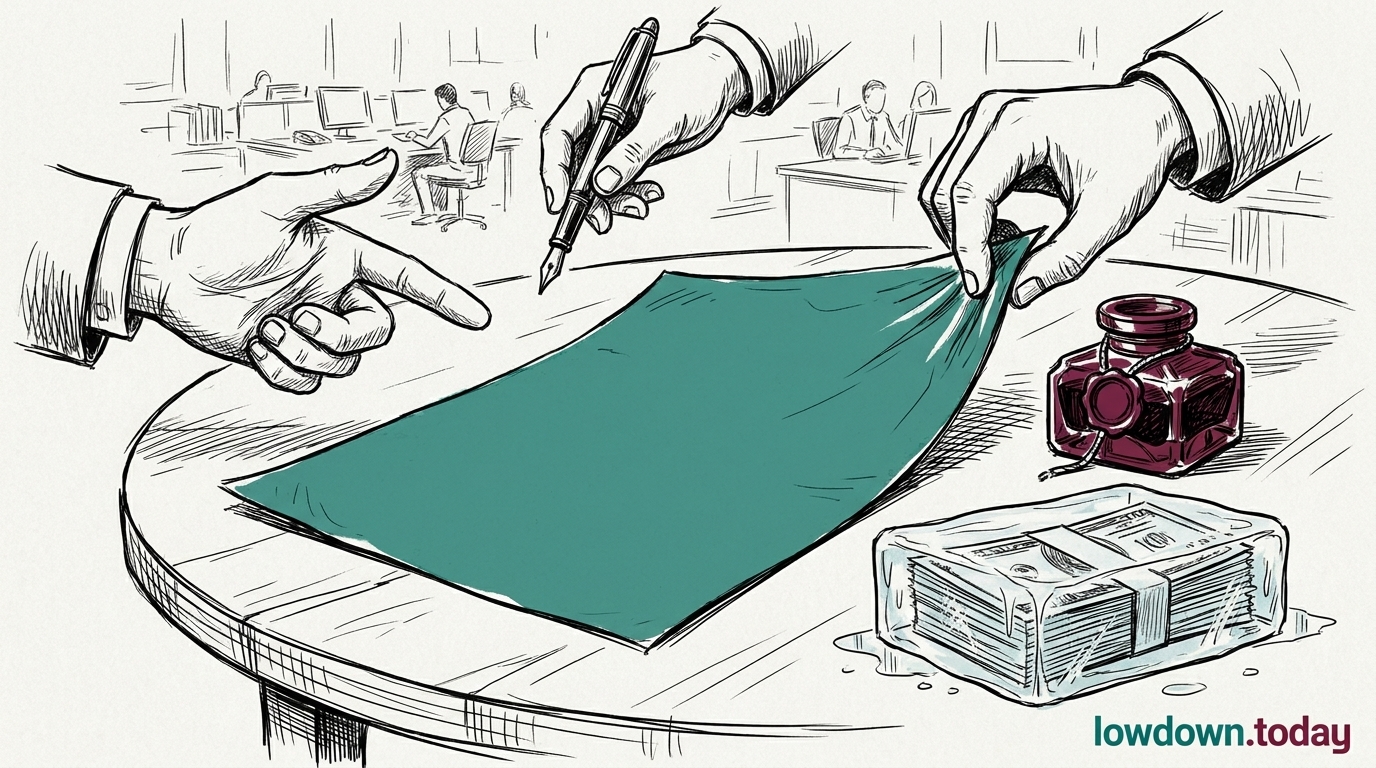
The text of the Islamabad Memorandum of Understanding still had not been published as of Wednesday 17 June. JD Vance, the US Vice President who signed for Washington, promised it "as early as tomorrow" on Tuesday; Wednesday came and went with nothing released 1. Senate Majority Leader John Thune formally pressed Trump for the document, and Senate Republicans signalled they will not back the deal without seeing it 2. Minority Leader Chuck Schumer demanded a Gang of Eight intelligence briefing, the closed session in which the eight senior congressional leaders review classified material.

US officials told CNN the document can stay vague because the binding terms sit outside it: Iran's critical commitments are not written into the signed text at all, and exist as verbal side-deals through the back-channel 3. Vance described the instrument as "approximately a page and a half". An agreement whose binding terms are spoken rather than signed cannot be enforced by either legislature, which is precisely why the IRGC and Mojtaba Khamenei have left it unsigned at their end .

The zero-transit reality in the strait and the empty insurance line that pinned more than five hundred ships in place both turn on terms no document records. A blank text means either party can later deny a commitment with no paper to contradict it, and that is the structural weakness the Majlis revolt and the Senate's refusal to endorse are both probing from opposite sides.

Deep Analysis

In plain English

The Islamabad Memorandum's text had not been released by 17 June. Senate Majority Leader John Thune formally asked to see it; Republicans said they would not support the deal without reading it first. US officials told CNN that Iran's most important commitments are not written into the document at all: they exist as spoken back-channel assurances. A verbal commitment cannot be enforced by courts, legislatures, or international organisations. If the US or Iran later disputes what was promised, there is no signed text to appeal to. That is why both Thune and Minority Leader Schumer pushed hard for the document: without it, the Senate has no leverage to hold either side to account.

Deep Analysis
Root Causes

The MOU's verbal-commitments structure has one direct cause: the two sides could not agree on written text for Iran's nuclear obligations without triggering immediate domestic political crises in both Tehran and Washington. Anything Iran commits to in writing on enrichment becomes a Majlis vote in Iran and a Senate ratification battle in the US.

The page-and-a-half length reflects a deliberate omission of substance, not an economy of drafting. A ceasefire instrument that defers enrichment, stockpile accounting, ballistic missiles, and IAEA re-entry dates cannot be page-and-a-half long unless those subjects were removed from the text entirely.

What could happen next?
  • Risk

    Verbal Iran commitments on nuclear enrichment and IAEA access cannot be enforced by the US Senate, international courts, or the IAEA itself; the 60-day talks open with no verified baseline.

  • Precedent

    A sole executive agreement with unpublished operative terms sets a precedent that US Iran policy can proceed without any congressional visibility, strengthening executive discretion but reducing institutional durability.

First Reported In

Update #130 · Trump signed the war over; it kept going

The Hill· 17 Jun 2026
Read original
Causes and effects
This Event
MOU text still secret 24h after sign
An agreement whose enforceable terms are spoken rather than written cannot be held to by either the US Senate or Iran's parliament.
Different Perspectives
Oil market and P&I insurers
Brent cleared $87 intraday only once CENTCOM's blockade became physical rather than declared, even though P&I Clubs had already excluded Hormuz war risk a week earlier on 7 July: capital hedged ahead of enforcement, but prices moved only after it.
UAE reporting
UAE reporting
UAE reporting placed the Omani tanker deaths at one seafarer against the International Maritime Agency's count of two, the first time in this war that a Gulf state's casualty figures have diverged from an international monitor's.
Jordan
Jordan
Iranian strikes reached Jordan again on 14 July as part of the Gulf-wide retaliation for the Hormuz blockade, extending the conflict's geographic footprint to a state with no direct stake in the strait itself.
Bahrain
Bahrain
Bahrain sounded air-raid sirens on 14 July during Iran's Gulf-wide retaliation, the same day CENTCOM's blockade order and fourth night of strikes pushed the conflict's physical reach into the wider Gulf littoral.
Kuwait
Kuwait
Kuwait intercepted Iranian missiles and drones on 14 July as Tehran's blockade retaliation reached Gulf states beyond Iran's immediate shoreline, confirming Kuwaiti airspace now sits inside Iran's retaliatory envelope.
Oman
Oman
Oman absorbed the war's first tanker casualties in its own waters on 14 July, with two supertankers disabled and seafarers killed, putting the sultanate's shipping lanes directly in the path of the blockade fight for the first time.