Skip to content
Welcome, thoughtbot's Giant Robots listeners!Start here
Iran Conflict 2026
25JUN

Russia's oil price down, revenue up

2 min read
14:30UTC

CREA reported Urals crude averaged $63.18 a barrel in June, down 26%, yet Russian oil-product revenue rose 14% as tight global supply lifted prices.

ConflictDeveloping
Key takeaway

Urals crude fell 26% to $63.18 in June, yet Russian oil-product revenue rose 14% on tight supply.

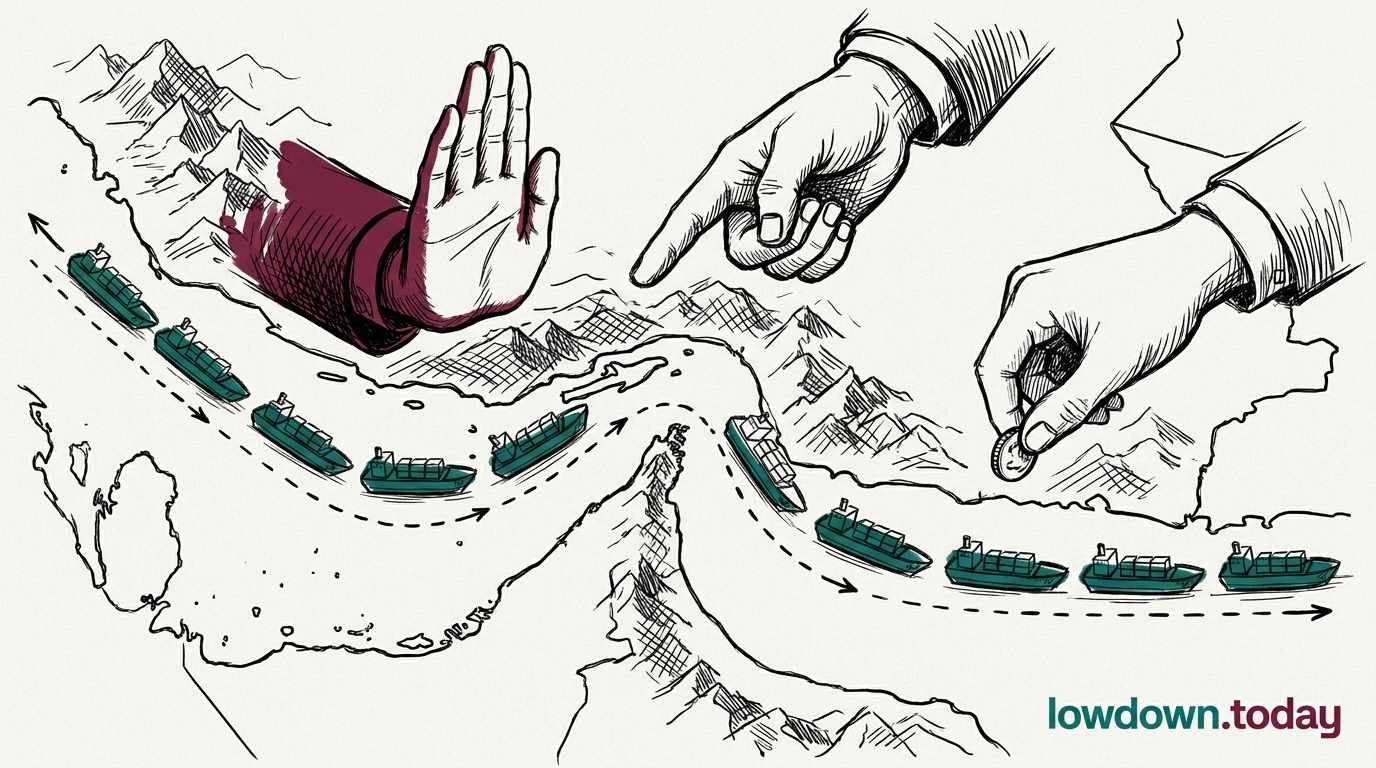
CREA, the Centre for Research on Energy and Clean Air, reported that Urals crude, the benchmark grade for Russian exports, averaged $63.18 a barrel in June, down 26% month-on-month⁠1. That compounds May's 12% fall from $82.02, and seaborne oil-product loadings dropped 21% to a record low as the refinery strikes bit⁠2.

The ledger has another side. CREA found that oil-product revenue rose 14% month-on-month in June, its highest since June 2024, because tight global supply lifted prices even as Russian volumes fell⁠3. The rise means Moscow banked more per tonne on a smaller flow of exports.

Demand held up in Asia. China took 41% of the top-five buyers' Russian crude in June, and India, the second-largest buyer, lifted its imports 34% to a record⁠4. The pressure falls on volume and on the state's ability to guarantee supply at home, not yet on the headline cash.

Deep Analysis

In plain English

CREA, a research group that tracks Russian energy exports, reported that the price Russia gets for its main crude oil grade, Urals, fell 26% in June to $63.18 a barrel, on top of a 12% fall in May. At the same time, the amount of refined fuel Russia managed to ship by sea hit a record low, even though the money it earned from that fuel actually rose, because global fuel prices were higher. This matters because it shows two different pressures squeezing Russia's oil revenue at once: falling crude prices and a shrinking ability to physically move fuel. China took 41% of top-five buyer purchases in June, and India's imports rose 34% to a record, both buying without Western sanctions enforcement applying to them.

Deep Analysis
Root Causes

The price cap only constrains Russian crude sales when the market price would otherwise exceed $44.10 a barrel; at $63.18, Urals remains comfortably above that floor, so the cap is not the mechanism doing the work in June's fall. The real driver is physical: Ukrainian strikes on refining and export infrastructure cut seaborne oil-product loadings to a record low, a supply constraint that shows up as falling volumes and revenue pressure regardless of where the price sits relative to any cap.

China and India's expanding share, 41% and a record 34% month-on-month rise respectively, reflects a structural condition of the cap regime itself: it creates no penalty for buyers outside the G7/EU insurance and shipping ecosystem, so the two largest non-aligned economies can absorb discounted volumes with no exposure to Western enforcement.

What could happen next?
  • Meaning

    Urals trading above the price cap floor while still falling sharply shows physical disruption, not sanctions enforcement, is now the dominant pressure on Russian oil revenue.

First Reported In

Update #23 · Moscow rations diesel as US cover lapses

CREA (Centre for Research on Energy and Clean Air)· 13 Jul 2026
Read original →
Different Perspectives
Office for Budget Responsibility
The OBR's 28 October forecast assumed $82 oil for 2026 and 2027, from market prices for the ten working days to 19 August, and blamed dearer wholesale energy on the war without naming Iran. It expects CPI inflation close to 4% in early 2027 even at that price.
Hengaw, Kurdish rights group
Hengaw reported the 3 November hangings of Amirhossein Maleki and Amirhossein Ebrahimi in Isfahan, saying Ebrahimi was tortured into confessing and that nine of 12 people sentenced to death in the case have now been hanged. Iran's judiciary holds that the defendants killed members of the security forces.
FINTRAC, Canada's financial intelligence unit
FINTRAC worked with the US Treasury on the 6 November designation of eight money services businesses in British Columbia, Ontario and Quebec. Treasury says the businesses still operate, some under new names, so closing them falls to Ottawa.
Abdul Qadir al-Dakhil, Governor of Nineveh
Al-Dakhil cancelled three Mosul International Airport contracts on 7 November over alleged links to armed groups, after meeting Prime Minister Ali al-Zaidi in Baghdad. He named no group or company, and said the contracts will go to international companies.
Kuwait
Kuwait
Kuwait condemned the Houthi missile fired towards the Madinah region on 5 November and restated its support for Saudi Arabia, the Qatar News Agency reported. Its state tanker company, Kuwait Oil Tankers Company, is among the Gulf state fleets on Iran's expanded Hormuz list.
Scott Bessent, US Treasury Secretary
Treasury designated an alleged Chandigarh false-flag network on 4 November and eight Canadian exchangers on 6 November, while State sanctioned alleged MANPADS intermediaries. None of the actions touches an oil buyer; they target the paper, cash and procurement around Iran's trade.

Written with AI from Lowdown's published reporting. Not individually reviewed by an editor. Editorial standards.
