Skip to content
Welcome, thoughtbot's Giant Robots listeners!Start here
Iran Conflict 2026
25JUN

Brent falls $21 across four sessions

4 min read
14:30UTC

Brent crude consolidated a four-session decline from $123 on 30 April to $101.70 on 4 May, with each leg attached to a discrete diplomatic trigger rather than a single Trump post.

ConflictDeveloping
Key takeaway

Markets priced four diplomatic signals in sequence, not a single Trump post; one IRGC round reverses the entire $21 concession.

Brent Crude settled at $101.70 per barrel on 4 May 2026, completing a four-session decline from the $123 post-war high of 30 April.⁠1 The cumulative move of $21.30, about 17 per cent, is the war's largest sustained price drop and is distinct in pattern from any single-session fall recorded since fighting began on 28 February.

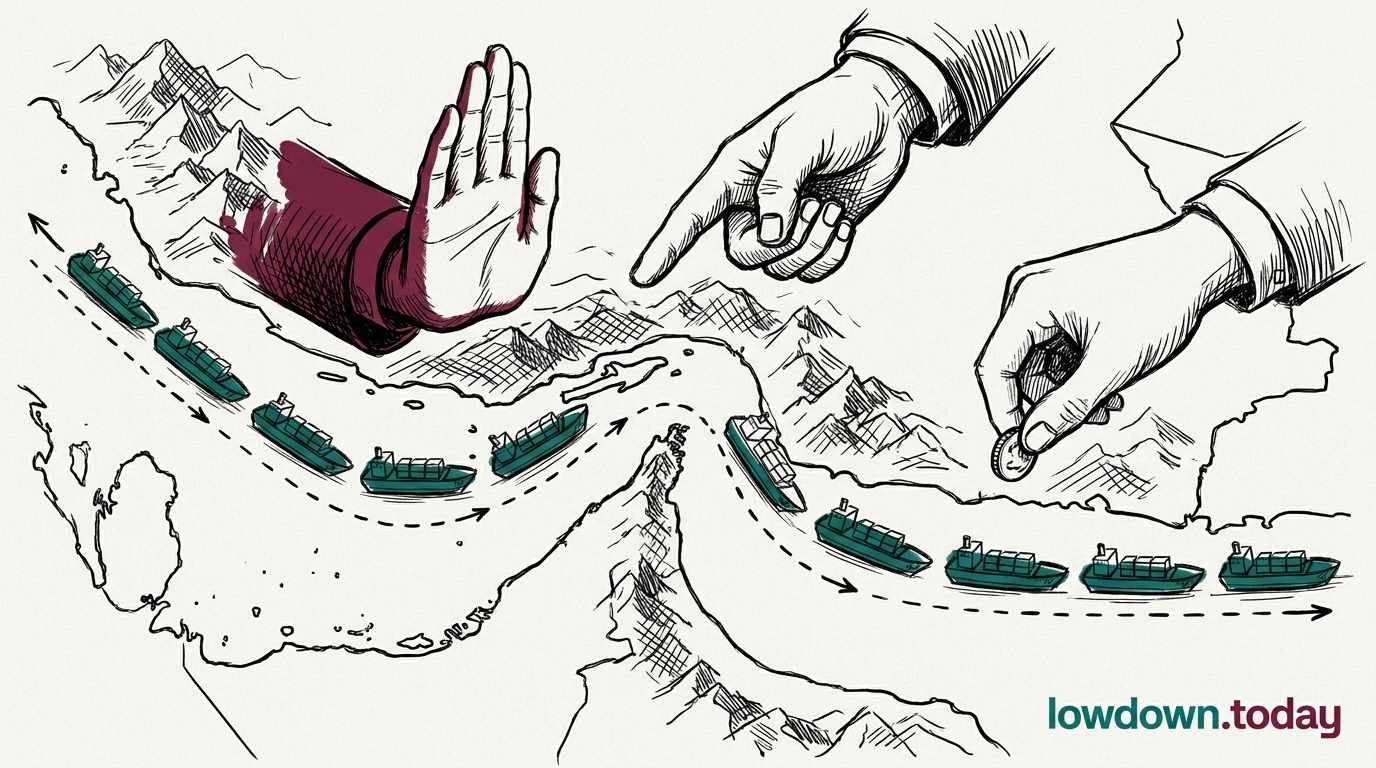
Each leg of the decline tracked a separate diplomatic trigger. The first was the UAE's exit from OPEC's quota framework on 30 April, which broke the cartel cohesion holding the post-war price floor. The second was Trump's rejection of Iran's 14-point ceasefire text on 1 May, which carried a $14.83 single-session fall. The third was the Project Freedom announcement on 3 May, which markets read as a humanitarian-framed escort rather than a kinetic escalation. The fourth was the Pakistan-channel US written reply on the same Sunday, which markets read as the first procedural step toward a settled paper diplomacy.

Markets are pricing four sequential signals, not reacting to a single Truth Social post. The IRGC issued a 30-day ultimatum on 3 May demanding the United States end its port blockade of Iran. The Majlis national security commission ruled that Project Freedom would be considered a violation of the ceasefire. Both sit on the other side of the trade. A single mine, a single small-boat interception, or a single written rejection through the same Pakistani diplomats would reverse the $21 concession in one session; market positioning suggests a $15 to $20 rebound on a confirmed IRGC fire on a Project Freedom escort.

UK pump prices remain roughly 8 to 10 pence per litre above the pre-war baseline at the standard wholesale-pass-through lag. A reversal would push another 5 to 7 pence onto the litre within two to three weeks. Wholesale gas remains decoupled because Hormuz LNG is largely Qatar-routed and unaffected for now.

Deep Analysis

In plain English

Oil prices fell sharply in the first week of May, dropping from $123 a barrel to around $101.70. Brent remains $34 above its pre-war level of $67.41, but the drop is the largest sustained move of the conflict. Each time a diplomatic signal arrived, whether the UAE leaving OPEC, Trump engaging with Iran's proposals, or Pakistan carrying a US written reply, the oil price fell a little more. Traders marked down the probability of the war getting worse, not a change in physical supply. UK petrol prices remain elevated, but a sustained Brent decline should start feeding through to forecourts within two to three weeks.

Deep Analysis
Root Causes

The structural driver of the four-session decline is the market's reassessment of tail risk: at $123, Brent was pricing a scenario where Project Freedom escalates into a direct US-Iran naval exchange that permanently closes the strait.

Each diplomatic trigger reduced the probability of that tail event. The UAE OPEC exit reduced the probability of a Gulf-wide supply alliance against Western interests; Trump's written rejection of Iran's terms confirmed the US was still engaging; the Pakistan reply confirmed Iran was still at the table.

The secondary structural cause is the arithmetic of the $21.30 move relative to pre-war prices. Brent at $101.70 remains $34 above its pre-war baseline of $67.41. The market has not priced a full ceasefire; it has priced partial de-escalation. The remaining premium reflects continued blockade risk, Majlis Hormuz sovereignty law uncertainty, and the P&I insurance freeze that prevents normal transit even if Iran formally agrees to reopen.

What could happen next?
  • Consequence

    The market's four-leg diplomatic pricing model means any single diplomatic reversal, such as a collapsed Pakistan round or an IRGC-Project Freedom contact, could reverse the $21.30 decline in one or two sessions.

    Immediate · 0.81
  • Risk

    Brent at $101.70 still embeds a $34 war premium above pre-war baseline. If Project Freedom's escort mission fails to move stranded vessels within 30 days, supply frustration will push prices back toward $115-120.

    Short term · 0.69
  • Opportunity

    Sustained oil prices below $100 for four-plus weeks would reduce Iran's war revenue sufficiently to strengthen the economic argument for ceasefire among Iran's civilian government, independent of any military outcome.

    Medium term · 0.57
First Reported In

Update #88 · 15,000 troops unsigned; Pakistan carries first reply

Trading Economics· 4 May 2026
Read original →
Different Perspectives
Office for Budget Responsibility
The OBR's 28 October forecast assumed $82 oil for 2026 and 2027, from market prices for the ten working days to 19 August, and blamed dearer wholesale energy on the war without naming Iran. It expects CPI inflation close to 4% in early 2027 even at that price.
Hengaw, Kurdish rights group
Hengaw reported the 3 November hangings of Amirhossein Maleki and Amirhossein Ebrahimi in Isfahan, saying Ebrahimi was tortured into confessing and that nine of 12 people sentenced to death in the case have now been hanged. Iran's judiciary holds that the defendants killed members of the security forces.
FINTRAC, Canada's financial intelligence unit
FINTRAC worked with the US Treasury on the 6 November designation of eight money services businesses in British Columbia, Ontario and Quebec. Treasury says the businesses still operate, some under new names, so closing them falls to Ottawa.
Abdul Qadir al-Dakhil, Governor of Nineveh
Al-Dakhil cancelled three Mosul International Airport contracts on 7 November over alleged links to armed groups, after meeting Prime Minister Ali al-Zaidi in Baghdad. He named no group or company, and said the contracts will go to international companies.
Kuwait
Kuwait
Kuwait condemned the Houthi missile fired towards the Madinah region on 5 November and restated its support for Saudi Arabia, the Qatar News Agency reported. Its state tanker company, Kuwait Oil Tankers Company, is among the Gulf state fleets on Iran's expanded Hormuz list.
Scott Bessent, US Treasury Secretary
Treasury designated an alleged Chandigarh false-flag network on 4 November and eight Canadian exchangers on 6 November, while State sanctioned alleged MANPADS intermediaries. None of the actions touches an oil buyer; they target the paper, cash and procurement around Iran's trade.

Written with AI from Lowdown's published reporting. Not individually reviewed by an editor. Editorial standards.
