Skip to content
You can now search across every topic, entity and event.What's new
Iran Conflict 2026
23JUN

White House signs nothing on Iran

2 min read
11:42UTC

The only presidential action published between 31 July and 3 August concerns imported quartz surface products. The de-escalation exists as remarks and phone calls.

ConflictAssessed
Key takeaway

The only instrument Trump signed in four days concerns quartz surface tariffs, not Iran.

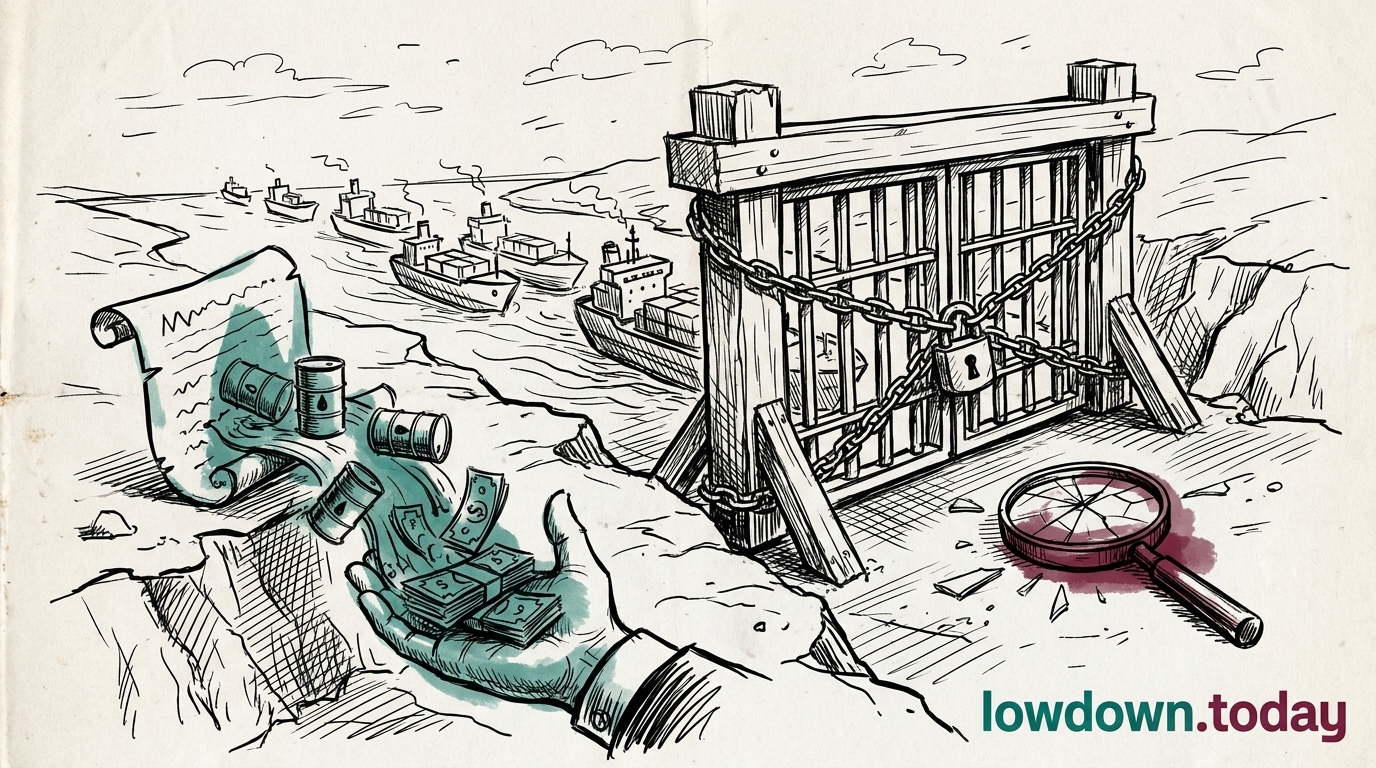
The White House published one presidential action between 31 July and 3 August: a proclamation dated 31 July adjusting tariffs on imported quartz surface products 1. No executive order, memorandum, national-emergency continuation or proclamation touching Iran, the war or sanctions appears on its own listing for those four days.

That listing is the register where a president's formal instruments land. Executive orders directing agencies, memoranda instructing departments, proclamations invoking or renewing statutory authority: each is dated, numbered and published there, and each is what turns a stated policy into an instruction a federal agency or a combatant command can act on. A verbal instruction from the Oval Office moves nobody outside the room.

Read the absence carefully. A cancelled strike does not normally generate an executive order, and the war has run for months on authorities already in force rather than fresh paper. The narrower claim survives the caveat: as of 3 August the climbdown rests on a social media post, remarks to reporters and calls from Riyadh, Doha and Abu Dhabi, none of which binds the President's own next decision.

This file already carries one instance of two governments describing the same room differently, when Tehran denied any negotiation with Washington while Trump described deep conversations . An unsigned understanding leaves each side free to keep its own version.


Deep Analysis

In plain English

The White House is where the US President works and lives. Between 31 July and 3 August, it published only one official document, and it was about tariffs on quartz countertops, nothing about Iran. That matters because Trump had just said he was calling off a planned strike. In America, changing a war plan does not automatically create a piece of paper. Nothing has been formally signed to make the pause official, or to reverse it.

Deep Analysis
Root Causes

Iran sanctions run on the International Emergency Economic Powers Act, which requires the president to renew the underlying national emergency annually rather than to sign a fresh order for each individual pause or resumption, so silence between 31 July and 3 August is legally unremarkable on its own.

A strike, by contrast, has never required a signed instrument in this war, since Trump has ordered every prior round verbally under an Article II self-defence claim; the paperwork gap is therefore constant across the conflict, not a new feature of this particular climbdown.

Escalation

The absence of an instrument does not indicate direction on its own, since Trump has never used a signed order to escalate this war either; watch the OFAC licence register, not the presidential-actions page, for the first real signal.

What could happen next?
  • Meaning

    The pause and any future resumption both rest on presidential statements rather than signed orders, a pattern set at the war's outset rather than created by this climbdown.

    Immediate · Assessed
  • Consequence

    Sanctioned counterparties get no legal basis to treat the war as paused, since only an OFAC general licence would change what a bank or insurer may lawfully do.

    Short term · Assessed
  • Risk

    Because resuming strikes needs no new instrument either, the pause could end without any public document announcing it.

    Short term · Reported
First Reported In

Update #165 · Gulf capitals talk Trump out of a strike

The White House· 3 Aug 2026
Read original
Causes and effects
Different Perspectives
Turkiye
Turkiye
Erdogan followed the Pakistani delegation to Jeddah for an instrument that has not been signed. Ankara's entry widens Saudi Arabia's defence architecture beyond the existing Pakistan pact, adding a second non-Gulf military partner mid-conflict.
Oman
Oman
Muscat is the corridor's broker but has published nothing about the arrangement Fars describes on its behalf. The account leaves Oman administering outbound traffic only, a narrower role than the shared route its mediation has rested on since 1979.
Pakistan
Pakistan
Islamabad sent Sharif, Munir and Dar to Jeddah to widen a defence commitment it has honoured in cheaper registers since March, when Dar invoked the Saudi mutual defence pact. Jeddah tests whether that hedge becomes a binding trilateral instrument with Turkiye.
United States
United States
Washington rejected the Majlis Hormuz bill outright while CENTCOM's own tally kept climbing to 49 vessels redirected since 14 July. Both instruments tightened in the same week Trump promised the strait would reopen soon.
Iran
Iran
Iran's foreign ministry is selling a phased Hormuz corridor through Oman and denying any percentage cargo tariff, while its own Majlis is legislating fines to 20% and a bar on Israeli-linked cargo. The two accounts, from the same government, do not agree with each other.
Saudi Arabia
Saudi Arabia
Riyadh published a target forecast, not an attribution, for the campaign it says the Najran strike previewed. That keeps an Article 51 case available while it formalises a trilateral defence architecture with Pakistan and Turkiye.



