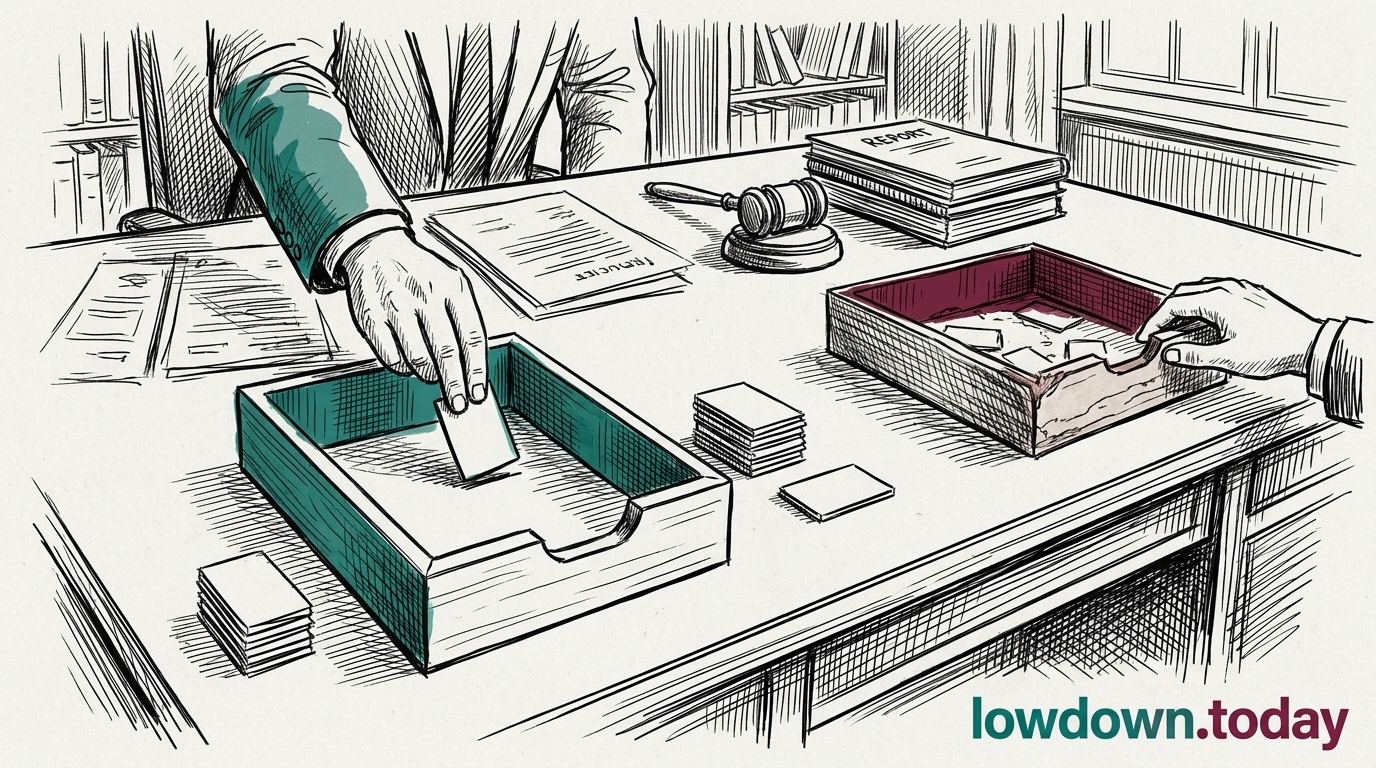
The bombing pause that followed Gen Dan Caine's munitions warning to the President held through Tuesday 28 July, and the Pentagon renamed the category under which it logs Iran war casualties on 26 July. Those are the two things Washington did since 26 July1.
What Washington said covered more ground. Donald Trump told Axios the United States is "engaged in deep conversations with Iran", and told a Michigan rally of the same government: "You cannot bribe them. You must defeat them, and we will defeat them decisively"2. Iranian Foreign Ministry spokesman Esmaeil Baghaei said Iran is conducting no negotiations with the United States, allowing only that mediators may be relaying messages3.
Tehran and Washington ran this exchange once already. Parliamentary speaker Mohammad Bagher Ghalibaf issued a categorical denial of talks on 23 March, calling Trump's claims an attempt to "manipulate markets and escape the quagmire", while a senior foreign ministry official told CBS News that US points had arrived through mediators and were being reviewed. Baghaei himself drew the same distinction then that he draws now, between direct negotiation and relayed messages. The Islamic Republic's political system requires that engagement with Washington look imposed rather than sought, which makes the public denial a fixed feature rather than a signal about what is happening in Muscat or Islamabad.
Al Jazeera's account also has US officials telling Reuters that available target sets were depleting, a reading Trump disputed to ABC News4. Read against the actions rather than the words, the pause and the recategorisation point the same way: one buys operational time while munitions stocks recover, the other buys legal time on the War Powers clock. Talks that one party denies are still talks the other can take credit for, and the pause runs on either way.


