Skip to content
Welcome, thoughtbot's Giant Robots listeners!Start here
Iran Conflict 2026
22JUN

The ban's own text makes it porous

3 min read
09:56UTC

Regulation (EU) 2026/261 binds on 17 June for short-term pipeline contracts, but exempts every long-term deal to September 2027 and six supply origins from prior authorisation.

ConflictDeveloping

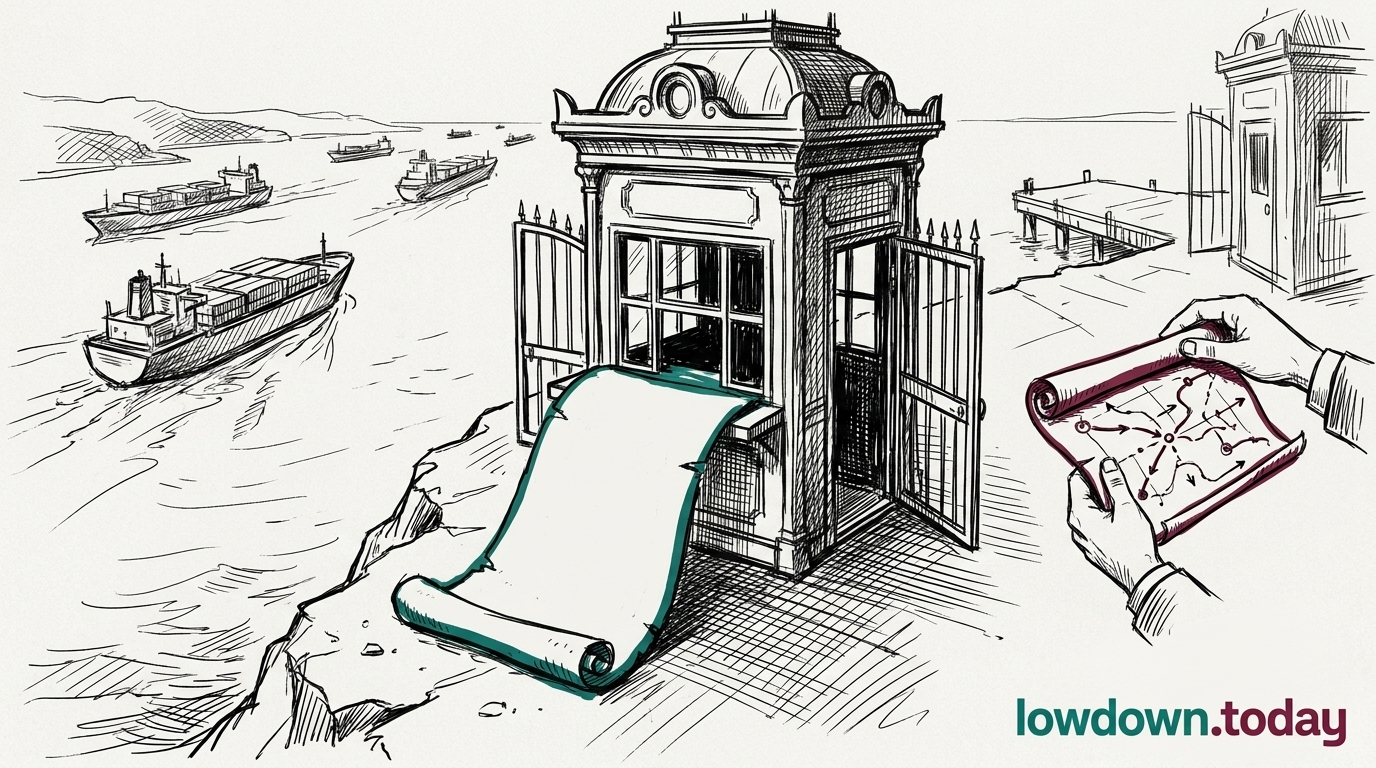
Regulation (EU) 2026/261 takes effect on 17 June for short-term pipeline contracts, those concluded before 17 June 2025⁠1. Regulation 2026/261 is the EU instrument phasing out Russian pipeline gas under the RePowerEU framework. Long-term contracts are exempt under its transitional provisions until 30 September 2027, which leaves the structural Russian flow into Central Europe legally intact for fifteen months past the headline date. The ban step-down was already flagged to bind with long-term TurkStream carved out; the regulation's detail confirms how little physical gas the deadline actually stops.

Implementing Decision (EU) 2026/335, adopted 9 February, exempts six origins from the prior-authorisation requirement: Algeria, Nigeria, Norway, Qatar, the UK and the USA⁠2. Prior authorisation is the mechanism a short-term importer uses to bring in non-exempt gas: it files one month before customs entry and clears an administrative check, a bureaucratic delay rather than a hard stop. Hungary's MVM, the state energy group, holds a 3.5 bcm long-term TurkStream contract fully exempt to September 2027.

The market priced this architecture days before the deadline. The CEGH-TTF basis had compressed to €0.41/MWh by 11 June, reading the ban as procedural rather than disruptive. CEGH is the Austrian virtual hub at the eastern end of the TurkStream route, the basis most exposed to any genuine physical step-down. A near-flat basis going into the binding week is the traded confirmation that desks expect the molecules to keep moving. TurkStream carries roughly 15 bcm a year to Hungary, Slovakia, the Czech Republic and Austria, and none of that long-term volume is touched on 17 June.

Deep Analysis

In plain English

The EU passed a law banning imports of Russian pipeline gas under short-term contracts, with the ban taking effect on 17 June 2026. Short-term contracts are deals signed less than a year ago, the kind traders use to move gas quickly across borders. But the ban has two large holes. First, long-term contracts signed before June 2025 are fully legal until at least September 2027. Hungary's state energy company MVM holds one such contract for 3.5 billion cubic metres per year of Russian gas through the TurkStream pipeline, which runs under the Black Sea and through Turkey. That gas keeps flowing legally. Second, six countries' gas is exempt from even the new administrative rules: Algeria, Norway, Qatar, Nigeria, the UK, and the US. Those six supply most of Europe's non-Russian gas already, so the rule mainly confirms the status quo for the main alternative suppliers.

Deep Analysis
Root Causes

The long-term contract exemption exists because Hungary and Slovakia negotiated transitional protection during the regulation's drafting. Both countries receive roughly 4-5 bcm per year of TurkStream gas under long-term contracts with pricing formulae that Gazprom set before the 2022 invasion.

Replacing those volumes at spot TTF prices would add an estimated €0.8-1.2 billion per year to their combined energy import bills at current price levels, a fiscal shock that the Commission had no solidarity mechanism to offset.

The six-origin prior-authorisation exemption in Implementing Decision 2026/335 reflects a separate structural constraint: LNG terminals in France, Spain, Belgium and the Netherlands cannot physically process sufficient non-Russian volumes to substitute short-term pipeline gas without queue and regasification capacity bottlenecks.

Algeria, Norway, Qatar, Nigeria, the UK and the US were already the primary alternative supply vectors before the regulation was drafted; exempting them is functionally an acknowledgement that no new supply origination was politically or commercially viable within the legislative window.

The prior-authorisation system, rather than an outright ban, reflects the Commission's legal caution: an absolute ban on all gas of Russian origin would likely trigger CJEU annulment on proportionality grounds given the 2018 European Court ruling on EU energy trade measures. Structuring the instrument as an administrative gate rather than a prohibition lets the Commission defend it as targeted and reversible in ongoing CJEU proceedings.

What could happen next?
  • Precedent

    Regulation 2026/261's tiered architecture creates a template for phased energy sanctions that subsequent EU instruments on TurkStream long-term volumes or LNG will reference as the established compromise model.

    Long term · Assessed
  • Risk

    MVM's 3.5 bcm TurkStream contract remaining exempt until September 2027 means Hungary retains Russian gas dependency for 15 more months, sustaining Kremlin leverage over Central European supply security through the 2026-27 heating season.

    Medium term · Assessed
  • Consequence

    The prior-authorisation exemption for six origins effectively grandfathers the current EU LNG supply structure, reducing the regulatory incentive to diversify beyond US LNG at 58% of EU imports.

    Medium term · Assessed
First Reported In

Update #18 · TTF breaks the floor into the import ban

EUR-Lex· 15 Jun 2026
Read original →
Causes and effects
This Event
The ban's own text makes it porous
The regulation stops a thin slice of short-term flow while the structural Russian pipeline supply into Central Europe stays legally intact for fifteen more months.
Different Perspectives
Office for Budget Responsibility
The OBR's 28 October forecast assumed $82 oil for 2026 and 2027, from market prices for the ten working days to 19 August, and blamed dearer wholesale energy on the war without naming Iran. It expects CPI inflation close to 4% in early 2027 even at that price.
Hengaw, Kurdish rights group
Hengaw reported the 3 November hangings of Amirhossein Maleki and Amirhossein Ebrahimi in Isfahan, saying Ebrahimi was tortured into confessing and that nine of 12 people sentenced to death in the case have now been hanged. Iran's judiciary holds that the defendants killed members of the security forces.
FINTRAC, Canada's financial intelligence unit
FINTRAC worked with the US Treasury on the 6 November designation of eight money services businesses in British Columbia, Ontario and Quebec. Treasury says the businesses still operate, some under new names, so closing them falls to Ottawa.
Abdul Qadir al-Dakhil, Governor of Nineveh
Al-Dakhil cancelled three Mosul International Airport contracts on 7 November over alleged links to armed groups, after meeting Prime Minister Ali al-Zaidi in Baghdad. He named no group or company, and said the contracts will go to international companies.
Kuwait
Kuwait
Kuwait condemned the Houthi missile fired towards the Madinah region on 5 November and restated its support for Saudi Arabia, the Qatar News Agency reported. Its state tanker company, Kuwait Oil Tankers Company, is among the Gulf state fleets on Iran's expanded Hormuz list.
Scott Bessent, US Treasury Secretary
Treasury designated an alleged Chandigarh false-flag network on 4 November and eight Canadian exchangers on 6 November, while State sanctioned alleged MANPADS intermediaries. None of the actions touches an oil buyer; they target the paper, cash and procurement around Iran's trade.

Written with AI from Lowdown's published reporting. Not individually reviewed by an editor. Editorial standards.
