Skip to content
You can now search across every topic, entity and event.What's new
Iran Conflict 2026
22JUN

State media leaks a deal nobody confirms

3 min read
09:56UTC

Mehr News, an Iranian state-affiliated outlet, published a 14-point version of the memorandum on 14 June listing $24 billion in frozen assets freed and $300 billion in reconstruction. No US or Iranian official confirmed it; Al Jazeera and Iran International could not verify it.

ConflictDeveloping
Key takeaway

The only published version of the deal is an unconfirmed leak from Iran's own state media.

Mehr News Agency, an Iranian state-affiliated outlet aligned with the IRGC, published a 14-point version of the memorandum on 14 June. 1 The list describes a permanent ceasefire on all fronts including Lebanon, $24 billion in frozen Iranian assets freed during the 60-day window, suspended oil sanctions, a naval blockade lifted within 30 days, and $300 billion in reconstruction, while leaving Iran's missiles and proxies out of the draft entirely. No US or Iranian official has confirmed a word of it.

The $24bn figure is not new to the negotiation. Iran's negotiator Rezaei had demanded exactly that sum in freed assets as a precondition for any deal , so the leaked draft reads less as disclosure than as Tehran restating its opening price through friendly media. To scale the numbers, $24bn is roughly half of Iran's pre-war annual oil revenue, and $300bn approaches three-quarters of its entire annual economic output.

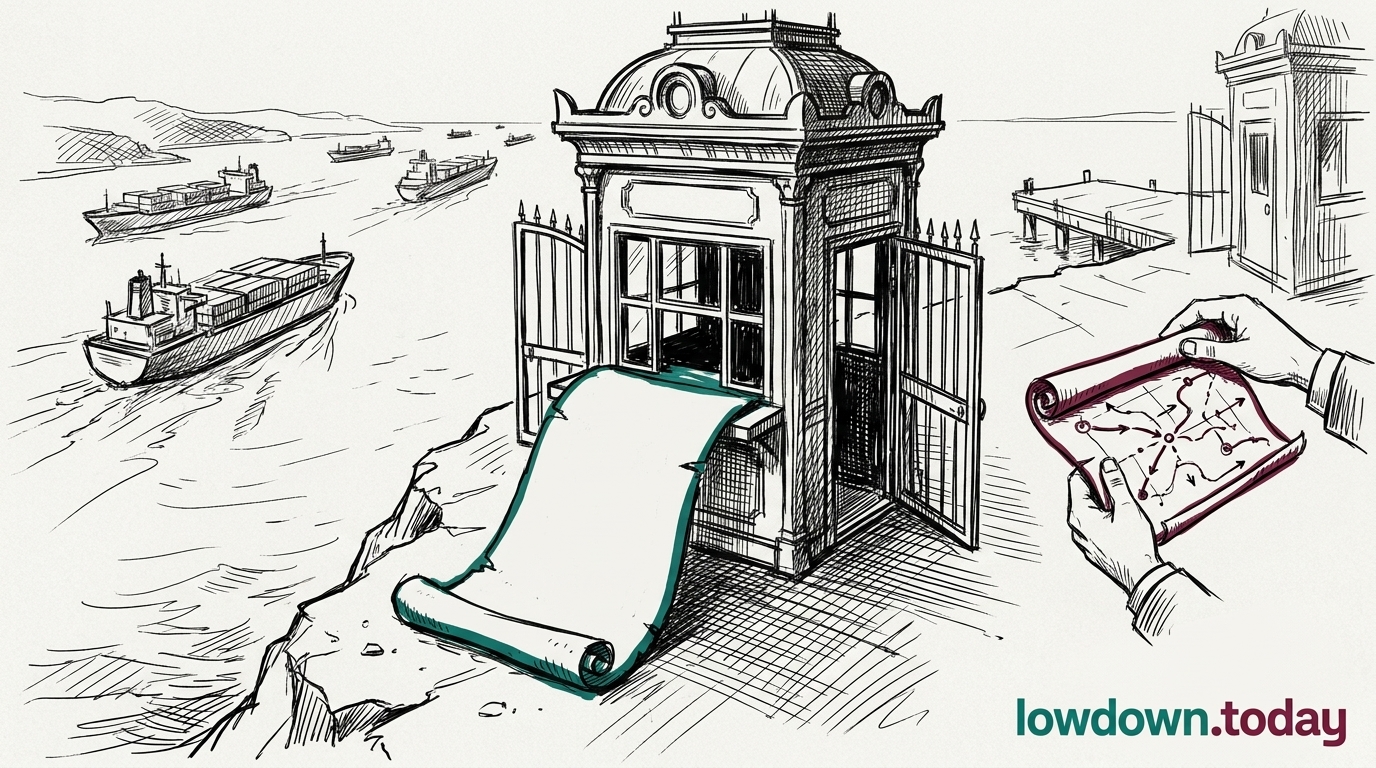
Al Jazeera and Iran International both said they could not independently verify the Mehr list. 2 The real text stays sealed until Geneva, which leaves a maximalist state-media draft as the only published account of what the deal contains. Set that draft beside the empty US record and the distance is the point: a 14-point wish list circulating in Tehran, against a Washington that has filed nothing.


Deep Analysis

In plain English

Mehr News Agency is an Iranian news outlet closely linked to the state and to the Islamic Revolutionary Guard Corps. On 14 June, before the MOU was digitally signed, Mehr published what it claimed was the full 14-point list of what Iran had agreed to: $24 billion in frozen bank accounts freed, oil sanctions suspended, a naval blockade lifted within 30 days, and $300 billion for reconstruction. No US or Iranian official confirmed these terms. Two other news outlets, Al Jazeera and Iran International, said they could not independently verify the list. The signed MOU has not been publicly released. That gap, between what Mehr published and what the official signed document says, is the story: the deal's real terms will only become clear at the Geneva ceremony on 19 June or when a text is officially released.

First Reported In

Update #129 · Iran deal signed, but no paper to show

Iran International· 16 Jun 2026
Read original
Causes and effects
This Event
State media leaks a deal nobody confirms
The only published terms are the ones Iran's own media chose to release, set against an official US record that stands empty.
Different Perspectives
Hengaw
Hengaw
The Norway-based monitoring group reported the Urmia executions of Omid Behzad and Pouria Safvat, the only source to do so, consistent with its documented pattern of recording far more executions than the Iranian state acknowledges. Iran's government has not confirmed either execution.
Shipping and insurance underwriters
War-risk premiums price the Houthi campaign because the group announces its targets in advance, but a reopening Trump has promised without a published text gives underwriters no benchmark to reprice Hormuz cover against. Insurers want a text before they move rates, not a promise.
Houthi movement
Houthi movement
Spokesman Yahya Saree claimed strikes on two tankers in the Red Sea and Gulf of Aden on 5 August, only one of which UKMTO could confirm. The group's campaign against shipping continues on its own schedule, independent of any Hormuz arrangement further north.
Oman
Oman
Muscat has brokered the coordinates both Tehran and Washington's wire sources now describe differently, but has published no account of its own. Oman's position depends on treating Hormuz as a shared route, which is not what Iran is currently describing.
United States Central Command
CENTCOM raised its interdiction tally from 35 to 44 redirected vessels and disclosed its first boardings on 3 August, the day before Trump promised a reopening. The command's own enforcement record does not yet reflect the release the President has described.
Iran's Foreign Ministry
Spokesman Esmaeil Baghaei described the agreed Hormuz coordinates as a wholly new corridor under Iranian management, not a split of the existing route, days after his own deputy rejected Oman's lane proposal. Tehran wants the arrangement read as a change of ownership, not a compromise on access.



