Skip to content
You can now search across every topic, entity and event.What's new
Iran Conflict 2026
22JUN

EU 21st package squeezes shadow tonnage

3 min read
09:56UTC

Von der Leyen announced the EU's 21st sanctions package on 26 May, built on fresh shadow-fleet tanker listings and banks rather than a price-cap revision.

ConflictAssessed
Key takeaway

The 21st package hits freight and the Urals discount, thinning compliant tonnage as GL 134C nears its 17 June lapse.

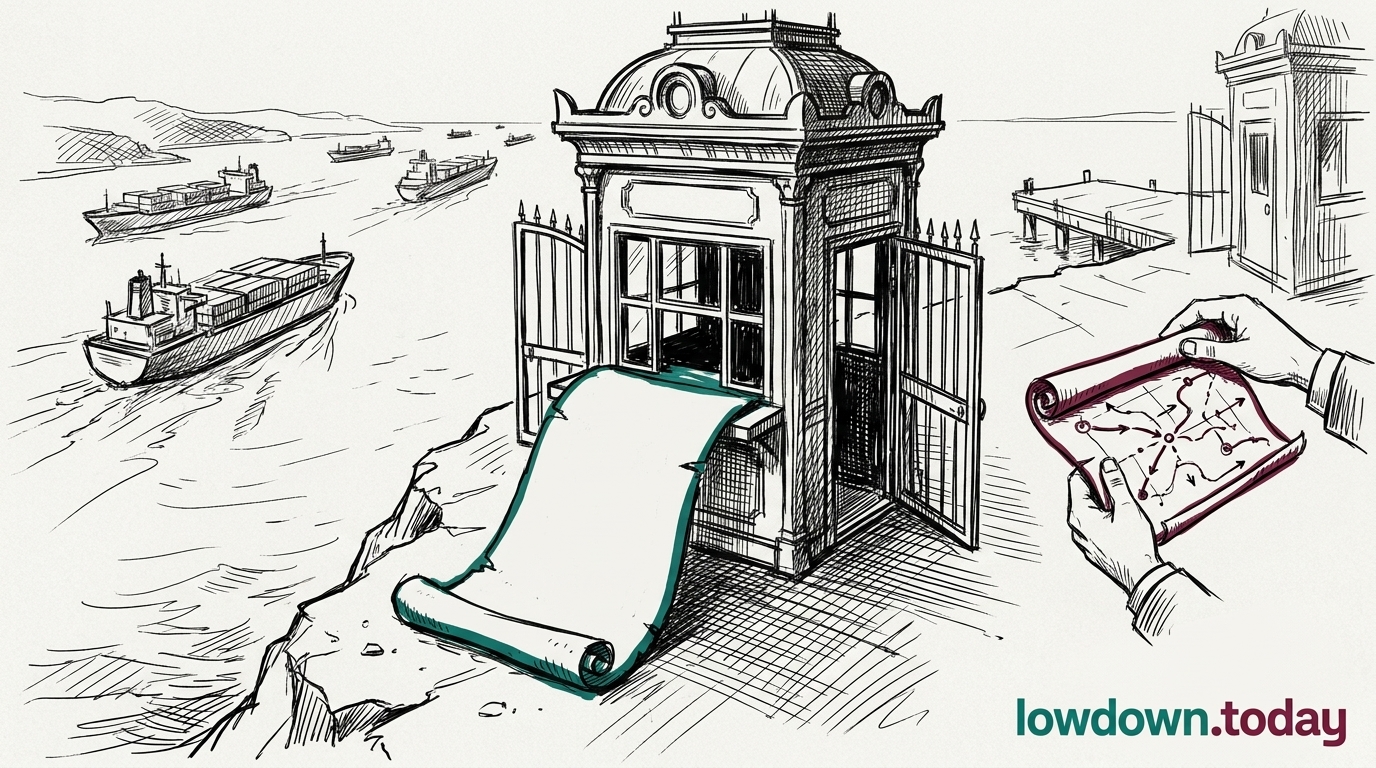
Ursula von der Leyen announced the EU 21st sanctions package on 26 May, the European Commission President fronting a set of measures built around additional shadow-fleet tanker listings and bank restrictions 1. It is the follow-through on the 20th package's deferred maritime-services ban , which a lack of EU-27 unanimity had blocked in April. The choice of instrument matters more than the headline.

von der Leyen's package targets carry, not the cap: it raises the cost of moving Russian crude rather than revising its assessed value, so the pressure surfaces in freight rates and the Urals discount rather than in a price-cap number. That distinction routes the consequence straight to European spreads: every hull listed is a hull pulled from the pool that moves Russian barrels.

The timing stacks. Fresh shadow-fleet tonnage comes out via the EU package precisely as GL 134C nears its 17 June lapse , which had eased the Baltic Aframax compliance bid when it restored in-transit cover. The compliant pool thins from the Russian side just as in-transit cover is set to expire. The last hard freight read is the BDTI at 2,249 on 20 May ; the direction is set up, not yet printed.


Deep Analysis

In plain English

The European Union has been imposing sanctions on Russia since the 2022 invasion of Ukraine, targeting the oil trade that funds Moscow's government. Each new package adds more names to a blacklist and makes it harder (and more expensive) for Russian oil to reach buyers. This 21st package focused on the so-called shadow fleet: hundreds of tankers operating outside Western insurance and regulatory systems, used to move Russian crude without triggering Western sanctions. Rather than changing the price cap (the maximum price Western buyers are allowed to pay for Russian oil), this package raises the cost of shipping by listing more shadow-fleet ships. When a ship is listed, Western banks and insurers cannot touch it, which raises freight costs and eats into the discount Russia has to offer buyers to compensate. The result shows up in the Urals discount, not in headline prices.

Deep Analysis
Root Causes

The 21st package's carry-led rather than cap-led design reflects two distinct political constraints.

The EU-27 unanimity requirement for price-cap revision effectively vetoed a headline cap change: Hungary, Slovakia, and Austria have each conditioned cap-revision support on domestic supply guarantees that are not resolvable in one round of Council negotiations. Carry-led measures (freight cost, insurance, bank restrictions) require only qualified majority in some instruments and are tactically easier to advance.

The G7 Kananaskis summit on 12-15 June 2026 is the structural prerequisite for a full maritime-services ban. The 21st package advances what can be advanced before that summit to demonstrate EU resolve while preserving cap-revision as the summit deliverable.

What could happen next?
  • Consequence

    Carry-led packages widen the Urals-Brent discount and compress the freight margin available to shadow-fleet operators, reducing their willingness to accept Russian crude at existing freight rates.

    Short term · Assessed
  • Risk

    With 632 vessels now listed and no G7 insurance backstop withdrawal yet, the package hits diminishing returns on the listing-mechanism alone; volume disruption requires the G7 Kananaskis (12-15 June) insurance coordination step.

    Short term · Assessed
  • Precedent

    The 21st package confirms the EU is proceeding in parallel with OFAC rather than waiting for G7 summit coordination, setting a precedent for unilateral EU carry-pressure between G7 milestones.

    Medium term · Assessed
First Reported In

Update #3 · OFAC loads a June squeeze the screen ignores

Reuters· 29 May 2026
Read original
Different Perspectives
Hengaw
Hengaw
The Norway-based monitoring group reported the Urmia executions of Omid Behzad and Pouria Safvat, the only source to do so, consistent with its documented pattern of recording far more executions than the Iranian state acknowledges. Iran's government has not confirmed either execution.
Shipping and insurance underwriters
War-risk premiums price the Houthi campaign because the group announces its targets in advance, but a reopening Trump has promised without a published text gives underwriters no benchmark to reprice Hormuz cover against. Insurers want a text before they move rates, not a promise.
Houthi movement
Houthi movement
Spokesman Yahya Saree claimed strikes on two tankers in the Red Sea and Gulf of Aden on 5 August, only one of which UKMTO could confirm. The group's campaign against shipping continues on its own schedule, independent of any Hormuz arrangement further north.
Oman
Oman
Muscat has brokered the coordinates both Tehran and Washington's wire sources now describe differently, but has published no account of its own. Oman's position depends on treating Hormuz as a shared route, which is not what Iran is currently describing.
United States Central Command
CENTCOM raised its interdiction tally from 35 to 44 redirected vessels and disclosed its first boardings on 3 August, the day before Trump promised a reopening. The command's own enforcement record does not yet reflect the release the President has described.
Iran's Foreign Ministry
Spokesman Esmaeil Baghaei described the agreed Hormuz coordinates as a wholly new corridor under Iranian management, not a split of the existing route, days after his own deputy rejected Oman's lane proposal. Tehran wants the arrangement read as a change of ownership, not a compromise on access.



