Skip to content
You can now search across every topic, entity and event.What's new
Iran Conflict 2026
21JUN

Ukraine's strikes move to the Azov

2 min read
17:51UTC

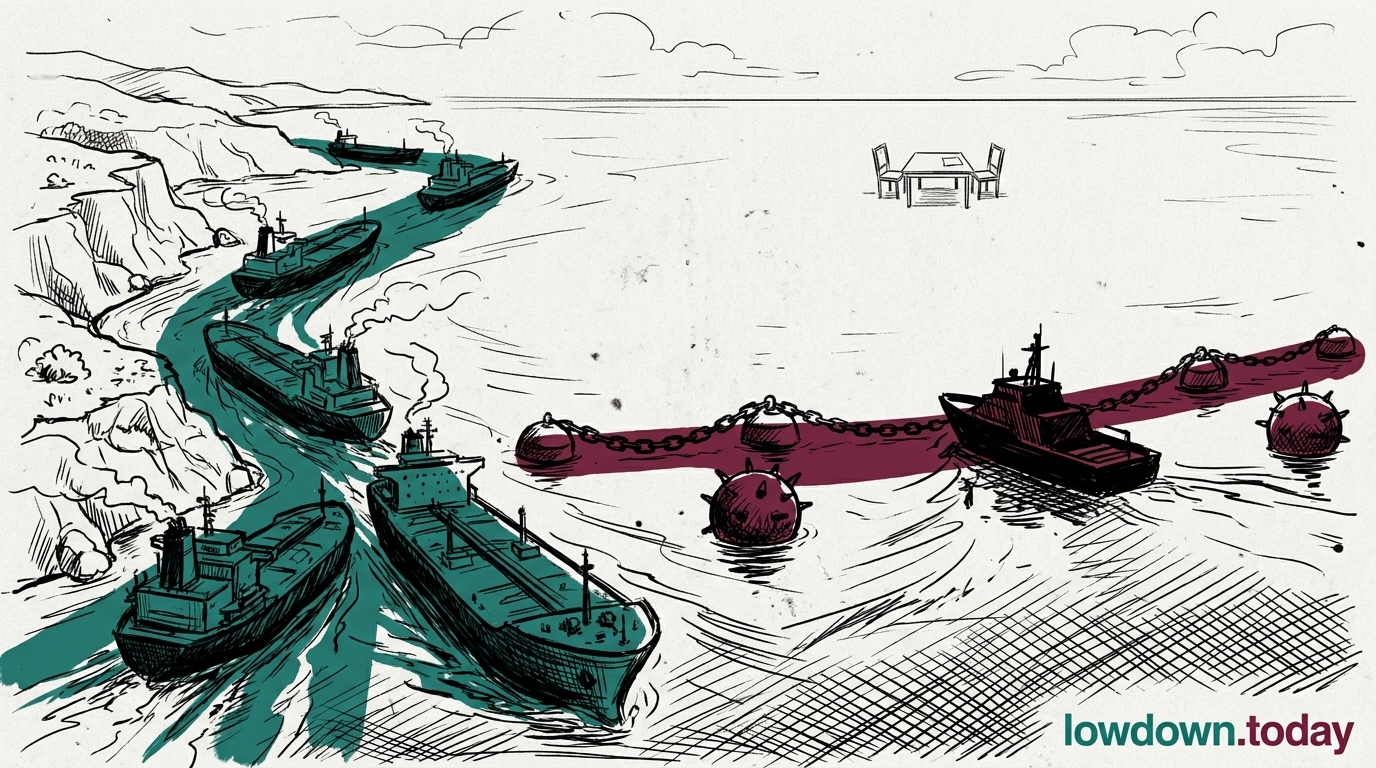
Ukraine's drones shifted from Russian refineries to fuel tankers in the Sea of Azov, cutting vessel traffic there by a possible 55% between 30 June and 11 July.

ConflictDeveloping
Key takeaway

Ukraine's strike campaign moved to Sea of Azov fuel tankers, cutting traffic there by a possible 55%.

Ukraine's long-range strike campaign shifted in the first fortnight of July from static refineries to the seaborne tankers carrying fuel across the Sea of Azov, the Institute for the Study of War (ISW) reported 1. Automatic identification system tracking from Starboard Maritime Intelligence, a commercial firm that monitors ship movements, recorded a possible 55% drop in Azov traffic between 30 June and 11 July 2.

Through June the campaign had reached deep inside Russia: the Kapotnya refinery near Moscow , the Tyumen plant two thousand kilometres from the border in Siberia , and airbase hangars at Saky on 1 July . Targeting the tankers changes the class of target from fixed installations to moving cargo, and it reaches the fuel at the point it leaves the country.

The tanker campaign works through logistics rather than firepower. Strike the vessels and the fuel cannot sail, so it backs up at the terminals the domestic market also draws on, pushing Russian pump prices higher 3. The diesel export ban exists in part to hold that backup inside Russia's borders.


Deep Analysis

In plain English

Ukraine has been bombing Russian oil refineries for months. Now it has widened the campaign to hit the ships that carry Russian fuel across the Sea of Azov, the inland sea between the two countries. A commercial tracking firm called Starboard Maritime Intelligence, which follows ship movements by radio signal, recorded roughly half as many vessels crossing the Azov between 30 June and 11 July as before. This matters because even fuel that survives the refinery still has to reach a buyer by ship. Targeting the tankers themselves, alongside the plants that make the fuel, closes off one more route Russia has been using to keep exports moving.

Deep Analysis
Root Causes

Refineries are fixed, defended, and can be patched or partially restarted; ocean-going tankers moving through the Sea of Azov's narrow approaches have far less air-defence cover and cannot be dispersed once under way, which makes them a softer target once Ukraine's strike range and targeting data allow it.

The economic incentive compounds this: the fuel crunch behind Russia's own diesel export ban tightens what refined product is even available to ship, so every remaining cargo becomes a higher-value target for the strike campaign to interdict.

Escalation

Direction: expanding target set from land-based refineries to seaborne logistics, a widening rather than a de-escalation of the strike campaign. Evidence: the 55% AIS traffic decline follows earlier June refinery strikes on Kapotnya and Tyumen, suggesting a deliberate broadening rather than a one-off incident.

What could happen next?
  • Consequence

    Vessel operators may increasingly go dark on AIS transponders to avoid becoming targets, which would make future traffic-decline figures harder to interpret as damage versus evasion.

First Reported In

Update #23 · Moscow rations diesel as US cover lapses

Institute for the Study of War / Critical Threats Project· 13 Jul 2026
Read original
Different Perspectives
Shipping and insurance industry
UKMTO counted about 20 US-facilitated Hormuz transits a day to 11 September against only 6 visible on AIS, with traffic still around 90% below the 138-a-day pre-war baseline. War-risk underwriters cannot price hulls they cannot see, or resolve whether the tanker El Gaia hit a mine, as Iran claims, or a missile and drone, as CENTCOM says.
European refiners
European refiners
European refiners, including Poland's Orlen, absorbed a roughly $26 gap between Dated Brent at $130.80 on 15 September and ICE Brent futures settling at $103.87 on 18 September, a spread that widened from $13.45 on 9 September rather than newly opening. Their futures hedges no longer cover what they now pay for physical barrels.
Saudi Arabia
Saudi Arabia
Saudi Aramco zeroed European term customers' October allocations and rerouted roughly 60 million barrels to Asia through Ras Tanura and Sohar, using Red Sea and Gulf terminal capacity built years ago to cut Hormuz exposure. Riyadh reallocated existing supply rather than negotiating a shortfall with Europe.
Qatar
Qatar
Qatar's energy minister Saad al-Kaabi told Bloomberg at the Qatar Economic Forum on 20 September that Bessent's two-year Hormuz-obsolescence forecast is wrong, and that Doha has deliberately built no bypass pipeline. Qatar's gas exports run through one waterway by choice, not oversight.
Iran (foreign ministry and Majlis)
Iran's foreign ministry and 130 Majlis deputies moved toward NPT withdrawal this week, with lawmaker Hossein-Ali Haji Deligani filing a triple-urgency bill on 20 September that Speaker Qalibaf has not yet scheduled. Tehran treats treaty membership as leverage still on the table, not yet spent.
Russia and China
Russia and China
Moscow and Beijing vetoed the Panel of Experts' renewal, maintaining Resolution 2231 lapsed in October 2025 and the 2025 snapback was never validly triggered, so the sanctions architecture the Panel enforces has no current legal standing. Both governments frame the veto as upholding law, not shielding Tehran.



