Skip to content
You can now search across every topic, entity and event.What's new
Iran Conflict 2026
21JUN

Ukraine says it hit 159 tankers

2 min read
17:51UTC

Ukraine's military said it struck 159 shadow-fleet vessels in 12 days through mid-July, up sharply from 35 strikes in the previous 96 hours.

ConflictDeveloping
Key takeaway

Ukraine says it hit 159 shadow-fleet tankers in 12 days, targeting Russia's sanctioned oil trade.

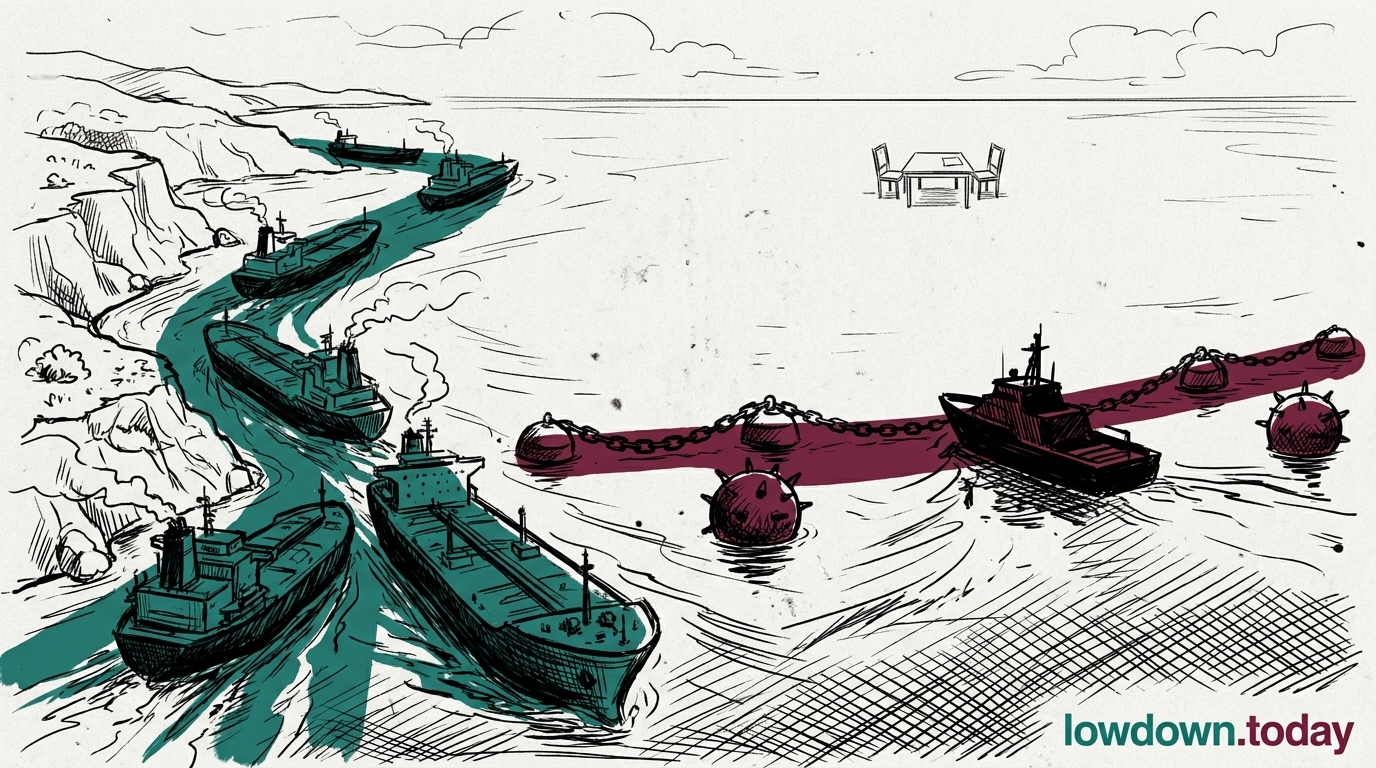
Ukraine's military said it struck 159 shadow-fleet vessels in a 12-day campaign through mid-July, up from 35 in the previous 96 hours 1. The figure is a Ukrainian military claim rather than an independently verified count, so the scale rests on Kyiv's own reporting. The shadow fleet is the loose armada of ageing, opaquely owned tankers Russia uses to move crude outside Western insurance and shipping channels.

The strikes extend a shift that began when Ukraine moved its maritime drones onto Sea of Azov fuel tankers, cutting traffic . Rather than chase warships, Kyiv is now going after the vessels that carry the oil itself, which puts the campaign directly onto the same ledger as the sanctions lapse driving Russian crude revenue.

Each disabled tanker raises the cost and risk of moving a barrel, and with Western licensing cover gone the shadow fleet is the mechanism Moscow leans on hardest. That makes it the pressure point where Ukrainian drones can bite even while the land front holds.


Deep Analysis

In plain English

Russia moves much of its sanctioned oil on a 'shadow fleet' of tankers that operate outside normal Western insurance and registration rules. Ukraine's military said it struck 159 of these vessels over 12 days through mid-July, a sharp jump from 35 strikes in the previous four days. The strikes aim to make shipping Russian oil riskier and more expensive, on top of the sanctions that already restrict who can legally buy it.

What could happen next?
  • Consequence

    A sustained strike rate at this level would push insurance and charter costs up across the whole shadow fleet, not only the vessels directly hit.

First Reported In

Update #25 · Ukraine rebuilds command as front freezes

RFE/RL· 23 Jul 2026
Read original
Different Perspectives
Shipping and insurance industry
UKMTO counted about 20 US-facilitated Hormuz transits a day to 11 September against only 6 visible on AIS, with traffic still around 90% below the 138-a-day pre-war baseline. War-risk underwriters cannot price hulls they cannot see, or resolve whether the tanker El Gaia hit a mine, as Iran claims, or a missile and drone, as CENTCOM says.
European refiners
European refiners
European refiners, including Poland's Orlen, absorbed a roughly $26 gap between Dated Brent at $130.80 on 15 September and ICE Brent futures settling at $103.87 on 18 September, a spread that widened from $13.45 on 9 September rather than newly opening. Their futures hedges no longer cover what they now pay for physical barrels.
Saudi Arabia
Saudi Arabia
Saudi Aramco zeroed European term customers' October allocations and rerouted roughly 60 million barrels to Asia through Ras Tanura and Sohar, using Red Sea and Gulf terminal capacity built years ago to cut Hormuz exposure. Riyadh reallocated existing supply rather than negotiating a shortfall with Europe.
Qatar
Qatar
Qatar's energy minister Saad al-Kaabi told Bloomberg at the Qatar Economic Forum on 20 September that Bessent's two-year Hormuz-obsolescence forecast is wrong, and that Doha has deliberately built no bypass pipeline. Qatar's gas exports run through one waterway by choice, not oversight.
Iran (foreign ministry and Majlis)
Iran's foreign ministry and 130 Majlis deputies moved toward NPT withdrawal this week, with lawmaker Hossein-Ali Haji Deligani filing a triple-urgency bill on 20 September that Speaker Qalibaf has not yet scheduled. Tehran treats treaty membership as leverage still on the table, not yet spent.
Russia and China
Russia and China
Moscow and Beijing vetoed the Panel of Experts' renewal, maintaining Resolution 2231 lapsed in October 2025 and the 2025 snapback was never validly triggered, so the sanctions architecture the Panel enforces has no current legal standing. Both governments frame the veto as upholding law, not shielding Tehran.



