Skip to content
You can now search across every topic, entity and event.What's new
Iran Conflict 2026
17JUN

State launches MFC for Hormuz with no members

3 min read
09:37UTC

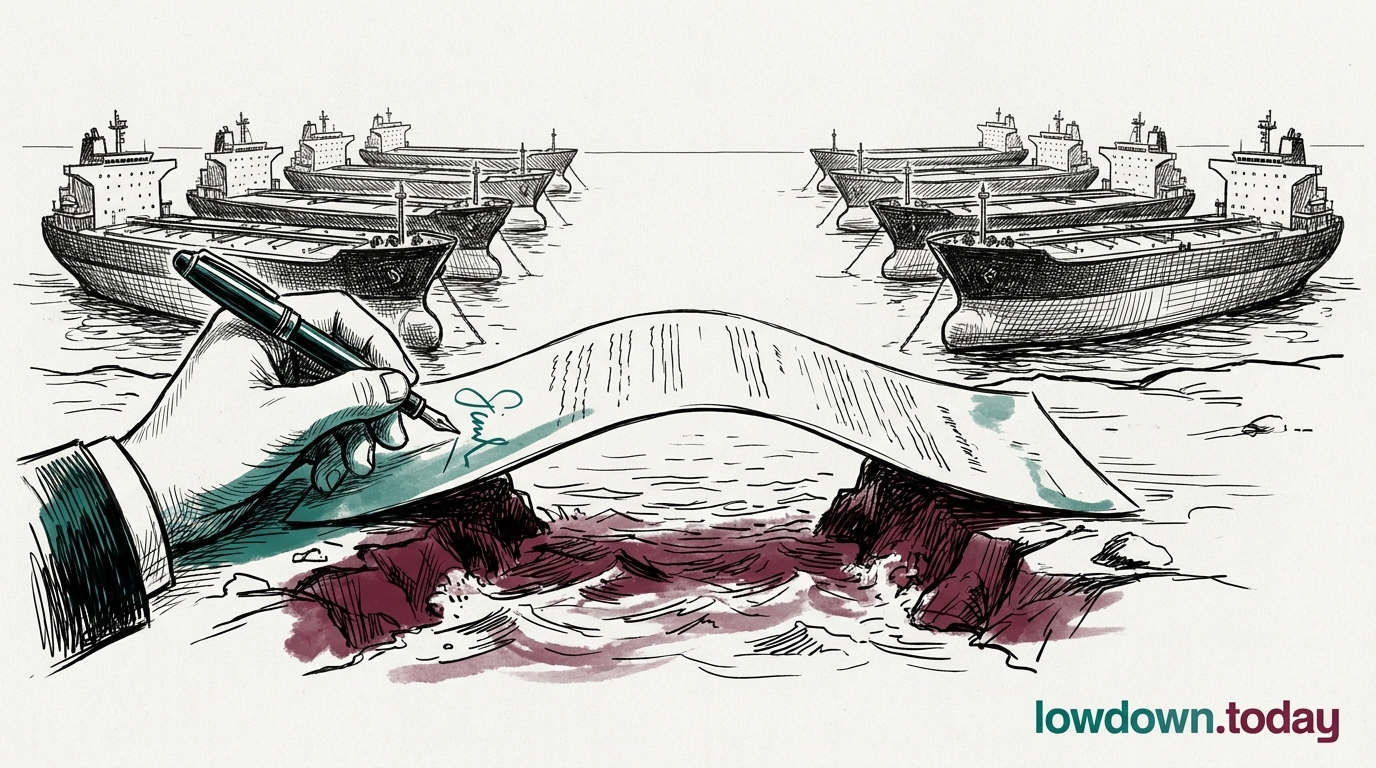
The State Department launched the Maritime Freedom Construct (MFC) alongside CENTCOM on 30 April 2026, naming no member countries and signing no framework document.

ConflictDeveloping
Key takeaway

The MFC was launched without member countries or a signed framework, leaving the European Northwood/Paris track ahead on documentation.

The US State Department launched the Maritime Freedom Construct (MFC) alongside CENTCOM on 30 April 2026, describing it as a diplomatic hub to provide "real-time information, safety guidance, and coordination to ensure vessels can transit securely" through the Strait of Hormuz 1. CENTCOM is the US Central Command responsible for the Middle East theatre; the MFC is the State Department's first dedicated diplomatic instrument for Hormuz governance since the blockade began. State named no member countries in the announcement, signed no framework document, and cited a diplomatic cable as the launching instrument.

A diplomatic hub without member countries cannot publish rules of engagement, the legal documents that would bind it, because rules of engagement require signatories. The United Kingdom and France lead a parallel coalition through the Northwood Permanent Joint Headquarters and the Paris track, with more than 50 named participating countries. Northwood is drafting rules of engagement now; the MFC has none yet to draft. Oman and Iran had already drafted a bilateral transit protocol in March, the structural inheritance behind Khamenei's same-day "new management" statement; the surrounding US posture sits in the prior week's blockade messaging .

The MFC reads as a counter-announcement to Khamenei's written statement rather than an operational instrument, the announcement repackages existing CENTCOM tasking under a State Department brand. Whether the MFC names member countries before the European track publishes rules of engagement is the documentation race that will determine which framework prices Hormuz transit risk.


Deep Analysis

In plain English

The US State Department announced on 30 April 2026 that it was launching a 'Maritime Freedom Construct' to help ships safely transit the Strait of Hormuz. The idea is that the US and partner countries would coordinate to make sure commercial vessels can get through despite the tension with Iran. But here is what makes this announcement unusual: no other countries were named as members of this coalition, no signed agreement was published, and the State Department sent the entire announcement via a diplomatic cable rather than a treaty or a press conference with allies present. By contrast, Britain and France have been quietly building their own parallel coalition, with more than 50 countries already involved, at a UK military base called Northwood and in Paris. The US MFC looks like a counter-announcement to that European effort, issued the same day Iran's Supreme Leader said Iran would take 'new management' of the strait. Three competing frameworks, zero agreed rules.

Deep Analysis
Root Causes

The MFC's empty membership reflects the diplomatic isolation created by Hegseth's 29 April HASC Posture Statement, which condemned all NATO allies who refused base, overflight, and basing rights as 'unconscionable, and we will remember'. No European naval power will join a US-led Hormuz framework under those conditions.

Gulf states face the additional constraint of not wanting to publicly align with either US or Iranian governance claims until the ceasefire framework is clearer. Oman, which sits on the southern shore of Hormuz and has already drafted a bilateral transit protocol with Iran, faces the most acute version of this constraint.

What could happen next?
  • Risk

    Without named members or signed framework documents, the MFC cannot publish rules of engagement, leaving naval commanders at Hormuz without binding guidance on how to respond to Iranian enforcement actions.

  • Consequence

    The parallel Northwood/Paris track with 50+ members now has a structural advantage over the MFC: text, members, and a potential legal architecture. Any future Hormuz governance framework is more likely to emerge from the European track than the US one.

First Reported In

Update #85 · "Not at war": three claims, no treaty

CBS News· 1 May 2026
Read original
Different Perspectives
Lloyd's Market Association
War-risk underwriters price the Houthis' Red Sea attacks because the group announces its targets in advance, but the unclaimed Damietta drone gives insurers a hit with no author to price against. An attack nobody claims costs shipping more than one that is claimed, since premiums are set against a known pattern, not raw damage.
US Central Command
US Central Command
CENTCOM has announced no strike on Iran since resuming bombing on 30 July within hours of an IRGC salvo on Jordan, and centcom.mil did not respond to requests to confirm any pause. The command has gone quiet before while a larger operation was being weighed, so silence alone proves nothing about what it has or has not done.
Hengaw
Hengaw
Hengaw recorded at least 67 executions in Iran during July, of which the state acknowledged only eight, and reported the 1 August execution of protest detainee Arvin Kheirkhahan at Shahrud with no advance notice to his family. A family's first notice of a death sentence is now usually the instruction to collect a body.
Egypt
Egypt
Egypt's government asked media on 2 August to report the Damietta attack accurately, named no author, and said no findings will be published before its own investigation concludes. Cairo holds the debris and jurisdiction over an attack on its own soil, and naming a culprit now would pull it into a dispute it has avoided for five months.
Iran's Foreign Ministry
Araghchi called the Hormuz talks with Oman final-stage on 2 August, four days after his own deputy rejected Oman's lane proposal, and denied the Damietta drone strike as an Israeli false flag while two Iranian officials privately claimed it for Tehran. Iran's public position now contradicts itself on both files at once.
Bahrain and Kuwait
Bahrain and Kuwait
Bahraini and Kuwaiti aircraft flew their own strikes on Iranian depots in July with Emirati air cover behind them, and Ynetnews reports some Gulf capitals wanted the 2 August strike to proceed rather than stop. States that have already taken fire see a closing window on Iranian weakness, not a reason to pause.



