Skip to content
You can now search across every topic, entity and event.What's new
Iran Conflict 2026
17JUN

MOU text still secret 24h after sign

3 min read
09:37UTC

Vance promised the memorandum text by Wednesday and never released it; US officials told CNN Iran's binding commitments are verbal side-deals, not in the signed document.

ConflictDeveloping
Key takeaway

Iran's binding commitments are verbal, so neither legislature can review or enforce the deal.

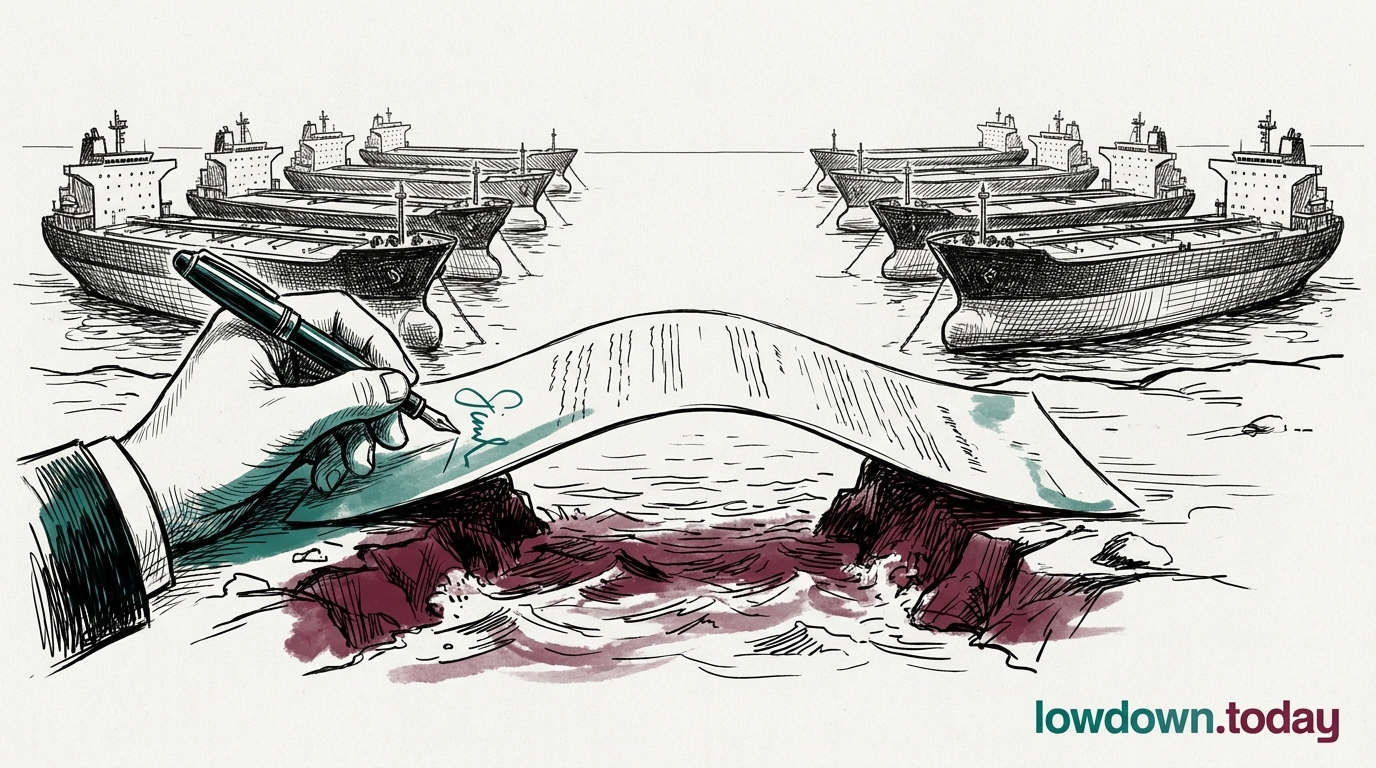
The text of the Islamabad Memorandum of Understanding still had not been published as of Wednesday 17 June. JD Vance, the US Vice President who signed for Washington, promised it "as early as tomorrow" on Tuesday; Wednesday came and went with nothing released 1. Senate Majority Leader John Thune formally pressed Trump for the document, and Senate Republicans signalled they will not back the deal without seeing it 2. Minority Leader Chuck Schumer demanded a Gang of Eight intelligence briefing, the closed session in which the eight senior congressional leaders review classified material.

US officials told CNN the document can stay vague because the binding terms sit outside it: Iran's critical commitments are not written into the signed text at all, and exist as verbal side-deals through the back-channel 3. Vance described the instrument as "approximately a page and a half". An agreement whose binding terms are spoken rather than signed cannot be enforced by either legislature, which is precisely why the IRGC and Mojtaba Khamenei have left it unsigned at their end .

The zero-transit reality in the strait and the empty insurance line that pinned more than five hundred ships in place both turn on terms no document records. A blank text means either party can later deny a commitment with no paper to contradict it, and that is the structural weakness the Majlis revolt and the Senate's refusal to endorse are both probing from opposite sides.


Deep Analysis

In plain English

The Islamabad Memorandum's text had not been released by 17 June. Senate Majority Leader John Thune formally asked to see it; Republicans said they would not support the deal without reading it first. US officials told CNN that Iran's most important commitments are not written into the document at all: they exist as spoken back-channel assurances. A verbal commitment cannot be enforced by courts, legislatures, or international organisations. If the US or Iran later disputes what was promised, there is no signed text to appeal to. That is why both Thune and Minority Leader Schumer pushed hard for the document: without it, the Senate has no leverage to hold either side to account.

Deep Analysis
Root Causes

The MOU's verbal-commitments structure has one direct cause: the two sides could not agree on written text for Iran's nuclear obligations without triggering immediate domestic political crises in both Tehran and Washington. Anything Iran commits to in writing on enrichment becomes a Majlis vote in Iran and a Senate ratification battle in the US.

The page-and-a-half length reflects a deliberate omission of substance, not an economy of drafting. A ceasefire instrument that defers enrichment, stockpile accounting, ballistic missiles, and IAEA re-entry dates cannot be page-and-a-half long unless those subjects were removed from the text entirely.

What could happen next?
  • Risk

    Verbal Iran commitments on nuclear enrichment and IAEA access cannot be enforced by the US Senate, international courts, or the IAEA itself; the 60-day talks open with no verified baseline.

  • Precedent

    A sole executive agreement with unpublished operative terms sets a precedent that US Iran policy can proceed without any congressional visibility, strengthening executive discretion but reducing institutional durability.

First Reported In

Update #130 · Trump signed the war over; it kept going

The Hill· 17 Jun 2026
Read original
Causes and effects
This Event
MOU text still secret 24h after sign
An agreement whose enforceable terms are spoken rather than written cannot be held to by either the US Senate or Iran's parliament.
Different Perspectives
Lloyd's Market Association
War-risk underwriters price the Houthis' Red Sea attacks because the group announces its targets in advance, but the unclaimed Damietta drone gives insurers a hit with no author to price against. An attack nobody claims costs shipping more than one that is claimed, since premiums are set against a known pattern, not raw damage.
US Central Command
US Central Command
CENTCOM has announced no strike on Iran since resuming bombing on 30 July within hours of an IRGC salvo on Jordan, and centcom.mil did not respond to requests to confirm any pause. The command has gone quiet before while a larger operation was being weighed, so silence alone proves nothing about what it has or has not done.
Hengaw
Hengaw
Hengaw recorded at least 67 executions in Iran during July, of which the state acknowledged only eight, and reported the 1 August execution of protest detainee Arvin Kheirkhahan at Shahrud with no advance notice to his family. A family's first notice of a death sentence is now usually the instruction to collect a body.
Egypt
Egypt
Egypt's government asked media on 2 August to report the Damietta attack accurately, named no author, and said no findings will be published before its own investigation concludes. Cairo holds the debris and jurisdiction over an attack on its own soil, and naming a culprit now would pull it into a dispute it has avoided for five months.
Iran's Foreign Ministry
Araghchi called the Hormuz talks with Oman final-stage on 2 August, four days after his own deputy rejected Oman's lane proposal, and denied the Damietta drone strike as an Israeli false flag while two Iranian officials privately claimed it for Tehran. Iran's public position now contradicts itself on both files at once.
Bahrain and Kuwait
Bahrain and Kuwait
Bahraini and Kuwaiti aircraft flew their own strikes on Iranian depots in July with Emirati air cover behind them, and Ynetnews reports some Gulf capitals wanted the 2 August strike to proceed rather than stop. States that have already taken fire see a closing window on Iranian weakness, not a reason to pause.



