Skip to content
You can now search across every topic, entity and event.What's new
Iran Conflict 2026
13JUN

Qatar confirms $6bn assets still frozen

2 min read
10:52UTC

Iran claimed the US agreed to release the funds; Qatar says Treasury approval was never granted.

ConflictDeveloping
Key takeaway

The $6 billion claim was aimed at Tehran's domestic audience, not at the negotiating table.

Qatar confirmed on 11 April that $6 billion in frozen Iranian assets remain frozen and any release requires US Treasury Department approval, which has not been granted. Iran had entered the Islamabad talks claiming the US had already agreed to release these funds.

The money traces back to the 2023 prisoner-swap deal and was frozen again under sanctions renewed by Trump in March . It was originally earmarked for Iranian humanitarian imports, food and medicine purchases that sanctions otherwise block. Subsequent US sanctions froze it again. Iran's parliament speaker framed the release as settled, not a subject for negotiation. Qatar's correction on 11 April flatly contradicted that position.

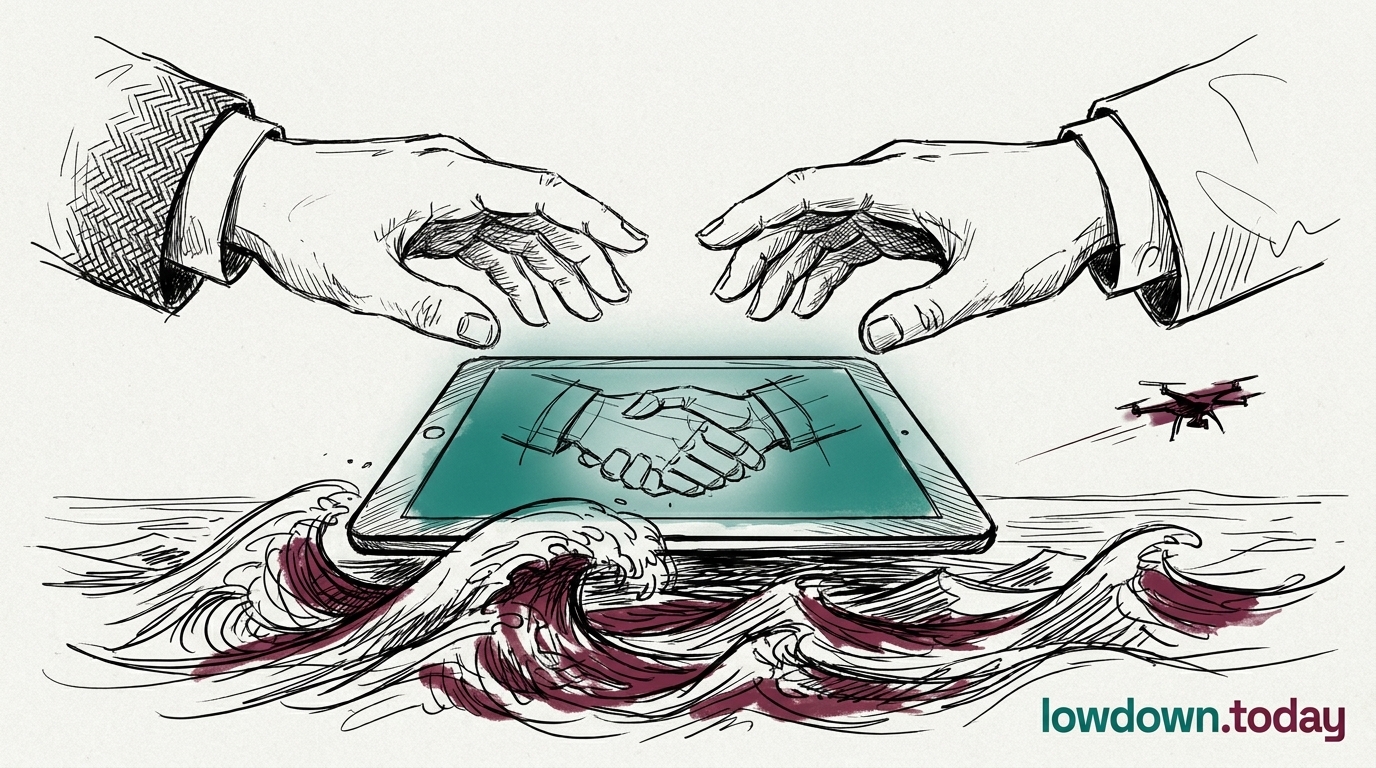
The gap between Iran's characterisation ("agreed") and Qatar's statement ("pending Treasury approval, not granted") is instructive. It suggests the asset claim served as domestic political framing rather than an operational negotiating position. The $6 billion was a bargaining chip pointed inward, not outward: it told the Iranian public that sanctions relief was already won before talks began.

Releasing the funds would ease domestic pressure on the Iranian government without touching the nuclear or military files. That is precisely why neither side moved on it. For Washington, releasing $6 billion before Iran agreed to any nuclear concession would collapse domestic support for the talks. For Tehran, claiming the release was already agreed gave parliament speaker Ghalibaf cover to present Islamabad as a position of strength, not supplication. The money never moved. Vance left without the matter resolved.

Deep Analysis

In plain English

In 2023, Iran and the US agreed a prisoner swap. As part of that deal, Iran was allowed access to $6 billion of its own money that had been held in South Korean and Qatari banks, frozen by sanctions. The money was meant to be used only for food and medicine. Iran turned up to the Islamabad talks saying the US had already agreed to release those funds as a precondition. Qatar then stated publicly that the money is still frozen and the US has not approved its release. The gap tells you something about how both sides were managing domestic audiences. Iran was telling its public that it had already won a concession before the talks even started. The US was saying nothing, which is itself a position.

Deep Analysis
Root Causes

The asset freeze is a product of the Biden-era prisoner swap mechanics being overtaken by the Trump administration's policy of maximum pressure.

Iran's claim that the funds were 'agreed' most likely reflects a genuine private signal that was communicated informally during pre-talk contacts and then not followed through in writing. The absence of any written US commitment gave Washington the ability to deny the concession publicly without technically lying.

What could happen next?
  • Consequence

    Iran's parliament speaker publicly framing the asset release as 'already agreed' before talks succeeded creates a domestic accountability problem: if the funds are not released, the regime must explain the gap to an audience that was told it had already won the point.

  • Opportunity

    GL-U expiry on 19 April and the asset-release question are both Treasury decisions; a package renewal of GL-U combined with asset release could serve as a good-faith signal without requiring nuclear or military concessions, potentially reopening talks before the ceasefire expires.

First Reported In

Update #66 · Islamabad collapses: 10 days to expiry

PressTV· 12 Apr 2026
Read original
Causes and effects
This Event
Qatar confirms $6bn assets still frozen
The gap between Iran's public claim and Qatar's factual correction reveals the $6 billion was a domestic framing device, not an operational concession.
Different Perspectives
Turkey
Turkey
Golden Global Portfoy Yonetimi closed three funds to new money a day after telling regulators they were legally separate from its sanctioned parent, and the central bank held its rate at 37 per cent citing energy-driven inflation risk. Ankara is absorbing balance-sheet and monetary costs from a war it is not fighting.
Qatar
Qatar
Qatar's foreign ministry said it was coordinating with China during a Beijing visit to restart negotiations, while filing hundreds of letters at the UN documenting Iranian strikes on its own civilian facilities. Doha is mediating for a neighbour it is also formally accusing, a contradiction the referral's clean vote count does not show.
China and Russia
China and Russia
China and Russia voted against the IAEA referral alongside Niger, and Iran's ambassador told the Board that inspections were impossible during a war Iran did not start. Beijing is separately mediating between Doha and Tehran, meaning the same power blocking the West's legal track is running the diplomatic one that might actually end the war.
Jordan
Jordan
Jordan said it intercepted 18 of the 20 Iranian ballistic missiles fired at its territory on 8 September, the war's first sustained salvo against a state that is not a combatant. Amman's 90 per cent interception rate held, but a tenfold jump in missiles fired in a single volley raises what the next one might carry.
United States
United States
CENTCOM said its strikes disabled five Iranian tankers only after two failed missile attempts on a US warship, and Treasury moved the same week to a presumption of denial on all Iran licences. Washington now treats commercial shipping and financial plumbing as one enforcement front rather than two separate tracks.
Iran / IRGC
Iran / IRGC
Iran's foreign ministry called the CENTCOM tanker strikes a war crime and a breach of the UN Charter, while the IRGC named two US destroyers it says it damaged without releasing images. Tehran expects the claims, unverifiable either way, to sustain domestic morale after losing five tankers in a single day.