Skip to content
You can now search across every topic, entity and event.What's new
Iran Conflict 2026
13JUN

Iran doubles its price for a deal

2 min read
10:52UTC

Khamenei military adviser Mohsen Rezaei told CNN any deal needs $24bn in frozen Iranian assets freed first, doubling the $12bn precondition Qatar had already refused.

ConflictDeveloping
Key takeaway

Rezaei doubled Iran's asset demand to $24bn, widening a gap Qatar had already declined to bridge.

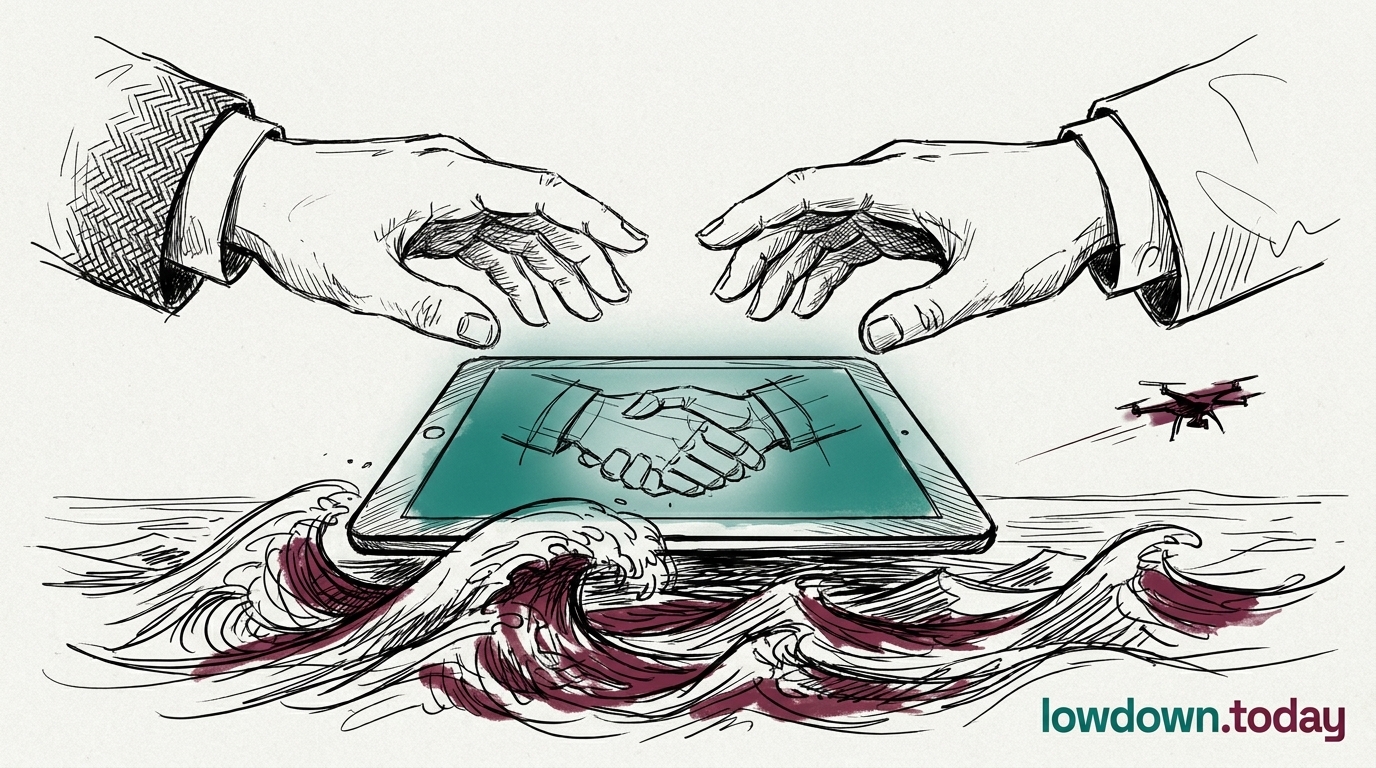
Mohsen Rezaei, a military adviser to Iran's Supreme Leader and an Expediency Council figure, told CNN on 6 June that any deal needs $24bn in frozen Iranian assets released before talks can move 1. The Expediency Council arbitrates between Iran's elected and clerical institutions, so Rezaei speaks from inside the leadership rather than the Foreign Ministry. His figure doubles the $12bn precondition that Qatar, acting as mediator, had already refused, offering only $6bn under restrictions .

Raising the floor at this point removes the arithmetic space for an agreement. The United States has publicly set a no-sanctions-relief sequencing, so an Iranian demand that frozen assets be freed first collides head-on with the declared American position. By doubling a number the mediator had already rejected, Tehran pushes the gap wider rather than narrower, which makes any near-term deal impossible on the asset track alone, independent of the unverifiable nuclear file.

Deep Analysis

In plain English

During negotiations, Iran wants the US to release billions of dollars in Iranian money that has been frozen in banks abroad because of sanctions. The US says it will only release that money after a deal is agreed and Iran follows through on it. Iran says it needs the money released before it will even sit down to finalise terms. This is the sequencing deadlock at the heart of the talks. Previously Iran asked for $12bn upfront, which Qatar, acting as a mediator, refused because US Treasury rules prevent it from releasing sanctioned funds without US authorisation. Now Mohsen Rezaei, who advises Iran's Supreme Leader on military affairs and sits on the powerful Expediency Council, has doubled that figure to $24bn on CNN. Rezaei sits on the Expediency Council, the body that arbitrates between parliament and the Supreme Leader, and advises Mojtaba Khamenei on military affairs. His public statement of a new, higher figure the same week Secretary Rubio said the deal is '95% done' signals that the military wing of Iran's leadership is not ready to settle on Rubio's terms.

Deep Analysis
Root Causes

The frozen-asset deadlock reflects a specific legal constraint: the largest tranche of frozen Iranian assets held in Qatar ($6bn) requires explicit US Treasury authorisation for release. Qatar cannot unilaterally transfer the funds regardless of any bilateral agreement with Iran, making the gap between Iran's demand and Qatar's offer structurally unbridgeable without a signed US instrument.

The US posture of no pre-deal sanctions relief means the legal authorisation will not come until the uranium clause is settled, which the IAEA verification gap makes impossible to execute. Rezaei's $24bn demand therefore sits inside a closed loop: the condition for its satisfaction cannot be met until a prior condition that cannot yet be satisfied is resolved.

First Reported In

Update #120 · The deal's last 5% is uranium nobody can find

CENTCOM· 7 Jun 2026
Read original
Different Perspectives
Iran's Supreme Leader's office and Iranian households
A letter published through state media named Lebanon's territorial integrity and an end to Israeli operations there as the war's ending condition; the same week, spokesperson Mohajerani cut the subsidised petrol ration from 70 to 50 litres a month. Iranian agencies still disagree on who inside the office signed the letter.
Oman
Oman
Muscat proposed a voluntary-funded coalition to police Hormuz, the corridor its own coastline gives it standing to manage, while Iran wants control and toll rights over shipping and Washington insists on free navigation. Oman's remit stops at the strait; it has no comparable claim over Iraq, the Caspian, or Lebanon.
Kyiv
Kyiv
President Volodymyr Zelenskyy confirmed the Caspian strike on an Iranian vessel carrying military cargo from Russia's Astrakhan region, opening a front that ties Iran's war to its supply relationship with Moscow rather than to anything the Gulf mediators are discussing.
Riyadh
Riyadh
Maj Gen Turki Al Malki named Iraq as the launch point for drones intercepted over the Eastern Province and Riyadh, the first time this war has reached Saudi Arabia from that direction rather than from Yemen. Nothing landed, but a second launch geography aimed at Saudi oil now exists alongside the Houthi front.
Baghdad
Baghdad
Iraq's Foreign Ministry summoned its own ambassador in Riyadh after Saudi Arabia's Defence Ministry said the drones came from Iraqi territory, while the same day drones struck Iranian-Kurdish opposition camps inside Iraq. Baghdad is disowning attacks it did not launch from territory it does not fully control.
The Pentagon and Congress
Acting press secretary Joel Valdez attributed the toll's reversal to site anomalies, the same explanation the department gave for the opposite cut on 24 July; Representative Thomas Massie called the category change an absurd ruse designed to reset the war's legal clock. Neither side agrees on which explanation, or which war, is real.