Skip to content
Briefings are running a touch slower this week while we rebuild the foundations.See roadmap
Iran Conflict 2026
8JUN

Lebanon clause hands Israel a deal veto

3 min read
09:58UTC

A clause ending the Israel-Hezbollah war in Lebanon entered the draft US-Iran accord, and Israeli Prime Minister Benjamin Netanyahu objected to it directly to Trump in a call on Sunday 24 May.

ConflictDeveloping
Key takeaway

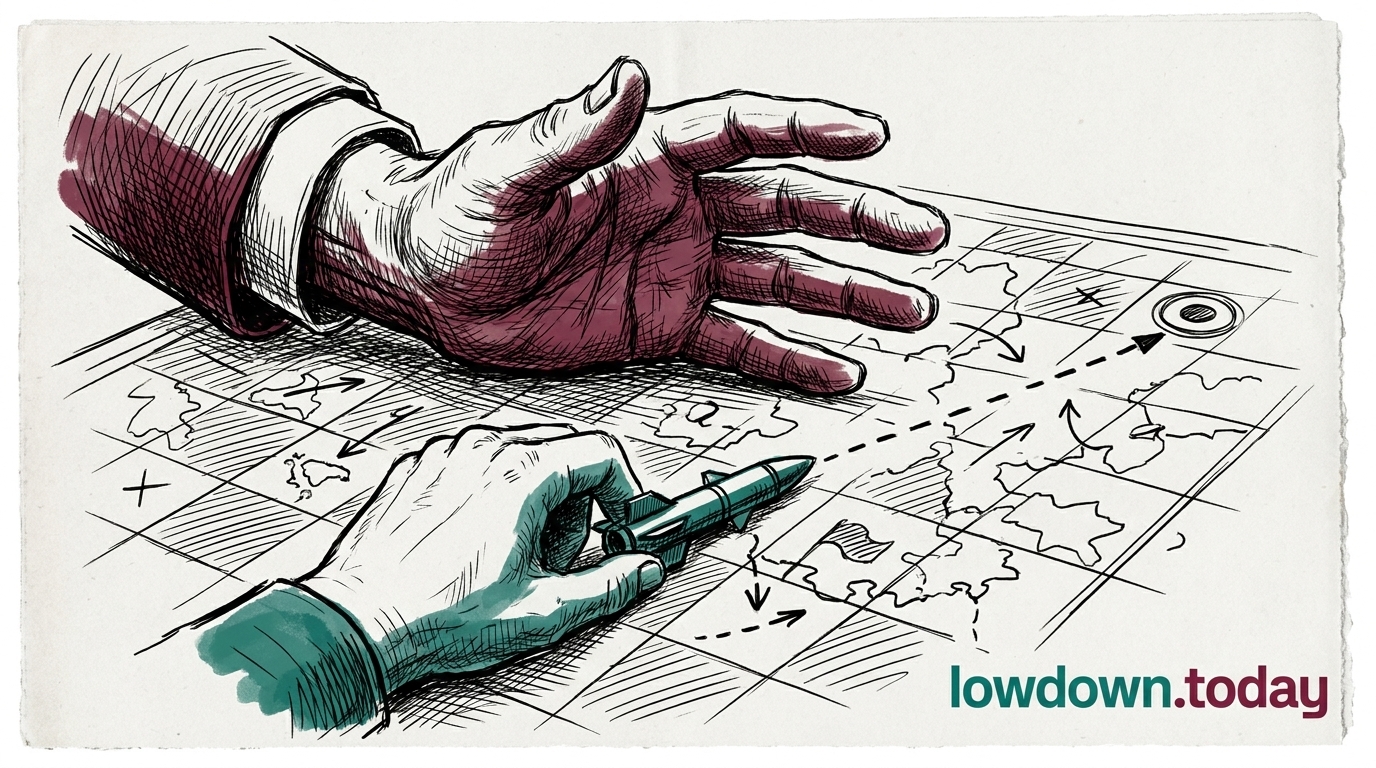
An Israel-Lebanon clause inside the US-Iran draft gives Netanyahu a veto over a deal he did not negotiate.

The draft memorandum of understanding (MOU) between Washington and Tehran now carries a clause ending the war between Israel and Hezbollah in Lebanon, and Israeli Prime Minister Benjamin Netanyahu objected to it directly in a phone call with Trump on Sunday 24 May 1. An Israeli official framed the concern bluntly: a Lebanon condition inside the Iran accord would oblige Israel to wind down its own campaign against Hezbollah, the Iran-backed militia it has fought across the Lebanese border.

That objection matters because of where it sits. Trump had declared the deal "largely negotiated" between the United States and Iran on 23 May , with the two principals close on the core terms. A clause that binds a third country's military campaign, inserted into a bilateral text, gives Netanyahu a lever over an agreement he is not formally party to. He need not reject the deal; he need only refuse to wind down in Lebanon, and the clause cannot be honoured.

The veto stacks on top of an existing wall. Tehran has tied any Hormuz reopening to the release of its frozen assets in Qatar first , while Trump has posted that the US blockade holds until a deal is "certified and signed" . Iran wants relief up front; Washington offers it only after performance. A Lebanon clause that depends on Israeli cooperation adds a second actor whose timing no one at the table controls.

The structure now requires three things to align that answer to three different authorities: a US Treasury order to free the Qatari assets, an Israeli decision to stand down in Lebanon, and a signed instrument neither Washington nor Tehran has yet produced. Each is a separate lock, and a deal that needs all three open at once is harder to close than one that needed only the two principals to agree.

Deep Analysis

In plain English

The US and Iran had been drafting a preliminary peace agreement (a "memorandum of understanding"). Hidden inside the draft was a clause requiring the war between Israel and Hezbollah, the Lebanese militia that Iran backs, to end as part of the deal. Israel's Prime Minister Benjamin Netanyahu called Donald Trump directly on 24 May to object. His concern: if the US-Iran deal requires Israel to stop fighting Hezbollah in Lebanon, Israel would effectively lose its ability to finish that campaign on its own terms. Netanyahu would have no choice but to wind down operations that his government says are essential to Israeli security. This gives Israel a practical veto over a clause in a deal between two other countries (the US and Iran). Trump has to decide whether to drop the Lebanon requirement from the deal, override Netanyahu's objection, or find a different arrangement.

What could happen next?
  • Risk

    If the Lebanon clause stays in the MOU, Netanyahu may publicly break with Trump over Iran, damaging the US-Israel relationship at a moment when the deal requires Israeli operational restraint.

    Immediate · Suggested
  • Consequence

    Iran's nuclear sequencing (Phase 1 Hormuz + assets, Phase 2 nuclear at 60 days) rests on the Lebanon clause providing Iranian leverage; removing it narrows what Iran gets from the deal and may cause Tehran to reopen closed issues (ID:3610).

    Short term · Assessed
  • Precedent

    Netanyahu's direct objection to Trump sets the precedent that Israel's approval is required for any US-brokered Middle East deal that touches Israeli military operations, a structural constraint on US diplomacy beyond this conflict.

    Long term · Assessed
First Reported In

Update #108 · US strikes Bandar Abbas as deal talk stalls

CNN· 26 May 2026
Read original
Causes and effects
This Event
Lebanon clause hands Israel a deal veto
A condition inside a bilateral deal hands a third party, Israel, an effective veto over text Washington and Tehran had otherwise largely settled.
Different Perspectives
Bahrain / Gulf partners
Bahrain's PAC-3 interceptor magazine sits at 87% depletion after absorbing IRGC salvos aimed at US bases; no resupply is scheduled before 2027, concentrating the intercept burden on US assets and Israeli Iron Dome and Arrow-3.
IAEA / Vienna process
IAEA officials cited proliferation concerns over 440.9 kg of HEU unaccounted for after 97 days without inspector access; the Board session that opened 8 June cannot retroactively close the evidentiary gap its own resolution documents.
China
China
China absorbed the Shanghai Qianye designation by OFAC and opposes censure at the IAEA Board, arguing the verification gap was created by strikes rather than Iranian non-compliance, a framing it shares with Russia to protect the non-Western bloc's Board votes.
Russia
Russia
Putin reaffirmed at SPIEF on 6 June his offer to hold Iran's uranium stockpile as custodian, a proposal the IAEA's 97-day verification gap now renders undeliverable: no one can transfer or confirm a stockpile that has not been inspected.
United States / Trump administration
Trump publicly asked Netanyahu not to retaliate and described a deal as 95% done; Rubio then acknowledged enrichment terms could take months. The 24-hour gap between the request and the Mahshahr strike removes the credible-restraint argument from US diplomatic leverage with Tehran.
Israel / Netanyahu government
Netanyahu struck the Mahshahr complex and missile sites inside Iran within 24 hours of Trump's public no-retaliation request, a second kinetic override of US counsel that confirms Israel will not allow Tehran to dictate the terms of the exchange.