Skip to content
Briefings are running a touch slower this week while we rebuild the foundations.See roadmap
Iran Conflict 2026
6JUN

UAE Stops 2,469 Missiles and Drones

2 min read
12:17UTC

The UAE has stopped over two thousand drones and four hundred ballistic missiles. Twelve people are dead, ten of them foreign workers.

ConflictDeveloping
Key takeaway

Five of six UAE war dead are migrant workers killed by defensive shrapnel, not enemy fire.

UAE forces intercepted 2,012 UAVs, 438 ballistic missiles, and 19 cruise missiles from 28 February to 1 April 1. Twelve people have been killed: two Emirati military personnel and ten foreign nationals from Pakistan, Bangladesh, India, Nepal, Palestine, and Morocco.

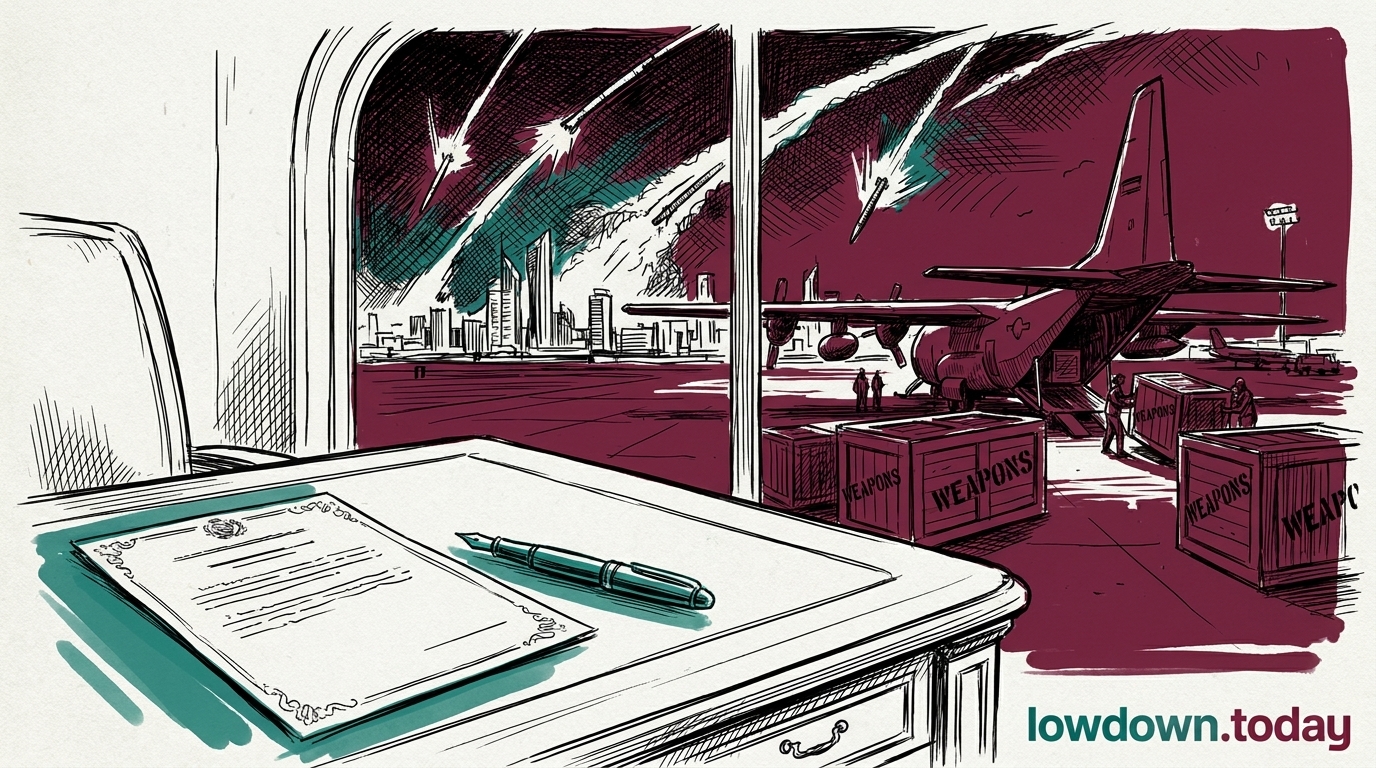
The casualty breakdown tells its own story. Five of every six dead in the UAE are migrant workers, killed not by incoming ordnance but by the debris of its interception. Iran targets the UAE's infrastructure. The UAE's defences protect that infrastructure. The shrapnel falls on the workers who built it. The airline ban on Iranian nationals closed the last civilian air corridor; the residency permit revocations began on 28 March. The UAE is hardening every surface simultaneously.


Deep Analysis

In plain English

UAE air defences have stopped over 2,400 incoming weapons since the war began. These systems use interceptor missiles to destroy drones and ballistic missiles in mid-air. When the interceptors detonate, shrapnel falls over a wide area. Ten of the twelve people killed in the UAE by this war are migrant workers, killed not by Iranian weapons reaching the ground but by the debris of the weapons system defending against them. The workers did not choose to be in a conflict zone; the conflict came to where they live and work.

First Reported In

Update #55 · The Last Door Closes

Al Jazeera· 2 Apr 2026
Read original
Different Perspectives
IAEA (Board of Governors, Vienna)
Grossi's 4 June Board report invoked 'loss of continuity of knowledge' on Iran's 440.9 kg stockpile after 97 days without access, the IAEA's formal finding that the evidentiary break cannot be retroactively closed. A Board censure resolution before 12 June would harden Iran's refusal to restore access.
Russia (Kremlin / SPIEF)
Putin reaffirmed Russia's offer to hold Iran's uranium at the St Petersburg Economic Forum on 6 June, positioning Moscow as the preferred custodian even after Trump vetoed the arrangement on 27 May. The offer allows Russia to present itself as a constructive actor while the IAEA verification gap renders any custodian arrangement unworkable.
Bahrain (Government and US Fifth Fleet host)
Bahrain's PAC-3 magazine reached 87% depletion after the 5 June IRGC salvo, with its resupply last in a Camden queue behind Qatar and Saudi Arabia. Manama hosts the US Fifth Fleet with terminal air defences that the supply chain cannot replenish before 2027.
China (Ministry of Commerce)
Washington designated Shanghai Qianye Energy on 5 June, the first mainland Chinese firm under Iran energy sanctions this war, the same week Beijing was pitched as a uranium custodian. China has not yet invoked its Blocking Statute; whether it absorbs the designation as a calibrated cost or retaliates is unresolved.
Iran (IRGC and Expediency Council)
The IRGC fired seven ballistic missiles at US bases in Kuwait and Bahrain on 5 June and Rezaei doubled the asset precondition to $24bn on 6 June, blocking both military and diplomatic de-escalation simultaneously. Tehran's hardliners are setting terms the civilian Foreign Ministry cannot override.
Trump administration (White House)
Trump claimed the uranium was 'entombed' and the deal '95% done' on 4 June, while signing no Iran executive instrument across Days 99-100. The gap between presidential assertion and signed executive action is now 100 days wide and structurally unchanged.



