Skip to content
Briefings are running a touch slower this week while we rebuild the foundations.See roadmap
Iran Conflict 2026
6JUN

Arrow-3 stocks hit 81 per cent drain

2 min read
12:17UTC

RUSI data shows the missile shield protecting Israel and the UAE will be materially degraded by mid-April. Rebuilding takes years.

ConflictDeveloping
Key takeaway

Iran does not need to win the air war; it needs to outlast the interceptors.

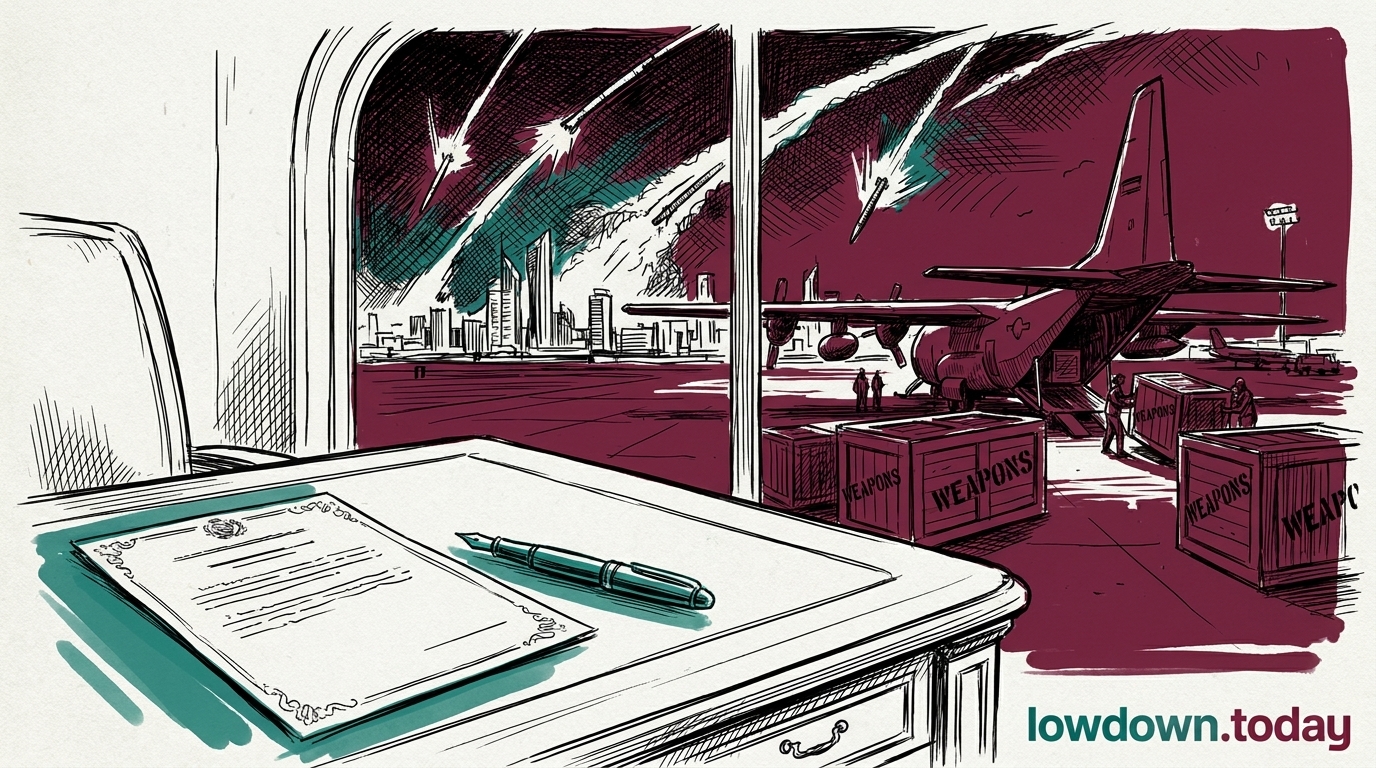
RUSI's "Command of the Reload" report documented 11,294 munitions expended in the campaign's first 16 days at an estimated cost of $26 billion. Arrow-3 interceptors are at 81% depletion by end of March. THAAD stocks are "approximately one month or less" from exhaustion at current expenditure rates . 1

Replenishment is not a logistics problem; it is an industrial one. A single Arrow-3 interceptor costs $2 to $3 million and takes months to produce. Full stock rebuild: two to three years. The missile defence architecture protecting Israel, the UAE, and US forces will be materially degraded by mid-to-late April.


Deep Analysis

In plain English

The US and Israel have been intercepting Iranian missiles and drones using expensive specialist rockets called interceptors. Each intercept uses one up. RUSI, a respected defence think tank, calculated that Israel's best interceptors are 81% exhausted. The US's top-tier system, THAAD, is roughly one month from running out. Each interceptor costs $2-3 million and takes months to produce. Rebuilding the full stock takes 2-3 years. Iran does not need to win the air war; it just needs to keep firing until the defensive rockets run out.

What could happen next?
  • Risk

    Arrow-3 exhaustion in mid-April degrades Israeli protection against Iran's long-range ballistic missiles at the moment THAAD is also near exhaustion.

  • Consequence

    Interceptor depletion creates a forcing function for all other deadlines: the 6 April grid deadline, the Kharg timeline, and the War Powers clock all operate inside a window shaped by shield degradation.

First Reported In

Update #58 · First US aircraft fall over Iran

Pentagon / The Intercept / Novara Media· 4 Apr 2026
Read original
Different Perspectives
IAEA (Board of Governors, Vienna)
Grossi's 4 June Board report invoked 'loss of continuity of knowledge' on Iran's 440.9 kg stockpile after 97 days without access, the IAEA's formal finding that the evidentiary break cannot be retroactively closed. A Board censure resolution before 12 June would harden Iran's refusal to restore access.
Russia (Kremlin / SPIEF)
Putin reaffirmed Russia's offer to hold Iran's uranium at the St Petersburg Economic Forum on 6 June, positioning Moscow as the preferred custodian even after Trump vetoed the arrangement on 27 May. The offer allows Russia to present itself as a constructive actor while the IAEA verification gap renders any custodian arrangement unworkable.
Bahrain (Government and US Fifth Fleet host)
Bahrain's PAC-3 magazine reached 87% depletion after the 5 June IRGC salvo, with its resupply last in a Camden queue behind Qatar and Saudi Arabia. Manama hosts the US Fifth Fleet with terminal air defences that the supply chain cannot replenish before 2027.
China (Ministry of Commerce)
Washington designated Shanghai Qianye Energy on 5 June, the first mainland Chinese firm under Iran energy sanctions this war, the same week Beijing was pitched as a uranium custodian. China has not yet invoked its Blocking Statute; whether it absorbs the designation as a calibrated cost or retaliates is unresolved.
Iran (IRGC and Expediency Council)
The IRGC fired seven ballistic missiles at US bases in Kuwait and Bahrain on 5 June and Rezaei doubled the asset precondition to $24bn on 6 June, blocking both military and diplomatic de-escalation simultaneously. Tehran's hardliners are setting terms the civilian Foreign Ministry cannot override.
Trump administration (White House)
Trump claimed the uranium was 'entombed' and the deal '95% done' on 4 June, while signing no Iran executive instrument across Days 99-100. The gap between presidential assertion and signed executive action is now 100 days wide and structurally unchanged.



