Skip to content
Briefings are running a touch slower this week while we rebuild the foundations.See roadmap
Iran Conflict 2026
4JUN

Iran fires missiles at US in Kuwait

3 min read
11:25UTC

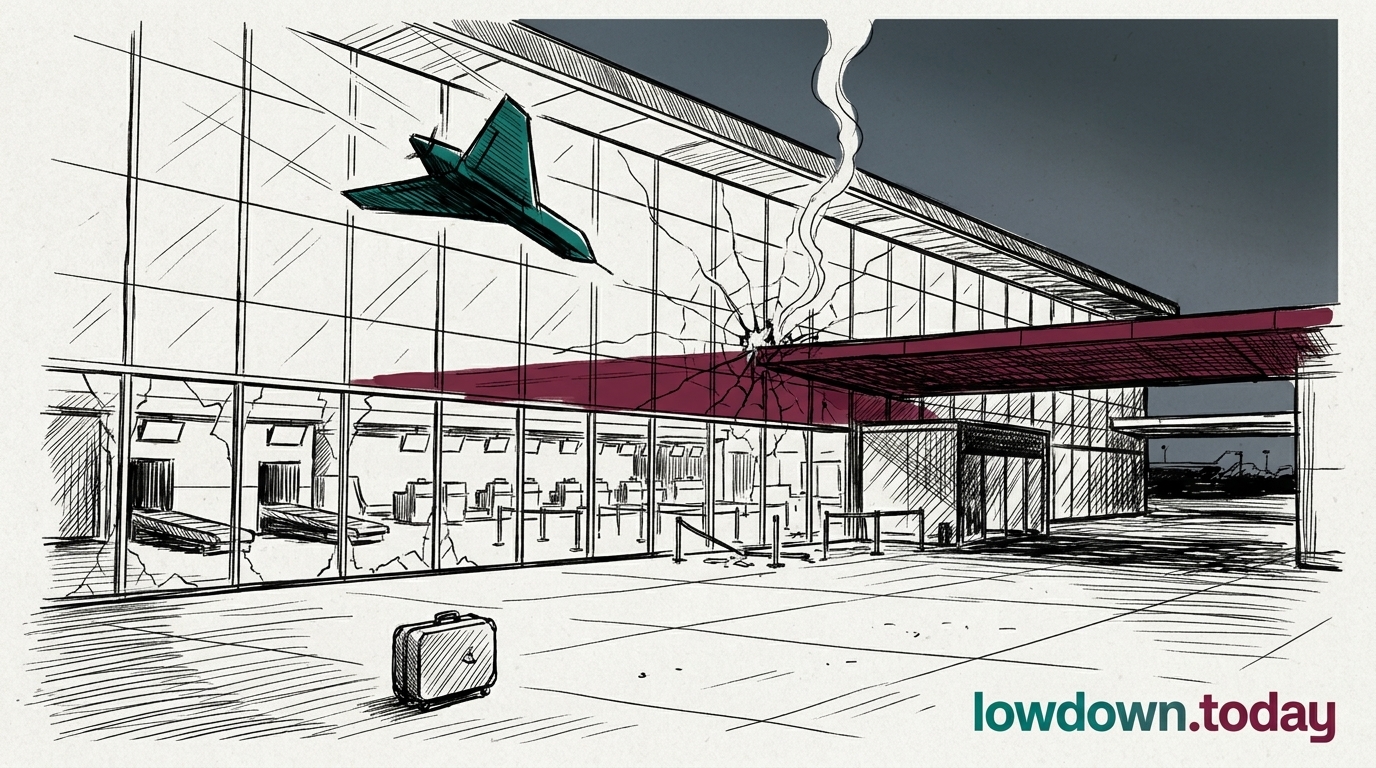
Iran fired two ballistic missiles at US forces in Kuwait late on 31 May; CENTCOM and Kuwaiti air defences intercepted both, and Kuwait invoked Article 51 of the UN Charter.

ConflictDeveloping
Key takeaway

Iran and the US traded live ballistic-missile fire over Kuwait inside the same day both called a ceasefire.

Iran fired two ballistic missiles at US forces in Kuwait late on Sunday 31 May; CENTCOM (US Central Command) and Kuwaiti air defences intercepted both, with CENTCOM confirming the engagement at 08:26 the next morning 1. Kuwait hosts US forces and opened fire again early on Monday 1 June against incoming drone and missile fire, an advance on the IRGC's Sirik Island strike and the projectiles Kuwait intercepted the same day . Kuwait has invoked Article 51, the UN Charter provision granting a state the right to self-defence against armed attack.

This is a direct exchange between Iran and the United States, distinct in kind from the commercial harassment of shipping in the Gulf. State forces fired ballistic missiles at a state's troops, and that state's air defences answered. The word "ceasefire" and live ballistic-missile intercepts now coexist in the same 24 hours.

Iran and the US kept shooting through a truce they both still invoke. A single missed interception over a Gulf base could pull Washington back into open war while its negotiators still call a deal close. The interception record holding is the only thing keeping the missile track and the diplomatic track from colliding.

Deep Analysis

In plain English

Kuwait is a small Gulf Arab country that hosts US military bases. Iran fired two ballistic missiles, guided weapons that travel through the upper atmosphere before diving at their target, at those US bases on the night of 31 May. Kuwait's own air defence systems, working alongside US forces, shot both missiles down before they hit. Kuwait then had to activate its defences again in the early hours of 1 June as more incoming fire arrived. Kuwait formally invoked Article 51 of the UN Charter, which is the UN rule that gives countries the right to defend themselves when attacked. This is the legal step a country takes when it wants the international community to recognise it is acting in self-defence, not as an aggressor.

Deep Analysis
Root Causes

The IRGC's decision to target Kuwait with ballistic missiles has a specific enabling condition: Kuwait's 1991 Status of Forces Agreement with the United States has never been publicly renegotiated to include an explicit clause about collective response obligations, which means US forces at Ali Al Salem and Ahmed Al Jaber air bases operate on a bilateral arrangement that does not automatically draw in Article 5-style allied commitments.

Kuwait cannot invoke NATO mutual defence; it can only invoke the UN Charter.

The second structural driver is the IRGC's Decentralised Mosaic Defence doctrine (activated 28 February 2026), which devolved ballistic missile launch authority to 31 provincial units. Ceasefire or diplomatic tracks coordinated by the Foreign Ministry do not automatically reach those units, which is why strikes continued even when Araghchi was at the table.

What could happen next?
  • Risk

    If Kuwait absorbs another ballistic missile strike and the US again limits its response to interception without an offensive counter-strike, Iran's provincial IRGC units will calibrate that as a confirmed ceiling of US retaliation risk, likely increasing strike frequency.

  • Precedent

    Kuwait's multiple Article 51 invocations create an accumulating legal record. A future UNSC resolution or coalition response would cite this documented pattern of armed attacks on a UN member state.

First Reported In

Update #115 · Iran moves first, Trump moves by phone

CBS News· 2 Jun 2026
Read original
Different Perspectives
China
China
Beijing's MOFCOM Blocking Rules constrain OFAC enforcement on the mainland; China has not corroborated Trump's verbal account of any bilateral summit, and the rial's failure to hold its Rubio bounce, combined with the IRGC's stablecoin rail closure, increases Chinese yuan-denominated oil-payment exposure through Hormuz.
Israel
Israel
IDF Chief Zamir said on 3 June there is no ceasefire for his forces even as Israel signed the Washington Lebanon framework requiring Hezbollah withdrawal south of the Litani; a UNIFIL peacekeeper was killed by mortar near Marjayoun on the same day, exposing the gap between the diplomatic framework and a ground advance that has not stopped.
Bahrain
Bahrain
The IRGC struck Bahrain on 3 June as its sirens sounded and its PAC-3 magazine neared exhaustion; excluded from Rubio's 2 May emergency resupply, Bahrain received a 50-round Federal Register notice on 1 June on an 18-month delivery timeline, meaning it is defending the US Fifth Fleet headquarters on the last rounds it has.
Qatar
Qatar
Qatar offered $6bn under OFAC Licence L-2 restrictions and sent Ghalibaf's delegation home empty-handed; the $6bn ceiling is a legal constraint, not a negotiating floor, and Rubio's no-sanctions-relief testimony means Qatar cannot revise it without White House action that has not been requested.
Kuwait
Kuwait
Kuwait expelled two Iranian diplomats within 24 hours of the airport strike, the strongest and fastest Kuwaiti diplomatic move of the conflict, while keeping the full mission in place to preserve a communication channel; it has now invoked Article 51 self-defence, filed a formal protest, and expelled diplomats, exhausting its formal toolkit short of full rupture.
United States
United States
Trump narrated a weekend deal while the channel Rubio described under oath, Khamenei's written-only couriers with a 3-to-5-day lag, cannot answer at that speed; CENTCOM called the airport strike deliberate, calculated and unjustified. The House 215-208 vote gave Congress its first on-record war-powers position against the deployment Trump has run without a signed instrument for 96 days.