Skip to content
Briefings are running a touch slower this week while we rebuild the foundations.See roadmap
Iran Conflict 2026
4JUN

Blast hits Tehran al-Quds march

3 min read
11:25UTC

An explosion killed one person at Iran's annual al-Quds Day rally — the first attack on the 47-year-old march. The president was metres away; Iran has not attributed the blast.

ConflictDeveloping
Key takeaway

The regime's refusal to cancel al-Quds Day turned its most powerful symbolic event into its most exposed security vulnerability.

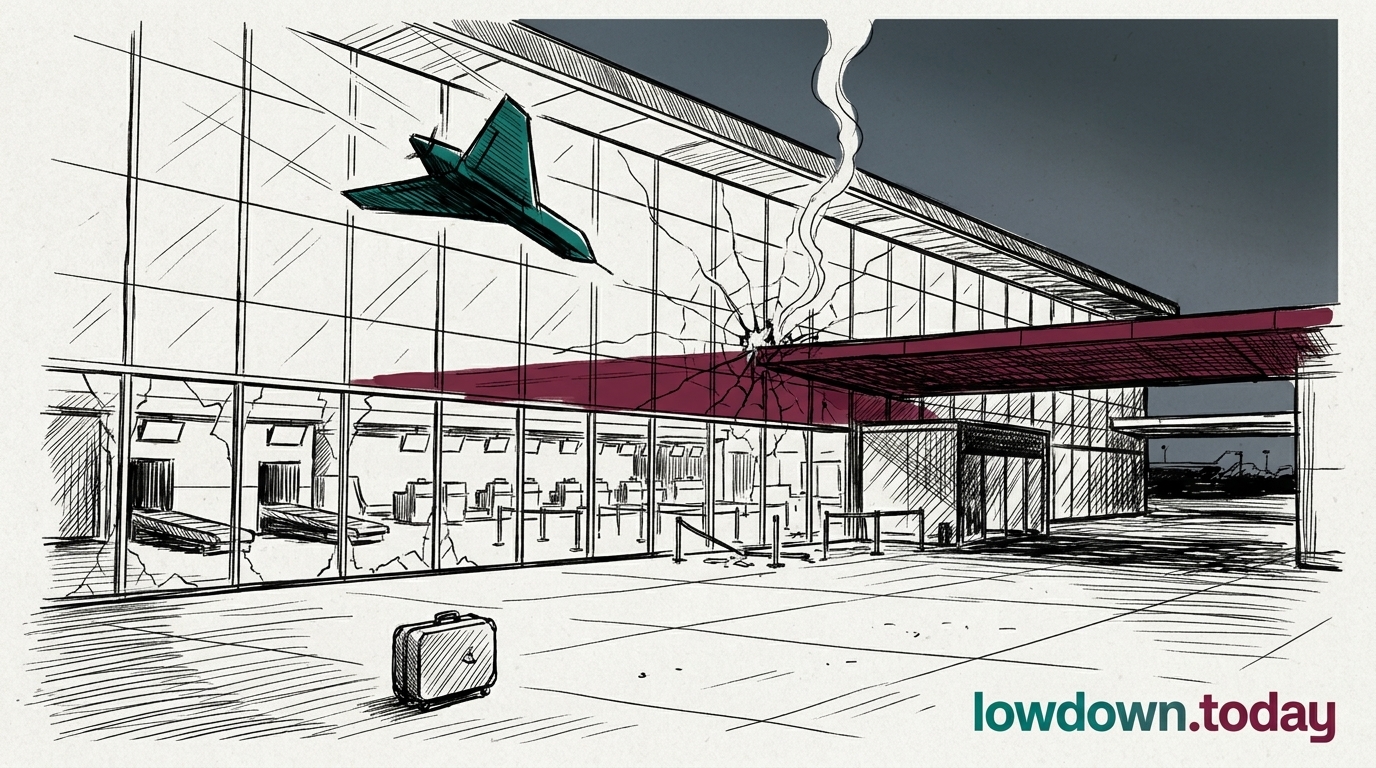
An explosion struck Ferdowsi Square in central Tehran on Friday midday, killing one person metres from thousands attending the annual al-Quds Day march. President Pezeshkian and security chief Ali Larijani were both at the rally when the blast occurred. Israel had warned people to clear the area shortly before. Whether this was an Israeli strike, Iranian ordnance, or an accident remains disputed. Iran has not publicly attributed it.

Al-Quds Day was instituted by Ayatollah Ruhollah Khomeini in 1979 as an annual solidarity rally with Palestine, held on the last Friday of Ramadan. In 47 years, it had never been targeted. The government chose to march its senior leadership into the open under active bombardment — a calculated projection of state continuity. Pezeshkian's presence carried particular weight: this is the same president who apologised to Gulf neighbours for Iranian strikes , was overruled by the IRGC within hours , then reversed himself with a vow to escalate. Standing in Ferdowsi Square was the most coherent message his presidency has delivered in a fortnight.

The explosion broke that message. If this was an Israeli strike, it is the first of the war to directly target a political gathering rather than military or Energy infrastructure — and the advance warning would be consistent with Israeli practice in Lebanon and Gaza. If it was Iranian ordnance — a defensive system misfiring, debris falling short — the government's inability to secure its own showcase event damages domestic morale more than an enemy attack. Iran's refusal to assign blame points toward a cause the government finds politically inconvenient. An Israeli strike would be straightforward to denounce; silence suggests the answer is not.

One person died. In a war that has killed hundreds and displaced millions, a single casualty at a domestic rally would ordinarily register as marginal. But al-Quds Day exists to project the state's command of public space — to show the population, and the world, that the government still summons and protects its people. The explosion, whatever caused it, demonstrated the opposite.


Deep Analysis

In plain English

Al-Quds Day is Iran's biggest annual political rally — held every year since 1979 to show solidarity with Palestinians and demonstrate that the Islamic Republic is unified and defiant. The government deliberately brings its top leaders into the streets as a display of strength. An explosion metres away — regardless of who caused it — punctures exactly the image the event exists to project. If Iran publicly acknowledges an Israeli strike, it admits vulnerability. If it was Iranian ordnance, it is an internal security failure. The regime's silence is itself a form of political management, but that silence simultaneously forecloses the retaliatory narrative the IRGC would normally use to demonstrate resolve.

Deep Analysis
Synthesis

The regime's deliberate choice to expose senior leadership at al-Quds Day as a political signal created the precise vulnerability that was exploited, revealing a structural contradiction. Iran's symbolic politics require open-air leadership presence; its wartime security requires the opposite. These imperatives are now irreconcilable. Each future high-profile public event will force the same impossible choice between political message and physical protection.

Root Causes

Al-Quds Day parade routes are publicly announced and logistically fixed weeks in advance, creating predictable targeting windows. Iran has never adapted its revolutionary-calendar ceremonies to wartime operational security requirements — the political cost of cancellation has always been judged higher than the security risk of exposure.

Escalation

Attribution ambiguity creates three divergent escalation pathways simultaneously. An Israeli finding triggers IRGC pressure for proxy retaliation against Israeli-linked targets. Iranian ordnance finding triggers a domestic accountability crisis. Sustained silence risks IRGC hardliners instrumentalising the ambiguity to expand security-sector authority over civilian decision-making.

What could happen next?
  • Precedent

    Al-Quds Day has been targeted for the first time in 46 years. Iran's most symbolically protected public ceremony is no longer off-limits, permanently altering the regime's public-event security calculus.

    Long term · Assessed
  • Risk

    If Iran internally attributes the explosion to Israel, IRGC pressure for proxy retaliation will intensify, raising attack tempo against Israeli-linked targets across the region.

    Immediate · Assessed
  • Consequence

    Sustained attribution ambiguity creates an internal accountability vacuum that hardline factions may exploit to expand IRGC authority over civilian security decisions.

    Short term · Suggested
  • Risk

    Each future high-profile public event involving senior Iranian leadership now faces the same irreconcilable tension between political symbolism and operational security.

    Medium term · Assessed
First Reported In

Update #34 · Tehran march bombed; first deaths in Oman

Al Jazeera· 13 Mar 2026
Read original
Causes and effects
This Event
Blast hits Tehran al-Quds march
Al-Quds Day has been held since 1979 and never targeted. The Iranian government staged its president and security chief at the rally under active bombardment to project state continuity. An explosion at this event demonstrated the government cannot guarantee security at its most choreographed public gathering. Iran's silence on attribution suggests the cause may be more politically damaging than an enemy strike.
Different Perspectives
Israel
Israel
IDF Chief Eyal Zamir declared on 3 June there was no ceasefire for his forces, and strikes killed at least 10 civilians and one Israeli soldier on 4 June. The IDF killed Hezbollah's chief engineer and warned three south Lebanon villages to evacuate on 5 June, advancing into ground the unsigned Washington framework has not caught.
Hezbollah / Lebanon
Hezbollah / Lebanon
Naim Qassem rejected the Washington Lebanon framework on 4 June as "absurd, humiliating and insulting", blocking a ceasefire instrument that required Hezbollah to withdraw north of the Litani before any Israeli withdrawal. Over one million Lebanese remain displaced; the framework's collapse prolongs that toll.
Iran
Iran
Foreign Minister Araghchi publicly coupled the Lebanon ceasefire to the Iran-US nuclear track on 4 June, carrying IRGC authority rather than his own civilian mandate. The IRGC delegation has sent no HEU counter-proposal since Araghchi confirmed no progress that same day; Mojtaba Khamenei's 21 May order to keep the 440.9 kg stockpile inside Iran remains operative.
United States
United States
Rubio placed the Iran-US deal at 95 per cent complete on 4 June while the administration signed no Iran instrument and OFAC designated only Cuban targets. Trump separately disclosed and rejected an airlift plan to collect Iran's HEU stockpile, claiming the material is "entombed", a claim the IAEA cannot verify.
China
China
Beijing's MOFCOM Blocking Rules constrain OFAC enforcement on the mainland; China has not corroborated Trump's verbal account of any bilateral summit, and the rial's failure to hold its Rubio bounce, combined with the IRGC's stablecoin rail closure, increases Chinese yuan-denominated oil-payment exposure through Hormuz.
Bahrain
Bahrain
The IRGC struck Bahrain on 3 June as its sirens sounded and its PAC-3 magazine neared exhaustion; excluded from Rubio's 2 May emergency resupply, Bahrain received a 50-round Federal Register notice on 1 June on an 18-month delivery timeline, meaning it is defending the US Fifth Fleet headquarters on the last rounds it has.



