Skip to content
Briefings are running a touch slower this week while we rebuild the foundations.See roadmap
Iran Conflict 2026
31MAY

CENTCOM blockade hits 44 vessels, 69m barrels

3 min read
09:14UTC

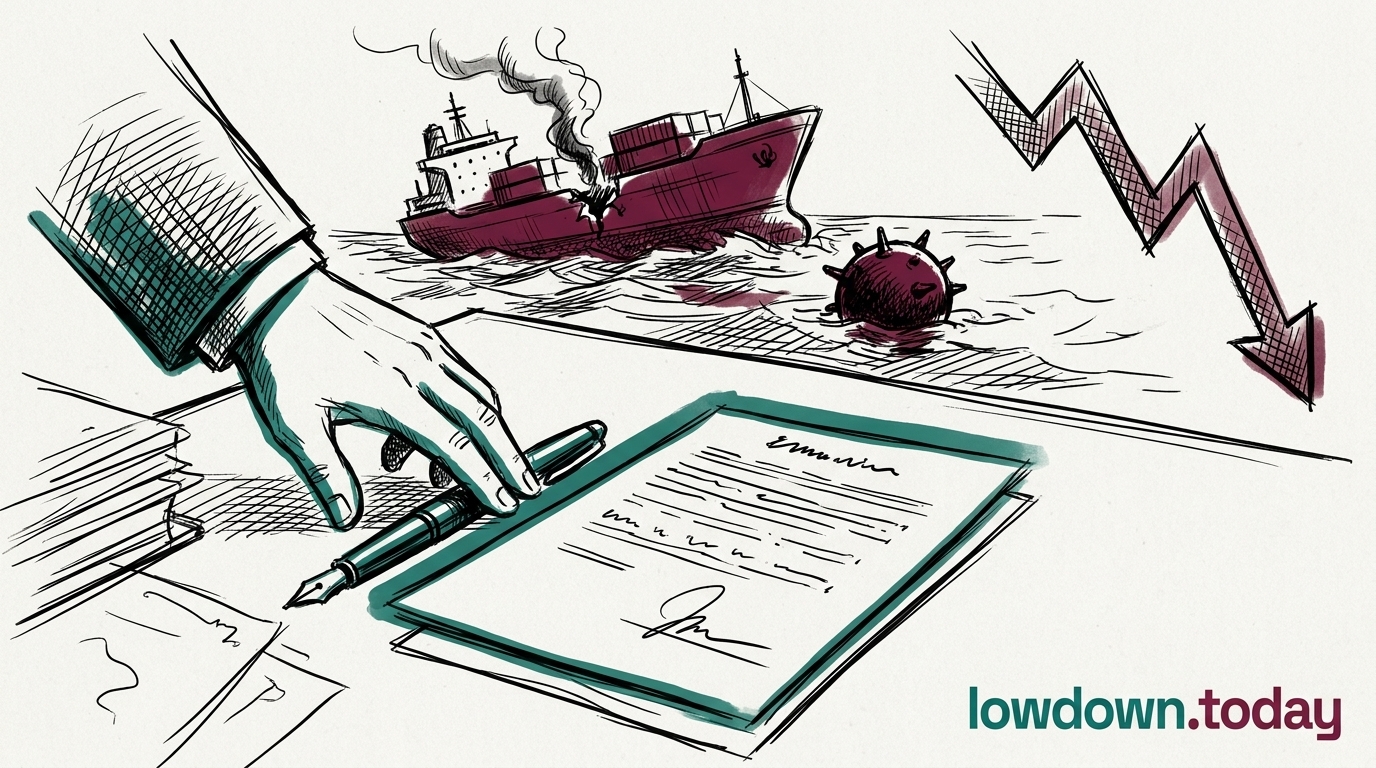
Adm Brad Cooper told reporters on 30 April 2026 that CENTCOM has redirected 44 commercial vessels, 41 of them tankers, carrying 69 million barrels of crude under the US blockade since 28 February.

ConflictDeveloping
Key takeaway

CENTCOM has redirected 44 vessels and 69 million barrels of crude, six more than Day 60.

Admiral Brad Cooper, commander of US CENTCOM (Central Command), stated on 30 April 2026 that 44 commercial vessels, 41 of them tankers, carrying 69 million barrels of crude have been turned around at sea under the US blockade since the start of the conflict 1. CENTCOM is the US joint command responsible for Middle East operations and the operational owner of the Hormuz blockade; Cooper's tally is the first public economic accounting of the redirections.

Cooper had logged 38 vessels on Day 60 , and six further redirections have entered the count since. The pace is unchanged from the prior week despite the simultaneous WPR political theatre on Capitol Hill. Six of the additional vessels carried cargo Cooper described as bound for Iran; the rest carried Iranian crude outbound. The 69 million barrels translates to roughly one week of global Brent demand removed from the spot market by US naval action alone.

Cooper's figure landed on the same afternoon the State Department launched the Maritime Freedom Construct to coordinate the rerouting that CENTCOM has been performing for 64 days without it. Cooper's tally is the instrument that the diplomatic hub announcement is layered over rather than the basis for a new arrangement.

Deep Analysis

In plain English

The US Navy has been physically stopping oil tankers at the entrance to the Strait of Hormuz and forcing them to turn back since the Iran conflict began on 28 February 2026. On 30 April, the US military's top commander for the Middle East, Admiral Brad Cooper, gave the first public count of how many ships have been stopped: 44 vessels, of which 41 were tankers carrying oil. Those 41 tankers were collectively carrying 69 million barrels of crude oil. At current prices, that is roughly $8.5 billion worth of oil that never reached its buyers. For context: the world uses about 100 million barrels of oil per day in normal times. The 69 million barrels stopped over 64 days is less than one day's global supply. The bigger economic effect comes from ships choosing to go the long way around Africa rather than risk being stopped, a detour that adds weeks to the journey and millions in fuel costs per voyage.

What could happen next?
  • Consequence

    The 69-million-barrel figure establishes a public baseline against which future blockade economics will be measured; any acceleration or deceleration will now be visible in Cooper's cumulative count updates.

  • Risk

    The 44-vessel tally, if maintained at 0.7 redirections per day, would reach approximately 100 vessels by Day 120, a milestone at which aggregate supply disruption could force Asian buyers to seek alternative long-term supply arrangements outside the Persian Gulf.

First Reported In

Update #85 · "Not at war": three claims, no treaty

ROGTEC Magazine· 1 May 2026
Read original
Different Perspectives
Iran human rights monitors (Amnesty International, Iran HRM, Hengaw)
Monitors documented 30 women held on capital moharebeh charges in a basement prison ward, Benyamin Naqdi's death sentence with a forced-confession broadcast, and 39 political executions since February. Iran's security courts have processed protest cases at uninterrupted wartime tempo regardless of the diplomatic track.
Lloyd's of London (war-risk underwriters)
Lloyd's held its Hormuz war-risk designation at $10-14 million per voyage while Brent fell 19%, maintaining a structural divergence from futures pricing. Underwriters require a UN Security Council resolution or government certification letter, not diplomatic optimism, before de-listing the strait.
Oman (Sultan Haitham's government)
Muscat issued a mine alert in its own territorial waters while denying any Hormuz toll plan after US Treasury threatened sanctions. A suspected mine in Omani waters on the same weekend as US financial pressure forces Muscat to demonstrate sovereignty without appearing to choose sides.
China (PRC)
China (PRC)
Beijing sent scholars rather than its defence minister to Shangri-La for the second year running and addressed Taiwan and multilateralism without mentioning Iran. China maintains its bilateral energy corridor protection with Tehran while refusing the diplomatic exposure of a public position at multilateral forums.
Iran Supreme National Security Council
The SNSC framed the unsigned MOU as a 10-point Iranian victory with enrichment already recognised, and the foreign ministry rejected Trump's nuclear conditions within hours. Tehran treats each unsigned day as validation that Iran has retained its stockpile without surrendering it.
Trump administration (CENTCOM/White House)
Trump posted three non-negotiable public conditions while CENTCOM disabled a commercial ship and Hegseth threatened resumed strikes from Singapore. The administration treats the unsigned MOU as leverage to extract maximum Iranian concessions before any ceasefire instrument is committed to paper.