Skip to content
Briefings are running a touch slower this week while we rebuild the foundations.See roadmap
European Tech Sovereignty
27MAY

Three EU-US deadlines collide in 9 days

3 min read
15:19UTC

USTR's Section 301 final determination on EU digital rules lands on Friday 24 July; the Commission's binding DMA decision on Google follows on Monday 27 July; AI Act GPAI enforcement activates on Sunday 2 August. Neither side has published a coordination plan.

TechnologyDeveloping
Key takeaway

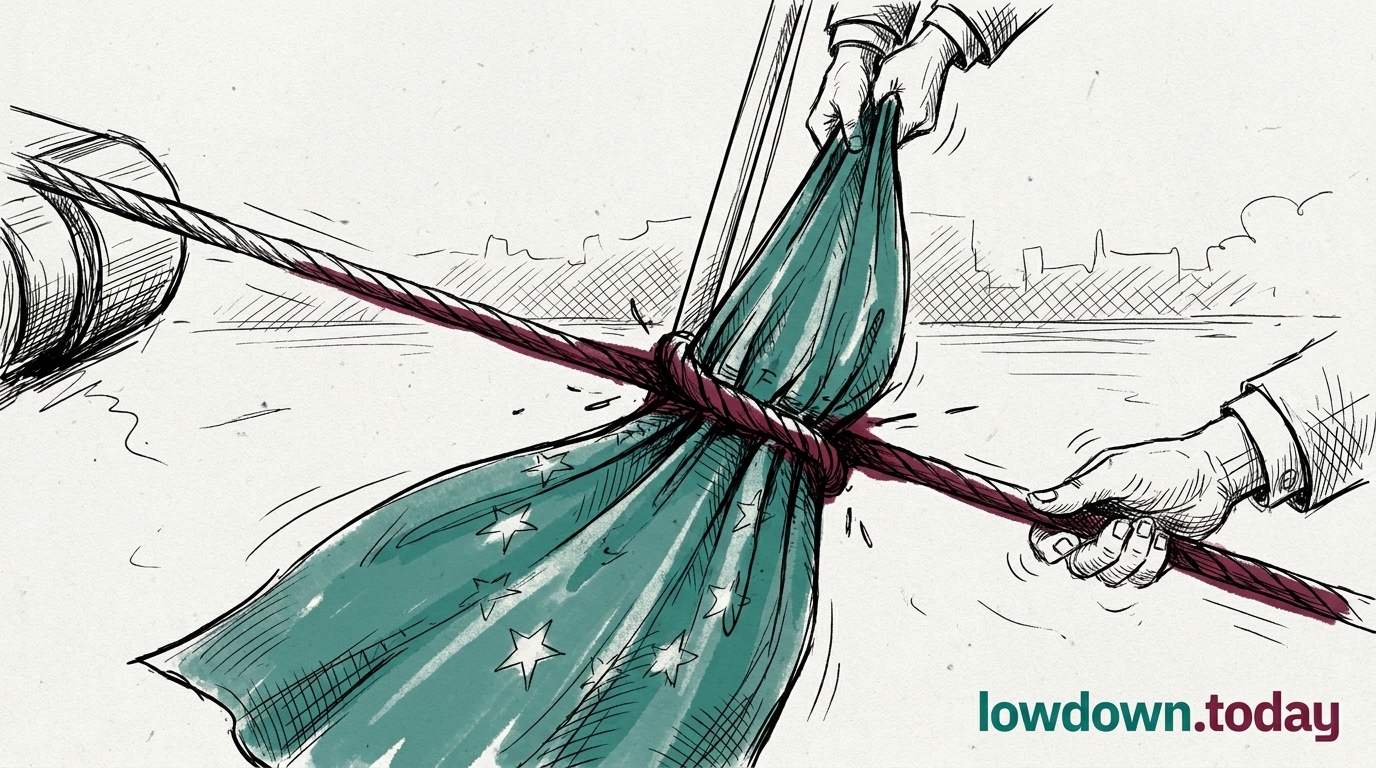
Section 301, DMA Google and AI Act GPAI enforcement now sit nine days apart with no published coordination.

The Office of the United States Trade Representative (USTR) confirmed Friday 24 July as the final determination date for its Section 301 investigation into European Union digital rules 1. The European Commission's binding decision on Google's Digital Markets Act (DMA) Article 6(11) search-data obligation, filed as DMA.100209 , follows on Monday 27 July. The EU AI Office gains full enforcement powers over General-purpose AI (GPAI) model providers on Sunday 2 August , with a fine ceiling of 3 percent of global turnover. Three deadlines, nine days, one diplomatic window.

The procedural sequence matters more than the calendar. Section 301 lands first. Washington's retaliation posture, including any threatened tariffs on European digital exports, will be public before the Commission issues its first major DMA cloud-AI ruling three days later. Any tariff threat in the determination puts political pressure on Brussels to moderate the Google ruling, or to appear to be doing so. Six days after that, AI Act GPAI enforcement activates against the same cohort of United States frontier-model providers; the DMA consultation behind the 27 July decision closed on 1 May, with submissions still under seal pending Alphabet's right of reply.

Neither the Commission nor USTR has publicly acknowledged the convergent calendar. The Center for European Policy Analysis brief from which the timeline is drawn calls Section 301 a tariff trigger that USTR is using to bare its claws on European tech rules 2; Brussels's own posture in the EU-Japan Digital Partnership Council signed two days ago was "acceleration of cooperation", not retaliation. The three deadlines sit inside the same diplomatic window the Tech Sovereignty Package is supposed to clear. If the package's 27 May adoption holds, the Commission will be writing the EU's first statutory definition of "sovereign" infrastructure while three of its existing instruments are tested simultaneously by Washington.

Deep Analysis

In plain English

In late July and early August 2026, three major decisions about technology regulation will all happen within nine days of each other. On 24 July, the US trade authority will announce whether it considers EU tech rules to be unfairly discriminating against US companies. On 27 July, the EU will announce whether Google must share its search data with rivals. And on 2 August, the EU's new rules for large AI systems come into force. The problem is that the US side and the EU side have not publicly coordinated on timing, so each decision could provoke a reaction from the other side before the dust has settled from the previous one.

Deep Analysis
Root Causes

The Section 301 investigation covers the EU AI Act's GPAI (general-purpose AI) compliance obligations, the DSA large-platform designation fees, and the DMA interoperability requirements. All three were enacted on separate legislative timelines with no joint US-EU impact assessment.

The USTR clock began running when the AI Act GPAI obligations were published in the EU Official Journal in August 2025, and the statute provides no mechanism to pause for diplomatic negotiation once the investigation is initiated.

The DMA Google search-data decision is structurally independent: it is a Commission enforcement action under existing law, not a new legislative measure, and the 27 July date cannot be shifted without Alphabet's agreement to extend the procedural timeline.

What could happen next?
  • Risk

    A USTR 301 determination and a €1bn+ DMA fine landing in the same week creates a bilateral escalation dynamic that neither Brussels nor Washington can easily de-escalate before congressional and Commission political cycles force a response.

    Immediate · 0.71
  • Opportunity

    The nine-day window also creates a strong incentive for a pre-emptive EU-US TTC ministerial meeting that could produce a coordinated statement reducing market uncertainty for companies subject to all three regimes simultaneously.

    Short term · 0.58
  • Precedent

    If the collision passes without formal coordination, it confirms that EU and US tech regulatory calendars operate on entirely independent tracks, making future deadline collisions structurally likely as both regimes expand.

    Long term · 0.79
First Reported In

Update #4 · CISPE moves first; Brussels misses again

Computer Weekly· 7 May 2026
Read original
Causes and effects
This Event
Three EU-US deadlines collide in 9 days
Washington's tariff posture goes public three days before Brussels rules on Google and nine days before the AI Office can fine the same cohort of US frontier-model providers up to 3 percent of global turnover.
Different Perspectives
ASML / European tech industry
ASML's Q2 2026 guidance came in €300m below consensus as China DUV revenue collapsed 17 percentage points; the company's CEO wrote US export-control outcomes directly into 2026 guidance. European tech firms named on the USTR retaliation list alongside SAP, Siemens and Spotify face the same calculus: US trade exposure constrains what Brussels can legislate on their behalf.
France / Anne Le Henanff
Le Henanff chaired the G7 Digital Ministerial at Bercy on 29 May with CAIDA off the agenda, pivoting France's presidency to AI safety principles it had not designed the week around. France backs CAIDA but cannot override Berlin's tariff calculus, so the ministerial produced no new French-led commitment.
Germany / Federal government
Berlin's automotive sector faces up to $200bn in threatened US tariffs, a commercial exposure that dwarfs any benefit CAIDA's public-sector cloud rules would deliver to German digital firms. Federal silence inside the College of Commissioners functions as a block under consensus adoption rules without requiring a formal veto.
USTR / Ambassador Andrew Puzder
Puzder's public warning on 25 May that CAIDA is inconsistent with the EU-US trade framework was the first time Washington made its bilateral pressure visible before a Commission adoption vote rather than after. The USTR Section 301 determination on 24 July provides the enforcement backstop.
European Commission / Henna Virkkunen
Virkkunen framed the third slip as a procedural delay in finalising a 400-page text without addressing Puzder's trade-framework red line publicly. The Commission enforces existing law against Google while losing the legislative timeline on CAIDA, exposing an asymmetric position: enforcement holds; new sovereignty legislation does not.
OpenForum Europe / open-source community
The EUR 350m Sovereign Tech Fund has no Commission host, no budget line, and no commissioner's name attached six weeks after the April conference, while Germany is already paying maintainers to staff international standards bodies. The CRA open-source guidance resolves contributor liability but leaves the financial-donations grey area open with the 11 September reporting clock running.
