Skip to content
You can now search across every topic, entity and event.What's new
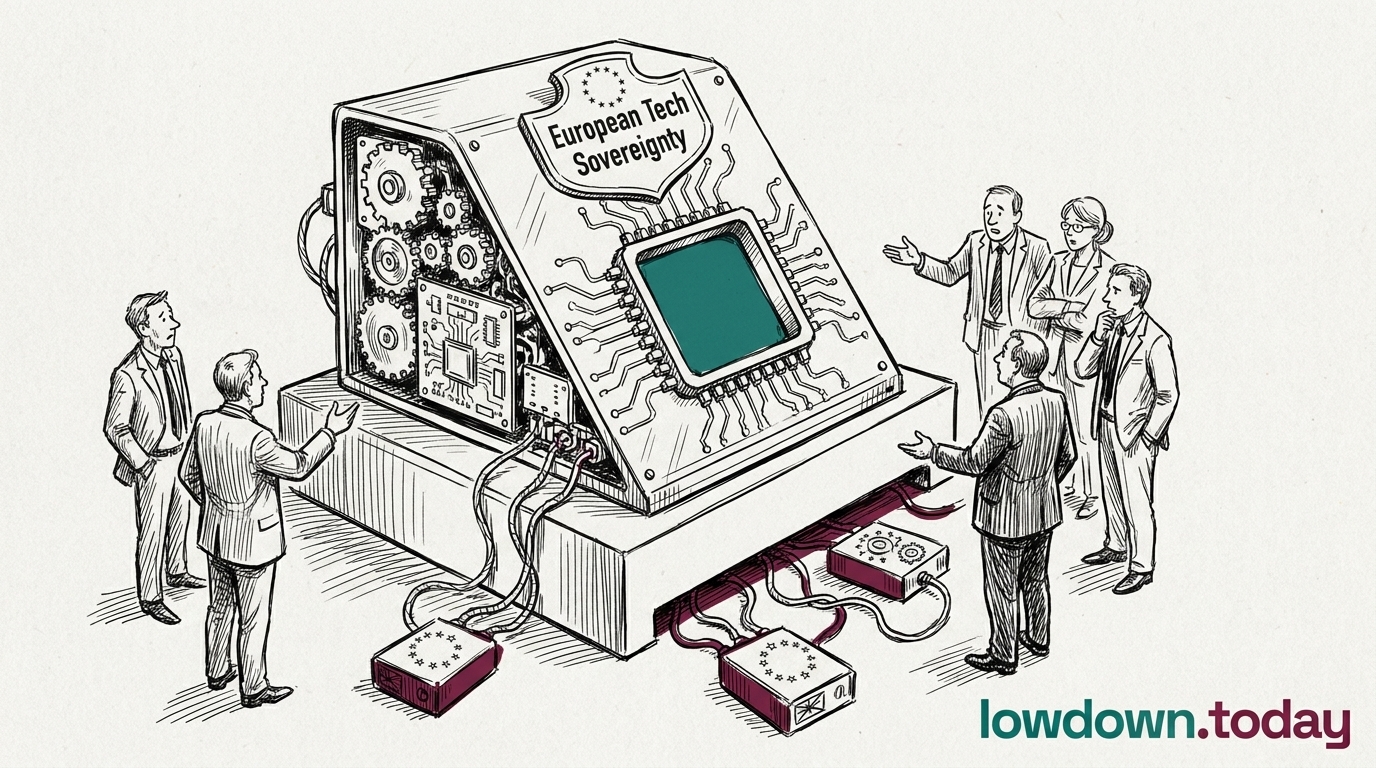
European Tech Sovereignty
23APR

Thousands march in Tehran under blackout

2 min read
09:21UTC

Thousands rallied in Tehran chanting 'no compromise, no surrender' hours before President Pezeshkian's televised apology to Gulf neighbours — an apology his own political system then repudiated.

TechnologyDeveloping

Thousands marched through Tehran on Friday waving Iranian flags and images of the late Ayatollah Khamenei, chanting 'We'll fight, we'll die, we won't accept humiliation' and 'No compromise, no surrender, destruction of Israel.' The demonstrations occurred hours before President Pezeshkian's televised apology to Gulf neighbours — an address whose conciliatory tone was contradicted within hours when IRGC forces struck Dubai, Saudi oil facilities, and Bahrain .

Whether the marches were spontaneous or IRGC-organised is impossible to verify. Iran's internet blackout, now in its ninth consecutive day, has severed the independent reporting channels — social media, encrypted messaging, citizen journalism — that made verification possible during the January 2026 protests . Both readings produce the same operational conclusion. If spontaneous, the war has genuinely mobilised popular sentiment against any form of capitulation. If organised, the IRGC is manufacturing the public mandate it needs to override a president who has twice attempted de-escalation — first with the apology to Gulf States, then by announcing that forces 'should not attack neighbouring countries' — and been ignored both times.

The marchers' slogans track precisely with the hardliner statements that followed Pezeshkian's address. Conservative media activist Meisam Nili declared 'any ceasefire is treason.' Qom lawmaker Mohammad Manan Raeisi called the president's remarks 'humiliating.' The alignment between street chants and elite rhetoric — whether coordinated or coincidental — leaves Pezeshkian isolated between Trump's unconditional surrender demand, which he explicitly rejected , and a domestic political and military establishment that treats his attempt to de-escalate with neighbours as betrayal.

For foreign ministries assessing Iran's internal dynamics, the picture is a system in which the elected president lacks the authority to deliver on any diplomatic commitment he might make. Pezeshkian can neither accept Washington's terms nor persuade his own security apparatus to honour the more modest restraint he has publicly promised. The January crackdown , for which Pezeshkian later apologised , demonstrated that Iran's security forces operate independently of presidential authority in domestic matters. The current war is demonstrating the same independence in external affairs.


First Reported In

Update #27 · Israel kills 41 on failed 1986 airman raid

TRT World· 7 Mar 2026
Read original
Causes and effects
This Event
Thousands march in Tehran under blackout
The demonstrations — whether spontaneous or IRGC-organised — show the visible Iranian public face of the war is not ready for de-escalation, narrowing the political space for any diplomatic off-ramp Pezeshkian might attempt.
Different Perspectives
United States (Google/Alphabet)
Alphabet lost its final Android appeal on 2 July with no further court to hear it, a result its Computer and Communications Industry Association allies frame as precedent, not deterrence, since the €4.1bn fine changed nothing about Google's Play Store terms across eight years of litigation.
UK Department for Science, Innovation and Technology
DSIT opened its £96m second Sovereign AI wave on 3 July, switching from April's equity stakes to fixed-price contracts because Britain has no domestic hyperscaler or Bpifrance-style lender to fund capacity another way. It is betting on buying outcomes it controls alone rather than joining an EU-wide framework.
German federal government
Berlin backed both German deliverables this week, Infineon's fab and Aleph Alpha's merger, but is finding one far harder to close than the other. It wants enforceable protective rights inside Cohere's cap table before the merger closes, a legal instrument the Bundeskartellamt has no filing to review yet.
European Commission
European Commission
The Commission banked a clean CJEU win on the eight-year Android case on 2 July, removing Google's last comparator argument before President von der Leyen rules on the far larger DMA self-preferencing fine due 27 July. Brussels treats Infineon's early Dresden delivery as proof the Chips Act mechanism works, at the node Europe already led.
Bruegel (EU industry sceptics)
Bruegel economist Mario Mariniello argued the EU sovereignty package mimics US and Chinese strategy while EU cloud providers hold roughly 15% of their home market; using nationality as a proxy for security without fixing the underlying capital and energy gaps that drive the dependency creates €86bn of migration cost without the security benefit it is sold as delivering.
France
France
France published a joint sovereignty definition with Germany at VivaTech and mobilised €13bn under Tibi Phase 3, placing SAP's partnership with Mistral as the working proof that a German enterprise-software giant running a French sovereign model inside public administration is what digital sovereignty looks like in practice.



