Skip to content
You can now search across every topic, entity and event.What's new
European Tech Sovereignty
8SEP

461 kg of uranium no one can verify

3 min read
15:06UTC

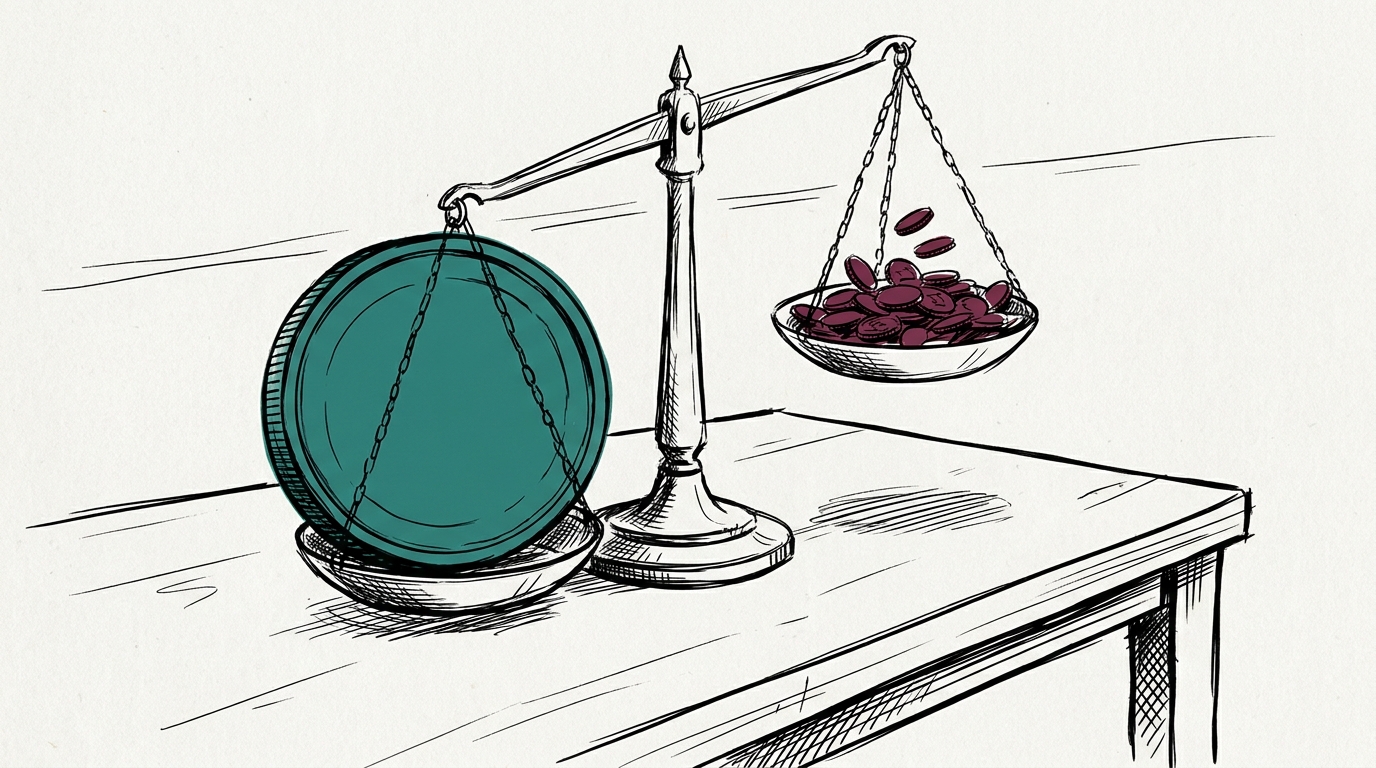
The Institute for Science and International Security read 265 to 287 kg of highly enriched uranium in Esfahan's backfilled tunnels from satellite imagery, against the 440.9 kg the memorandum commits Iran to destroy under inspectors who cannot enter the country.

TechnologyDeveloping
Key takeaway

Inspectors cannot enter Iran, so the uranium the deal commits Iran to destroy stays uncounted.

The Institute for Science and International Security, a Washington non-proliferation think tank, used June 2026 satellite imagery to place Iran's 60 per cent enriched uranium across three hardened sites: 265 to 287 kg in backfilled tunnels at Esfahan, 80 kg at Fordow and 74 to 96 kg at Natanz. That totals as much as 461 kg, against the 440.9 kg the Islamabad memorandum commits Iran to destroy under international supervision. 1

Each figure comes from satellite imagery, not from an on-site count. The International Atomic Energy Agency (IAEA), the UN's nuclear watchdog, has had no inspector access to Iran for more than 100 days, and the Esfahan tunnel entrances are backfilled. Its director-general Rafael Grossi, speaking at Fukushima on 26 June, said access "is going to happen" and that work on modalities and dates would begin soon, but named no date and holds no signed access instrument. 2

Iran's deputy foreign minister Kazem Gharibabadi the same day ruled out access before a final deal and the lifting of all sanctions, deepening the impasse Grossi described . US envoy Steve Witkoff's claim that Iran had sent the IAEA a letter clearing inspectors stayed unconfirmed by both Iran and the agency. The memorandum names the IAEA to supervise the destruction of the stockpile, yet the inspectors it names cannot enter the country to begin. 3

Deep Analysis

In plain English

The International Atomic Energy Agency, the United Nations body that monitors nuclear programmes worldwide, has been unable to enter Iran's nuclear facilities for more than 100 days. The only information available about Iran's stockpile of highly enriched uranium comes from commercial satellite photos taken from space, not from inspectors on the ground. A June 2026 analysis by a US non-proliferation think tank estimated Iran holds around 460 kg of uranium enriched to weapons-capable levels, mostly in tunnels at a site called Esfahan. On 26 June, Iran's deputy foreign minister said there are no plans to let inspectors back in until a final deal is completely agreed and all sanctions are lifted. That condition makes the inspection practically impossible before the Islamabad agreement's 60-day window expires in mid-August.

What could happen next?
  • Risk

    Gharibabadi's sequencing, inspection access only after a completed final deal and full sanctions termination, means the 21 August General Licence X expiry arrives before the conditions for inspection can be met, and the entire Islamabad disarmament architecture collapses by default rather than by decision.

    Short term · Assessed
  • Meaning

    The gap between the MOU's 440.9 kg commitment and the Bulletin of the Atomic Scientists' 540 kg satellite estimate means the deal may have been written to a stockpile figure Iran itself cannot verify, creating a potential compliance dispute even if inspectors re-enter.

    Medium term · Reported
  • Precedent

    A 100-day verification blackout during a formal nuclear disarmament window establishes that the IAEA's monitoring framework can be suspended without triggering an automatic consequence, reducing the deterrent value of future safeguards agreements with states that have domestic political capacity to weather international pressure.

    Long term · Reported
First Reported In

Update #140 · US bombs Iran, and the oil market shrugs

Al Jazeera· 28 Jun 2026
Read original
Different Perspectives
Poland
Poland
Poland leads a self-announced AI Gigafactory consortium with a EUR 100 million phase-one commitment, matched by Czechia and joined by Hungary at EUR 25 million. EuroHPC has confirmed no consortium for the call closing 12 November, so the bloc exists only in national announcements so far.
UK Government (DCMS)
Secretary of State Lisa Nandy told the Commons on 3 September she has inherited the sovereign AI brief from Liz Kendall, but gave no assessment, figure or date on frontier-model access. It is the first public claim of ownership since DSIT's abolition, without the substance the committee asked for.
ASML
ASML
ASML CEO Christophe Fouquet credited Intel Foundry, not a European fab, with shipping the first high-volume logic product made on High-NA EUV, the tool only ASML builds. Europe holds the chokepoint tool; the company that spent it into volume production first is American.
Luxembourg
Luxembourg
Luxembourg joined Mistral's Series D as a new investor on 8 September, the same government that co-funds EuroHPC's MeluXina-AI supercomputer. One small member state now funds the sovereign compute Mistral may need and holds equity in the company using it.
Samsung Electronics
Samsung Electronics
Samsung led Mistral's Series D on 8 September and the same day expanded its ASML collaboration on next-generation lithography. One Korean company now sits atop Europe's largest AI funding round and inside its most sensitive chip-tooling relationship.
Mistral AI
Mistral AI
Mistral closed a EUR 3 billion Series D above a EUR 21 billion valuation on 8 September, with Samsung leading and Luxembourg joining as a new state investor. The company markets itself as Europe's non-American AI option even as the round's lead capital comes from South Korea and two US private-equity firms.
