Skip to content
You can now search across every topic, entity and event.What's new
European Tech Sovereignty
8JUL

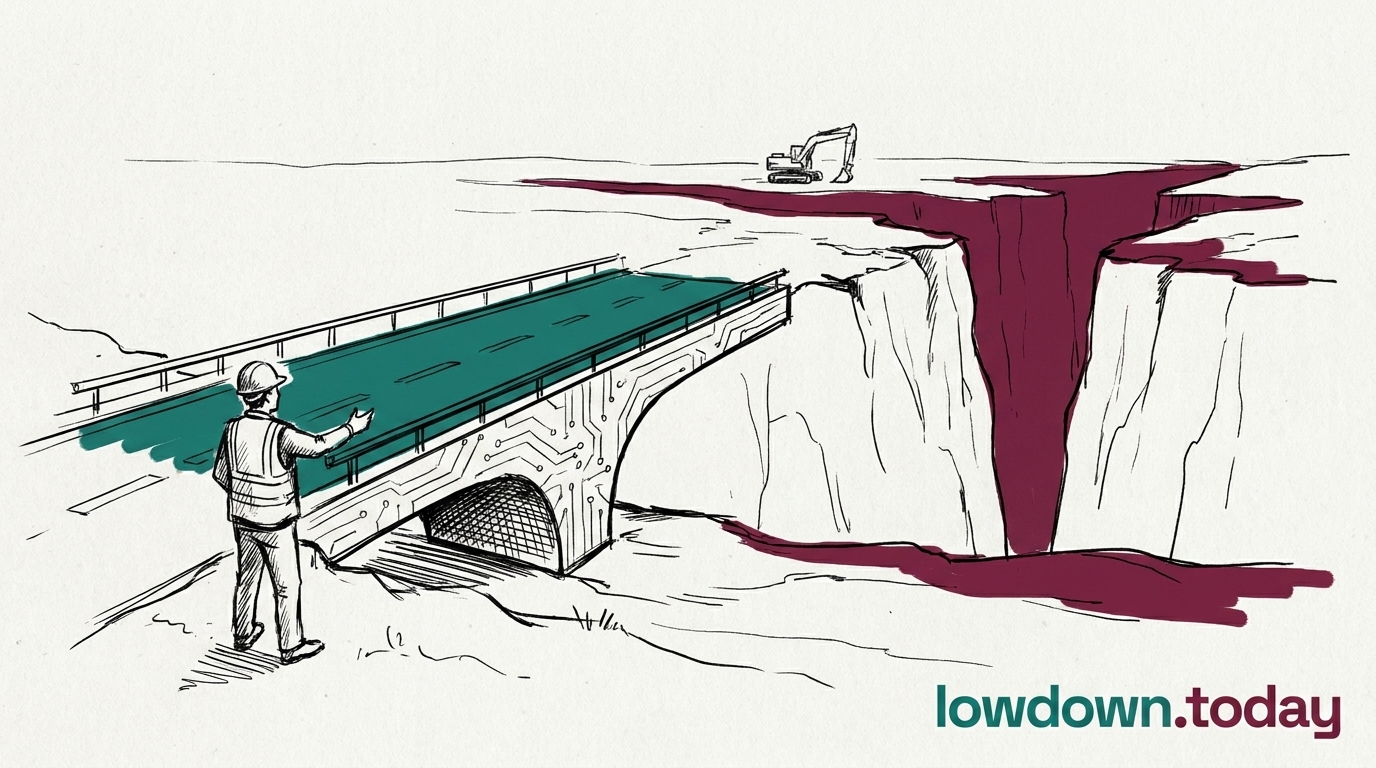
US Strikes Civilian Bridge; Eight Commuters Killed

2 min read
09:50UTC

US forces struck the B1 highway bridge between Karaj and Tehran on 3 April, killing eight people and injuring 95. CENTCOM called it a supply route; Iran called it a commuter road.

TechnologyDeveloping
Key takeaway

The B1 strike marks the first US attack on civilian commuter transport infrastructure in this campaign.

Eight people were killed and 95 injured when US forces struck the B1 highway bridge between Karaj and Tehran on 3 April, according to Iranian state television. The bridge , the Middle East's tallest at 136 metres, inaugurated earlier in 2026 , carried civilian commuter traffic between Iran's fifth-largest city and the capital.

CENTCOM described the target as a supply line to drone and missile units. That framing sits uneasily alongside the casualty profile: eight dead on a road built for cars, not convoys. Every prior bridge strike in this campaign had targeted military or industrial supply corridors . The B1 carried commuters. The shift is substantive, not semantic.

The strike also lands against a specific backdrop. CENTCOM has reported 12,300+ targets struck since the campaign began , and the classification of each as military infrastructure has progressively widened. A 136-metre commuter bridge between two major cities is a categorically different kind of target from an ammunition depot or missile storage site.

Whether the supply-line designation is operationally accurate or legally sufficient will be contested. What is not contested is the casualty count, reported by Iranian state television and not yet disputed by CENTCOM.


Deep Analysis

In plain English

US forces bombed a major motorway bridge between two Iranian cities. Eight commuters died. The US says the bridge was being used to move military equipment; Iran says it was a civilian road. This is the first time the US has hit a road that ordinary people use to get to work rather than a military facility or industrial site.

Deep Analysis
Root Causes

The B1 bridge sits on a route that also serves Iranian military logistics between Karaj (a major IRGC garrison city) and Tehran. Dual-use infrastructure has always been the hardest IHL category: civilian use does not immunise a target if military use is substantial and the military advantage is proportionate.

The deeper structural cause is the failure of the first 34 days of airstrikes to sever drone and missile resupply to western Iran. Each time CENTCOM claims Iranian strike capability has been "dramatically curtailed", the UAE intercept numbers contradict it. The bridge strike is evidence of target escalation driven by frustrated campaign objectives.

Escalation

Escalatory. The shift from military and industrial targets to civilian commuter infrastructure is a threshold crossing. Iran's response options now include strikes on US-allied civilian infrastructure in the Gulf, which it has previously avoided targeting explicitly. The Kuwaiti desalination plant strike on the same day may already be the reciprocal move.

What could happen next?
  • Consequence

    The IHL proportionality case for the strike is contestable; ICC jurisdiction over non-party nationals remains limited, but UN Special Rapporteur documentation is now likely.

    Short term · High
  • Risk

    Iran may cite the B1 strike to justify reciprocal strikes on Gulf civilian transport infrastructure, widening the target set.

    Immediate · Medium
  • Precedent

    The first US strike on civilian commuter infrastructure in this campaign sets a targeting escalation precedent that is difficult to reverse without formal acknowledgement.

    Long term · High
  • Consequence

    European governments face renewed domestic pressure over their posture of tacit support, particularly from parties with strong IHL compliance positions.

    Short term · Medium
First Reported In

Update #57 · Bridge strike kills eight; Army chief fired

Iranian State Television / IRIB· 3 Apr 2026
Read original
Causes and effects
Different Perspectives
United States (Google/Alphabet)
Alphabet lost its final Android appeal on 2 July with no further court to hear it, a result its Computer and Communications Industry Association allies frame as precedent, not deterrence, since the €4.1bn fine changed nothing about Google's Play Store terms across eight years of litigation.
UK Department for Science, Innovation and Technology
DSIT opened its £96m second Sovereign AI wave on 3 July, switching from April's equity stakes to fixed-price contracts because Britain has no domestic hyperscaler or Bpifrance-style lender to fund capacity another way. It is betting on buying outcomes it controls alone rather than joining an EU-wide framework.
German federal government
Berlin backed both German deliverables this week, Infineon's fab and Aleph Alpha's merger, but is finding one far harder to close than the other. It wants enforceable protective rights inside Cohere's cap table before the merger closes, a legal instrument the Bundeskartellamt has no filing to review yet.
European Commission
European Commission
The Commission banked a clean CJEU win on the eight-year Android case on 2 July, removing Google's last comparator argument before President von der Leyen rules on the far larger DMA self-preferencing fine due 27 July. Brussels treats Infineon's early Dresden delivery as proof the Chips Act mechanism works, at the node Europe already led.
Bruegel (EU industry sceptics)
Bruegel economist Mario Mariniello argued the EU sovereignty package mimics US and Chinese strategy while EU cloud providers hold roughly 15% of their home market; using nationality as a proxy for security without fixing the underlying capital and energy gaps that drive the dependency creates €86bn of migration cost without the security benefit it is sold as delivering.
France
France
France published a joint sovereignty definition with Germany at VivaTech and mobilised €13bn under Tibi Phase 3, placing SAP's partnership with Mistral as the working proof that a German enterprise-software giant running a French sovereign model inside public administration is what digital sovereignty looks like in practice.



