Skip to content
You can now search across every topic, entity and event.What's new
European Oil Markets
18JUN

Iran oil exports fall below 300,000 bpd

3 min read
12:45UTC

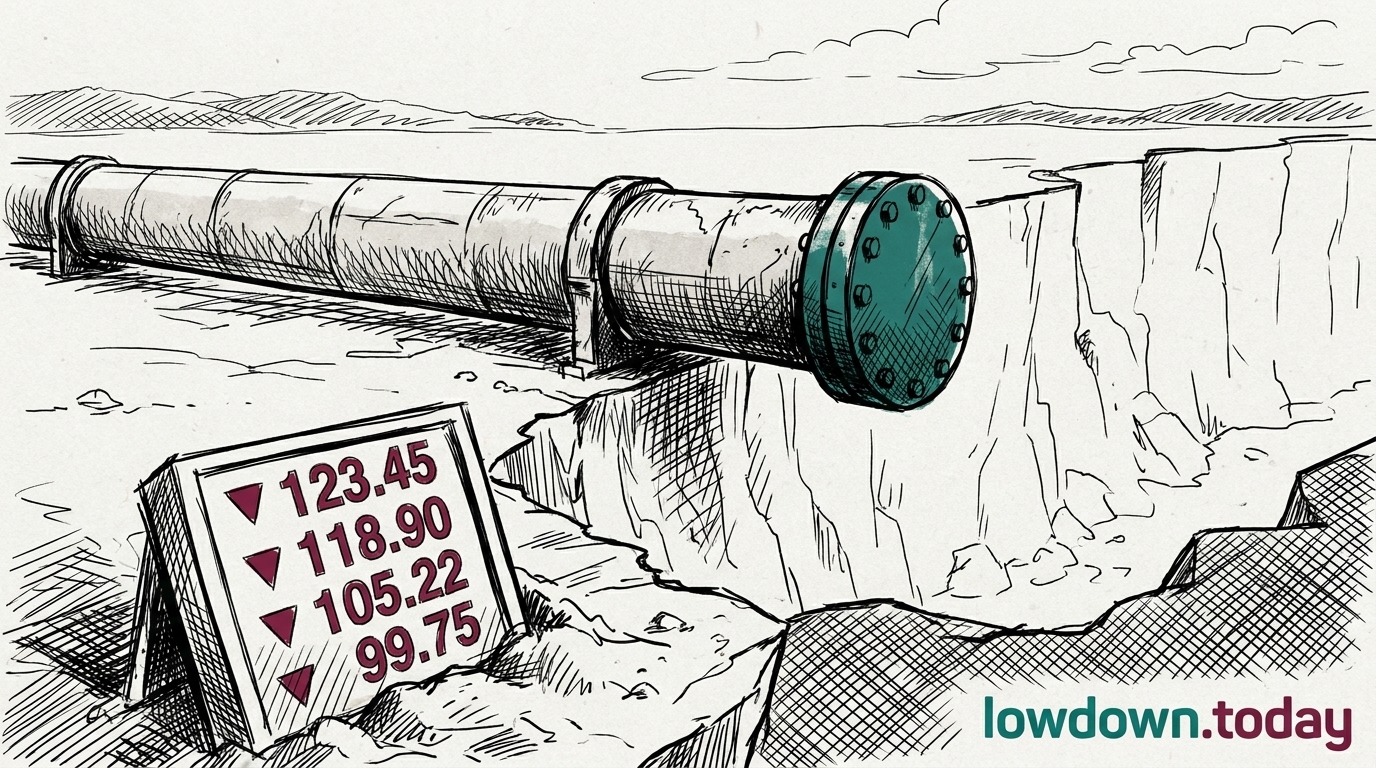
Kpler and Lloyd's List data put Iran's oil exports below 300,000 barrels a day in May, down from 1.84m before the war. Some 67m barrels sit stranded in the Gulf.

EconomicAssessed
Key takeaway

Iran's oil exports have collapsed to one-sixth of pre-war volume, with 67m barrels stranded in the Gulf.

Kpler trade intelligence and Lloyd's List maritime data found Iran's oil exports fell below 300,000 barrels per day in May 2026, down from 1.84m bpd before the war began, roughly one-sixth of the pre-blockade flow 1. The lost revenue since April runs to about $5.8bn, and some 67m barrels sit stranded inside The Gulf, unable to clear the blockade.

The collapse is the revenue consequence of CENTCOM's 121-vessel naval blockade . Ship-tracking measures cargoes that move, so the figure is anchored outside Tehran's control: hard for Iran to inflate, hard for outsiders to dispute.

At a conservative $90 a barrel, Iran's monthly oil income has now fallen below what Saudi Arabia spends in a single day. Read alongside the 77.2 per cent inflation print, the two numbers approach the squeeze from opposite ends, Tehran's own statistics and independent vessel data, and meet on the same floor under the war's economic cost.


Deep Analysis

In plain English

Before the war, Iran sold roughly 1.84 million barrels of oil per day on the international market. That oil was a major source of government revenue. By May 2026, exports had fallen below 300,000 barrels per day, less than one sixth of the pre-war level, because CENTCOM is blocking most tankers from carrying Iranian oil and buyers are too nervous to participate. As a result, 67 million barrels are sitting in ships and storage inside the Gulf, unable to move. Iran has lost approximately $5.8bn in revenue since April. This does not directly affect most Western consumers because global supply has been partly replaced by Saudi and other OPEC production, but it does keep Brent crude elevated above the pre-war price and contributes to higher fuel bills across the importing world.

What could happen next?
  • Consequence

    Iran's daily government revenue from oil has fallen from roughly $145m to roughly $25m, a structural deficit that makes negotiated settlement economically urgent for Tehran.

    Immediate · Assessed
  • Risk

    The 67 million stranded barrels will create a price-suppression spike when any deal permits their release, potentially dropping Brent by $8-15 per barrel in a single trading session.

    Medium term · Reported
  • Opportunity

    China's pre-war Iranian crude contracts give Beijing leverage in any post-deal commodity arbitrage; Chinese absorption of stranded barrels may accelerate Iran's economic recovery faster than sanctions relief alone.

    Medium term · Reported
First Reported In

Update #119 · Trump's Iran deal: 95% done, 0% signed

Al Jazeera· 6 Jun 2026
Read original
Different Perspectives
Gulf oil producer
Gulf oil producer
Secured OPEC's confirmed 188,000 b/d September increment with the next meeting set for 6 September, but the Secretariat's own 2 August release says nothing about the fourth quarter. Output guidance beyond September remains undisclosed even as delegate sourcing keeps filling that gap.
Money manager positioned in WTI
Added 21,402 lots to a 108,307 net long in NYMEX WTI in the week to 28 July, against just 1,485 added to Brent's 15,740, a roughly fourteen-to-one split. Conviction sits in the American benchmark even as the European diesel story sets the record.
Indian refiner buying Urals
Bought Russian crude at a discount that narrowed to $1-2 a barrel in the week to 29 July from over $10, as Hormuz risk pushed it toward Urals. If that risk eases with the strike now called off, the discount it is currently enjoying could re-widen just as fast.
Russian diesel exporter
Novak tied any lifting of the diesel export ban, due to lapse 31 July, to an unspecified market recovery with no date, and pushed the gasoline ban to end-2026. An open-ended constraint suits an exporter benefiting from the record European crack it feeds.
War-risk underwriter
Withdrew war-risk cover for Saudi-linked hulls on 24 July and has not reinstated it, holding Bab el-Mandeb tanker transits near 7.5 a day. A cancelled strike does not by itself trigger the committee review needed to re-accept the class.
Northwest European refiner
Sources only 17% of diesel imports from Saudi Red Sea ports against the Mediterranean's 24%, so the ARA crack at $85.86 trails the Med print by $5.81. Lower Red Sea exposure is cushioning it against the rerouting cost, not eliminating it.



