Skip to content
You can now search across every topic, entity and event.What's new
European Oil Markets
15JUN

Trump Replaces Own Deadline With Fourth Ultimatum

2 min read
11:33UTC

The 6 April power-grid threat has been displaced by a 48-hour Hormuz demand expiring Monday. It is the fourth reformulation in six weeks.

EconomicAssessed
Key takeaway

Four deadlines in six weeks with zero enforcement has exhausted the threat's credibility.

Donald Trump issued a new 48-hour Hormuz ultimatum via Truth Social on 4 April, superseding his own 6 April power-grid deadline : "Time is running out, 48 hours before all Hell will reign down on them." The new expiry is Monday 7 April. 1

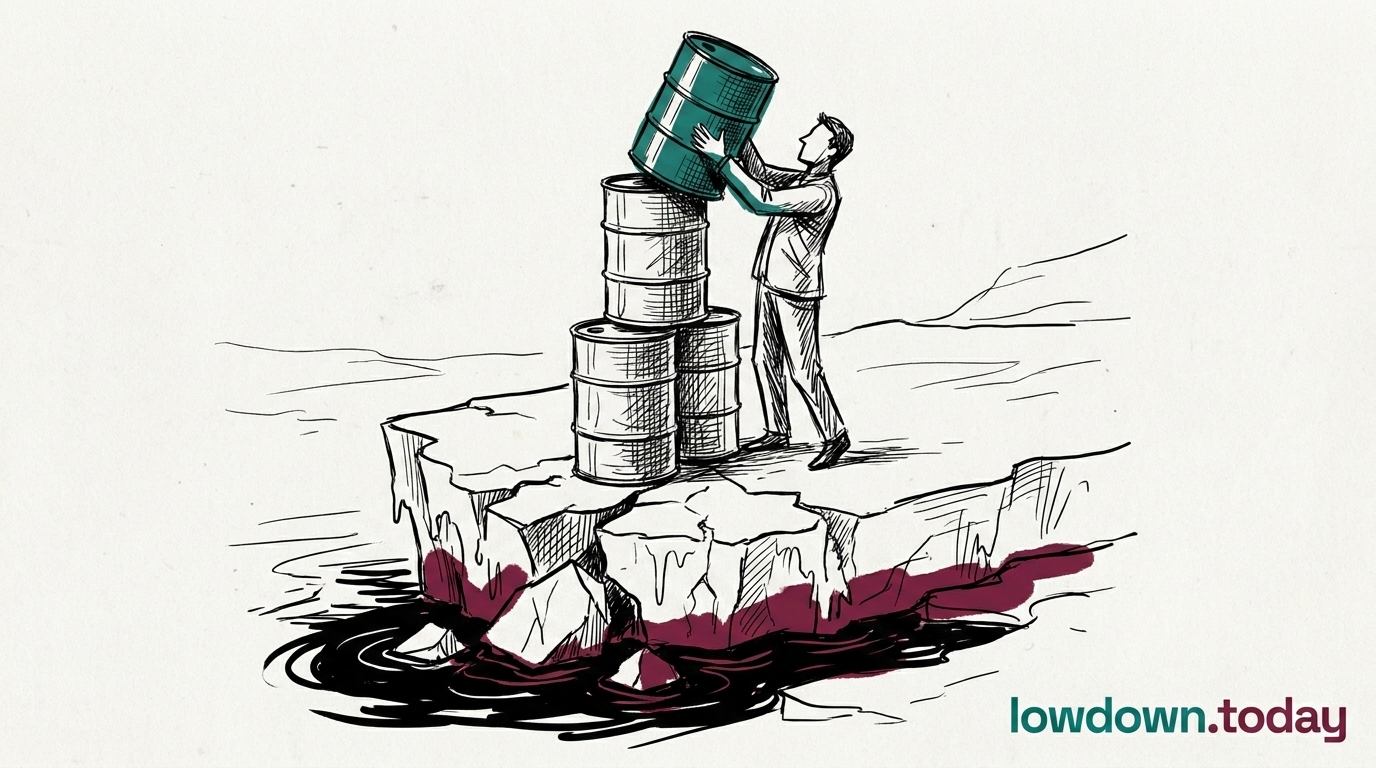
The threat changed shape again. The March deadline targeted 15 identified power grid nodes. The April formulation threatens power plants, oil facilities, and "possibly all desalination plants." The 16 March deadline was extended to 23 March. The 23 March deadline was extended to 6 April. The 6 April deadline was displaced, not extended, by an entirely new ultimatum issued 24 hours before its expiry. Four coercive ultimatums in 42 days, none acted upon.

Ceasefire talks are at a "dead end" per the Wall Street Journal on 3 April. 2 Iran refused to meet US officials in Islamabad. Iran's conditions (reparations, US base withdrawal, guarantees against future attacks) and Washington's single demand (reopen Hormuz) share no overlap. General Aliabadi dismissed Trump as "helpless, nervous, unbalanced and stupid." The deadline mechanism no longer functions as coercive leverage. It functions as domestic political communication.


Deep Analysis

In plain English

In the past six weeks, the US president has set four separate deadlines for Iran to reopen a critical shipping lane, each time threatening to attack Iranian infrastructure if the deadline was not met. None of the four deadlines has been enforced. This is a problem for whoever issues the next threat. In diplomacy, a threat only works if the other side believes you will actually do it. Four unanswered threats suggest you might not, which makes the fifth threat easier to ignore.

What could happen next?
  • Consequence

    The credibility of US coercive diplomacy toward Iran has been materially degraded by four unenforced ultimatums. Restoring it requires either enforcement or a fundamentally different coercive instrument.

First Reported In

Update #59 · Day 37: A Ground War Inside Iran That Nobody Will Name

Jerusalem Post· 5 Apr 2026
Read original
Different Perspectives
Sanctions compliance officer reviewing a Lukoil International GmbH bid
OFAC's amended FAQ 1224 gives a compliance desk its first published standard: full severance from Lukoil and a US-jurisdiction blocked account for sale proceeds. The conditions name neither ISAB nor Italy, so a Priolo Gargallo-linked bid answers a different question than a Neftochim Burgas or Petrotel Ploiesti one.
Managed-money funds on Brent Last Day
CFTC data for the week to 21 July showed managed money flipping 74,400 contracts to a net long of 15,665 against 1,410 short on the Brent Last Day contract, code 06765T. A fund that held that short through July has now covered it, and the spent short base raises the bar for the next leg higher.
Saudi crude exporters
Saudi-linked tanker transits through Bab el-Mandeb fell to about 7.5 a day after the 24 July underwriting withdrawal, pushing more barrels onto the longer route round the Cape or through the Yanbu terminal. Every diverted barrel ties up a ship for longer, and a fleet that turns slower charges more.
Tanker owners on the Bab el-Mandeb route
Lloyd's-market syndicates withdrew war-risk cover from Saudi-linked hulls on 24 July, leaving owners of that class of vessel to sail Bab el-Mandeb uninsured or not at all. Tanker transits on the route fell to roughly 7.5 a day, and cover, once withdrawn, does not return on a shipowner's timetable.
Eni
Eni
Eni's board approved second-quarter results on 29 July, swinging refining EBIT to a EUR0.08bn profit from a year-earlier loss even as group profit doubled, and named Red Sea freight cost as a cap on that improvement. A refiner absorbing higher shipping costs on Saudi-linked crude while its numbers improve treats the freight line as a drag, not a crisis.
Asian buyers (India, Japan, China, South Korea)
Asian refiners are absorbing 62% of Yanbu's 3.75m b/d flow, the bulk of Saudi Arabia's rerouted crude now clearing east rather than into the Atlantic basin. That destination split leaves Asian buyers more exposed to any single Yanbu-specific disruption than under the kingdom's normal multi-terminal export pattern.



