Skip to content
You can now search across every topic, entity and event.What's new
European Oil Markets
15JUN

Brent-WTI spread widens out to $3.55

3 min read
11:33UTC

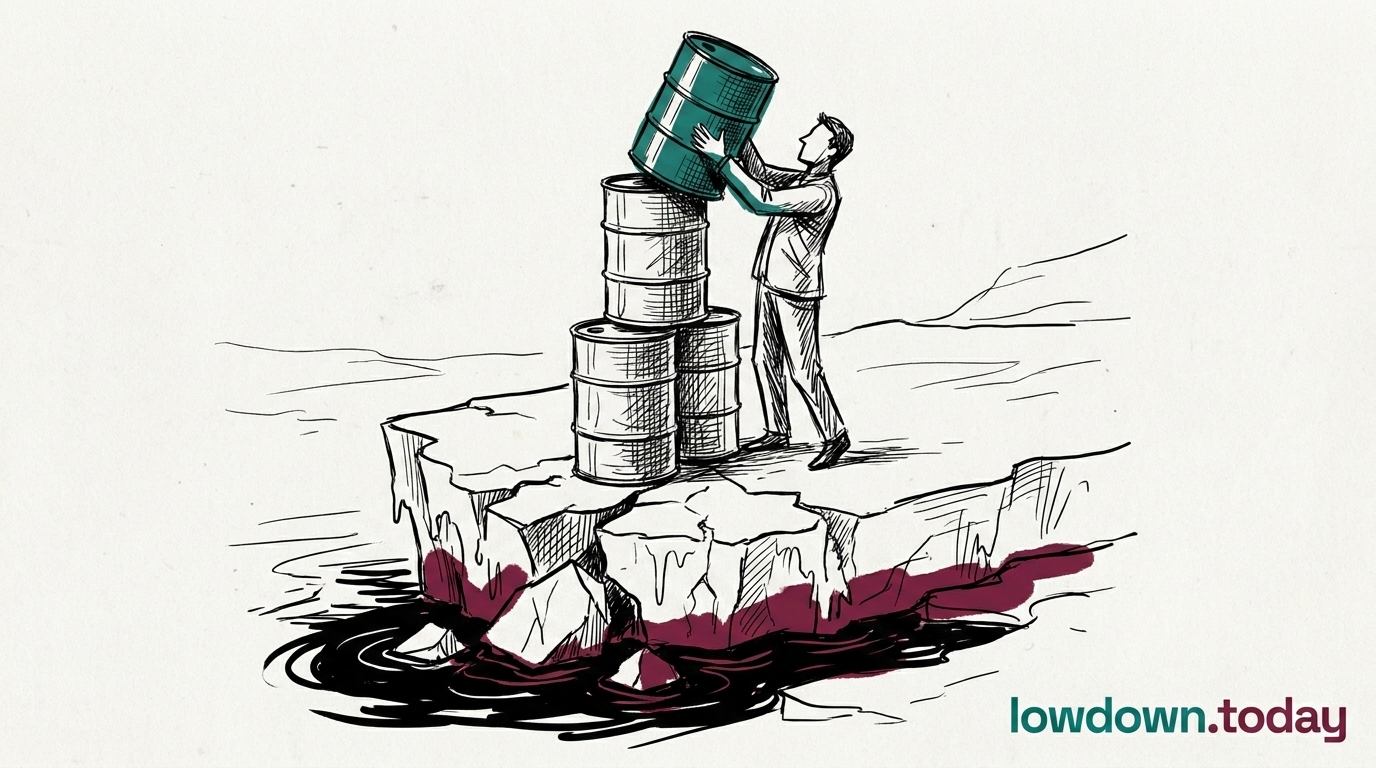
Brent settled near $94.06 and WTI near $90.51 late on Friday 29 May, a spread of about $3.55, as NYMEX WTI managed-money length bled out faster than Brent sold off. The transatlantic TC2 gasoline arb tightens from the freight side at $3.50-plus.

EconomicDeveloping
Key takeaway

Brent-WTI widened on a positioning unwind, not a fundamental shift, and it shuts the TC2 arb from the freight side.

Brent settled around $94.06 and WTI (West Texas Intermediate) near $90.51 late on Friday 29 May, a spread of about $3.55 1, out from the $2-3 band the May Iran memorandum had compressed it into . NYMEX WTI managed money had run to a +172,580 net-long extreme by 19 May ; that length is now bleeding out, and WTI falls faster than Brent as the unwind progresses. The +172,580 contracts unwinding drove the spread, with no matching move in crude supply or demand.

The re-widening bites hardest on freight. At $3.50-plus the TC2 route (the transatlantic clean-products freight benchmark for gasoline and naphtha out of Northwest Europe) sees its arb tighten, because US barrels have less incentive to cross the Atlantic once the crude spread moves against them. With Chinese lifting absent and Atlantic-basin light-sweet grades staying West, European EBOB (the Northwest European gasoline barge benchmark) faces less competition from US exports.

The arb shuts from two directions at once: the crude spread pushes US barrels home, and the absent Eastern bid keeps Atlantic crude in the basin. European refiners gain on the product side what they lose on tighter feedstock economics. The detailed US gasoline-balance print underneath this spread is the demand evidence, and it sits in its own EIA reading.


Deep Analysis

In plain English

The price gap between Brent crude (the main European oil benchmark) and WTI (the American one) widened to about $3.55 last Thursday. This happened because a large group of investors who had bet heavily that US crude prices would rise started unwinding those bets, pushing American crude prices down faster than European ones. This spread matters for petrol prices in Europe because when it widens, it becomes less attractive for American refineries to export petrol to Europe. That reduces the supply available to European markets and tends to push up prices at the pump.

Deep Analysis
Root Causes

The WTI managed-money long of +172,580 contracts was built on two catalysts: the 7.9mb US crude draw and GL 134C supply-legitimacy relief.

The 23 May Iran MOU then forced an unwind: peace-resolution pricing collapsed the flat-price, but WTI fell harder than Brent because the long was concentrated in WTI rather than Brent. CFTC data showed ICE Brent managed money was already net short at -24,966 by 19 May, meaning Brent had no equivalent concentrated long to liquidate.

The EFS and Brent-WTI mechanics are connected: as China stays off the spot market, Dubai weakens relative to Brent. The Brent-WTI spread widens partly because Brent holds on structural European support while WTI loses the speculative premium built in during the supply-disruption peak.

What could happen next?
  • Consequence

    The TC2 gasoline and naphtha arb tightens at $3.50+ Brent-WTI, reducing incentive for US barrels to cross to Europe and supporting EBOB independently of the crude complex.

  • Risk

    If the WTI long unwind accelerates, Brent-WTI could temporarily overshoot $4-5, shutting the TC2 arb entirely and removing the transatlantic supply safety valve for European gasoline markets.

First Reported In

Update #4 · EFS compression is a China hole, not Hormuz

OilPrice.com· 1 Jun 2026
Read original
Different Perspectives
Money managers
Money managers
Managed money rebuilt a dual crude net-long in the week to 9 June at entries $5-6 above the 12 June close; the 20 June print will show whether the flush ran. The RBOB long (+64,125 contracts) adds crack-compression exposure if crude overshoots lower before the product position unwinds.
OPEC+ / Saudi Arabia
OPEC's June MOMR cut 2026 demand growth to 970kbd for a third successive month; the 7 June ministerial added a third 188kbd July increment into a 37-year output low. Saudi Arabia's $108-111 fiscal breakeven sits above both the current Brent screen and the EIA's $79 2027 forecast, meaning Riyadh absorbs revenue pain to hold market share.
United States / OFAC
OFAC's 11 June issuance of GL 55F for Sakhalin-2 while declining to publish GL 134D signals a deliberate commodity-class split: gas licences for allied energy dependencies renewed; crude-vessel services allowed to run to lapse. Secretary Rubio's earlier statement (ID:4009) set the political intention; GL 55F confirms the architecture rather than contradicting it.
European Commission
European Commission
Brussels proposed the 21st package on 9 June to lock the $44.10 cap before the 15 July formula review auto-lifts it; Malta and Greece's block on the maritime-services ban risks delaying adoption past that deadline. A failed freeze converts the EU's primary revenue constraint on Russian oil into a decorative mechanism for H2 2026.
Russia
Russia
GL 134C's lapse on 17 June removes Western insurance cover from the fraction of Russian seaborne crude still routed through European P&I clubs, tightening placement at commercial terms. A 15 July cap review lifting the ceiling from $44.10 toward ~$75 would restore ~$93 million per day in export earnings at 3mbd, partly offsetting the vessel-services squeeze.
European Commission / EU energy regulators
The EU 21st sanctions package, announced 26 May, targets shadow-fleet tankers and banks but has not accelerated a resolution of the ISAB ownership question. A 27 June GL 131F lapse without OFAC issuing a transaction licence creates a supply-security problem for Med products that Brussels cannot solve unilaterally.



