Skip to content
You can now search across every topic, entity and event.What's new
European Oil Markets
15JUN

Brent jumps 5.08% on Monday short-squeeze

3 min read
11:33UTC

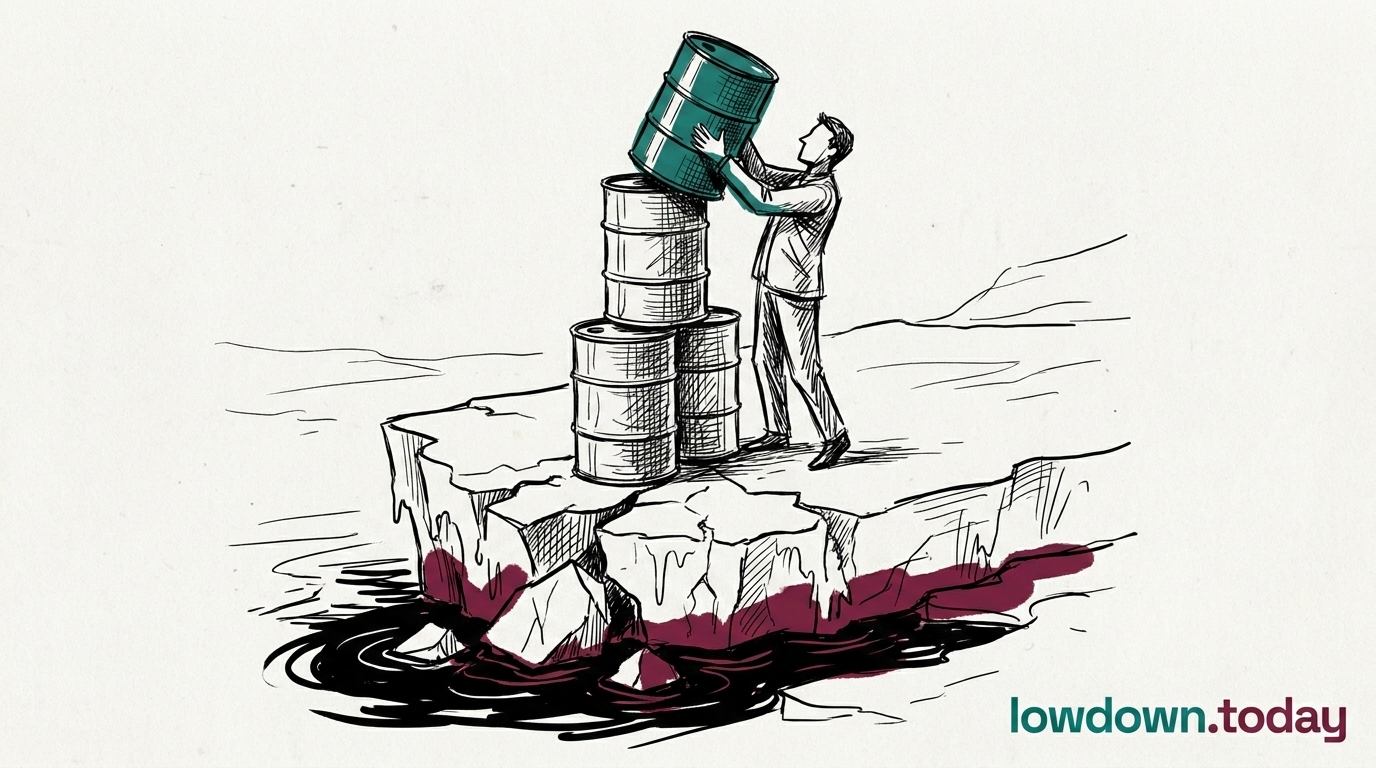
Brent settled 5.08% higher at $97.82 on Monday 8 June, the first settlement after the weekend, as traders covered short positions following the referenced Iran-Israel escalation rather than buying fresh.

EconomicDeveloping
Key takeaway

The Monday jump is a covering rally with no long base, so it fades when the catalyst stales.

Brent settled 5.08% higher at $97.82 on Monday 8 June, the first settlement after the weekend, having closed near $93 on Friday 5 June 1. West Texas Intermediate added a similar margin to roughly $94.80. The move tracked the Iran-Israel missile exchange overnight 6-7 June, the dated escalation that lit the catalyst; the military and diplomatic detail belongs to the Iran-conflict-2026 file, and this market owns only the price consequence.

The character of the rally matters more than its size. This was traders closing out bets that prices would fall, not new buyers convinced they will rise. A covering rally adds risk premium to the flat price without committing a barrel behind it, and it unwinds as fast as it built once the headline stales.

Brent-WTI compressed to $2.75-$2.87, down from the $3.55 it had re-widened to on 29 May , with both legs rallying in parallel rather than Brent pulling away. That parallel strength pins the crude arb mechanically near $2.80 instead of reopening it. The squeeze extends the WTI net-short unwind that CFTC data had already confirmed was complete , and it sits on top of a sixth consecutive US crude draw to 424.4mb . The barrels are tight; the question is whether positioning can hold a price the physical market did not bid up on its own.


Deep Analysis

In plain English

Oil prices can move sharply for reasons that have nothing to do with physical supply: it can also be because of how traders are positioned. In the weeks before 8 June, many professional traders had placed bets that oil prices would fall, a type of trade called a 'short position'. When an Iran-Israel missile exchange over the weekend prompted concern that the conflict was escalating, those traders rapidly reversed their bets, buying oil contracts to close out their losing short positions. This buying rush is called a 'short-squeeze'. The result was Brent crude jumping over 5% on the Monday to $97.82. The physical supply of oil did not suddenly change that morning: what changed was how traders were positioned and how quickly they needed to exit those positions.

What could happen next?
  • Consequence

    With WTI managed money net short at -26,694 as of 2 June, a further escalation event before the CFTC can register new covering would drive a second short-squeeze leg toward $100 Brent.

  • Risk

    Short-squeeze rallies that lack new long entry tend to retrace fully once the covering is complete; Kuwait's 10-12 week output recovery floor means the fundamental supply picture does not support a sustained price above $97-100 on a ceasefire outcome alone.

First Reported In

Update #6 · OPEC's quota is fiction at a 37-year low

OilPrice.com· 8 Jun 2026
Read original
Different Perspectives
Money managers
Money managers
Managed money rebuilt a dual crude net-long in the week to 9 June at entries $5-6 above the 12 June close; the 20 June print will show whether the flush ran. The RBOB long (+64,125 contracts) adds crack-compression exposure if crude overshoots lower before the product position unwinds.
OPEC+ / Saudi Arabia
OPEC's June MOMR cut 2026 demand growth to 970kbd for a third successive month; the 7 June ministerial added a third 188kbd July increment into a 37-year output low. Saudi Arabia's $108-111 fiscal breakeven sits above both the current Brent screen and the EIA's $79 2027 forecast, meaning Riyadh absorbs revenue pain to hold market share.
United States / OFAC
OFAC's 11 June issuance of GL 55F for Sakhalin-2 while declining to publish GL 134D signals a deliberate commodity-class split: gas licences for allied energy dependencies renewed; crude-vessel services allowed to run to lapse. Secretary Rubio's earlier statement (ID:4009) set the political intention; GL 55F confirms the architecture rather than contradicting it.
European Commission
European Commission
Brussels proposed the 21st package on 9 June to lock the $44.10 cap before the 15 July formula review auto-lifts it; Malta and Greece's block on the maritime-services ban risks delaying adoption past that deadline. A failed freeze converts the EU's primary revenue constraint on Russian oil into a decorative mechanism for H2 2026.
Russia
Russia
GL 134C's lapse on 17 June removes Western insurance cover from the fraction of Russian seaborne crude still routed through European P&I clubs, tightening placement at commercial terms. A 15 July cap review lifting the ceiling from $44.10 toward ~$75 would restore ~$93 million per day in export earnings at 3mbd, partly offsetting the vessel-services squeeze.
European Commission / EU energy regulators
The EU 21st sanctions package, announced 26 May, targets shadow-fleet tankers and banks but has not accelerated a resolution of the ISAB ownership question. A 27 June GL 131F lapse without OFAC issuing a transaction licence creates a supply-security problem for Med products that Brussels cannot solve unilaterally.



